
Tall Fescue
Also known as: Tall Fescue, Meadow Fescue, Reed Fescue
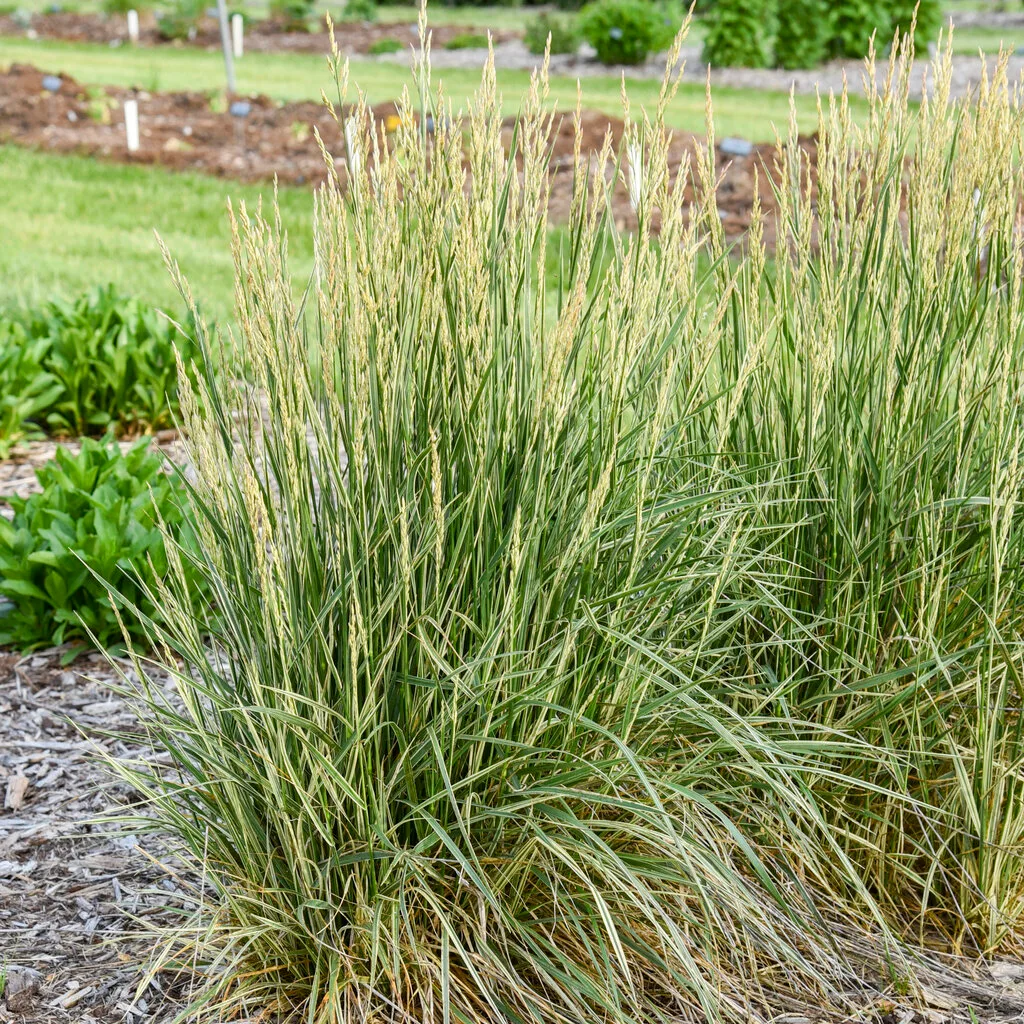
Tall Fescue is a robust, cool-season perennial grass forming dense, deep green tufts. It has narrow, dark green leaves with prominent veins and produces tall, slender flowering stems topped with loose panicles in summer. The plant is valued for its excellent wear tolerance, rapid establishment, and ability to maintain green colour through mild winters.
Scientific classification
- Species
- Tall Fescue (Festuca arundinacea)
- Genus
- Information to be completed
- Family
- Poaceae
- Non-toxic to humans and pets.
- Toxicity
- Perennial · Grass Like
- Plant type
- 0.5 - 1.2 metres
- Height
- 0.3 - 0.6 metres
- Spread
- Evergreen
- Foliage
- Clump forming · Tufted
- Habit
- Spring · Summer · Autumn
- Season of interest
- Full sun · Partial shade
- Sunlight
- 15 – 25 °C
- Ideal temperature









Tall Fescue pictures
Distribution of Tall Fescue
Distribution map
Europe, North Africa, and temperate Asia
Toxicity
Non-toxic to humans and pets.
Tall Fescue care guide
- Water deeply during dry spells, allowing soil to dry slightly between waterings
- Watering
- Full sun · Partial shade
- Sunlight
- 15 – 25 °C
- Ideal temperature

Watering
Water deeply during dry spells, allowing soil to dry slightly between waterings
Fertilizing
 Fertilizing
Every 4-6 weeks during the growing season (spring and autumn)
Pruning
 Pruning
Mow regularly during the growing season to a height of 5-8 cm. Avoid cutting too short, especially in summer. Remove dead leaf debris in late winter.
Propagation
 Propagation
Sow seeds in spring or autumn at a depth of 0.5-1 cm directly into prepared soil. Alternatively, divide established clumps in early spring or autumn; replant divisions at the same depth.
Growing
 Growing
Grow in well-drained, fertile soil in full sun to partial shade. It tolerates a wide pH range (neutral to alkaline) and withstands drought once established. Water deeply during prolonged dry spells, but avoid waterlogging. Apply a balanced nitrogen-rich fertiliser in spring and again in autumn. Mow to 5-8 cm in the growing season; raise cutting height in hot weather. In cold regions, a winter mulch can help protect crowns.
Common pests and diseases
Diseases
Susceptible to brown patch and leaf spot in humid conditions; good air circulation and avoiding excessive nitrogen reduce risk.
Pests
May be attacked by aphids, billbugs, and white grubs; monitor and treat with appropriate insecticides if necessary.
Explore the plant health library →




