
Snake plant
Also known as: Snake plant, Mother-in-law's tongue, Devil's tongue, Laurentii snake plant
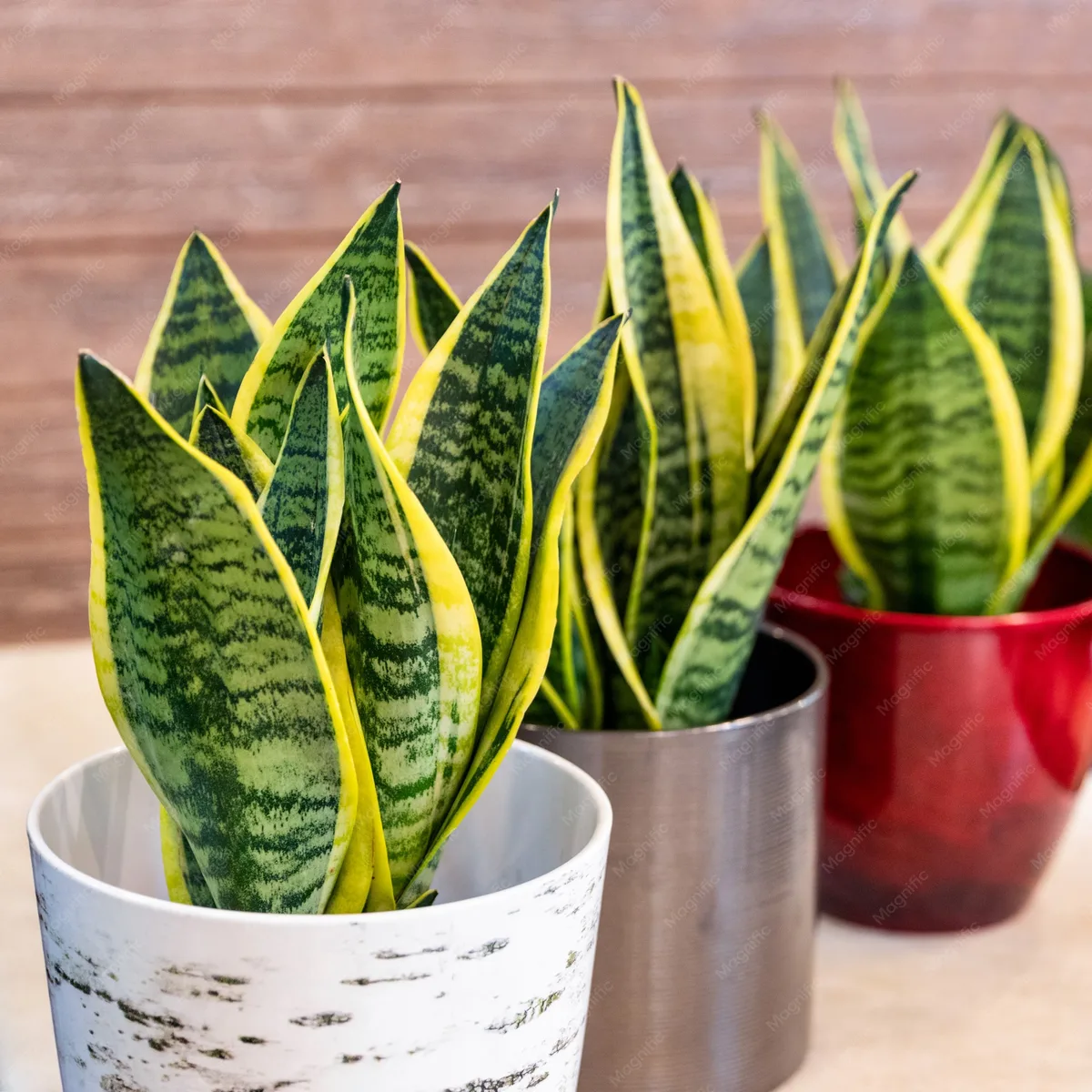
Sansevieria trifasciata 'Laurentii' is a striking evergreen perennial with upright, sword-shaped leaves. The dark green blades are edged with broad golden-yellow margins and feature light green horizontal zigzag patterns. It forms dense clumps and can produce fragrant greenish-white flowers in summer, though flowering is rare indoors. Ideal as a low-maintenance houseplant or for subtropical outdoor landscapes.
Scientific classification
- Species
- Snake plant (Sansevieria trifasciata 'Laurentii')
- Genus
- Information to be completed
- Family
- Asparagaceae
- Mildly toxic to humans and pets if ingested; may cause nausea, vomiting and diarrhea.
- Toxicity
- Succulent · Foliage · Houseplants
- Plant type
- 0.6 - 1.2 metres
- Height
- 0.3 - 0.6 metres
- Spread
- Evergreen
- Foliage
- Upright · Clump forming
- Habit
- Summer
- Season of interest
- Bright indirect light · Partial shade
- Sunlight
- Information to be completed
- Ideal temperature









Snake plant pictures
Distribution of Snake plant
Distribution map
- Native
- Introduced
- Cultivated
Source:WCVP v16 · Royal Botanic Gardens, Kew · CC BY 3.0 · Boundaries:WGSRPD / TDWG
Toxicity
Mildly toxic to humans and pets if ingested; may cause nausea, vomiting and diarrhea.
Snake plant care guide
- Water when soil is dry to the touch, avoiding waterlogging
- Watering
- Bright indirect light · Partial shade
- Sunlight

Watering
Water when soil is dry to the touch, avoiding waterlogging
Fertilizing
 Fertilizing
Every 4-6 weeks during spring and summer
Pruning
 Pruning
Remove individual yellowing, damaged or old leaves at the base with a clean, sharp knife. No routine pruning needed.
Propagation
 Propagation
Easily propagated by division in spring when repotting: carefully separate offsets from the mother plant. Leaf cuttings can be taken in summer; cut a healthy leaf into 5-10 cm sections, allow to callus for a few days, then insert upright in moist sand or water. Keep at 20-25°C. Variegated forms should be propagated by division only to preserve the yellow margins.
Growing
 Growing
Grow in bright indirect light or partial shade; avoid direct afternoon sun which can scorch leaves. Use a well-drained potting mix such as cactus or succulent compost. Water sparingly, allowing the soil to dry out completely between waterings; reduce watering in winter to once a month or less. Fertilize with a balanced liquid feed every 4-6 weeks during the growing season. Tolerates low humidity and infrequent watering, making it an excellent choice for beginners. Protect from temperatures below 10°C.
Common pests and diseases
Diseases
Prone to root rot and fungal leaf spot if overwatered or kept in poorly draining soil. Generally disease resistant with proper care.
Pests
Occasionally susceptible to mealybugs, spider mites and scale insects, especially when stressed or in dry indoor air.
Explore the plant health library →




