
Jelly Bean Plant
Also known as: Jelly Bean Plant, Pork and Beans, Christmas Cherries
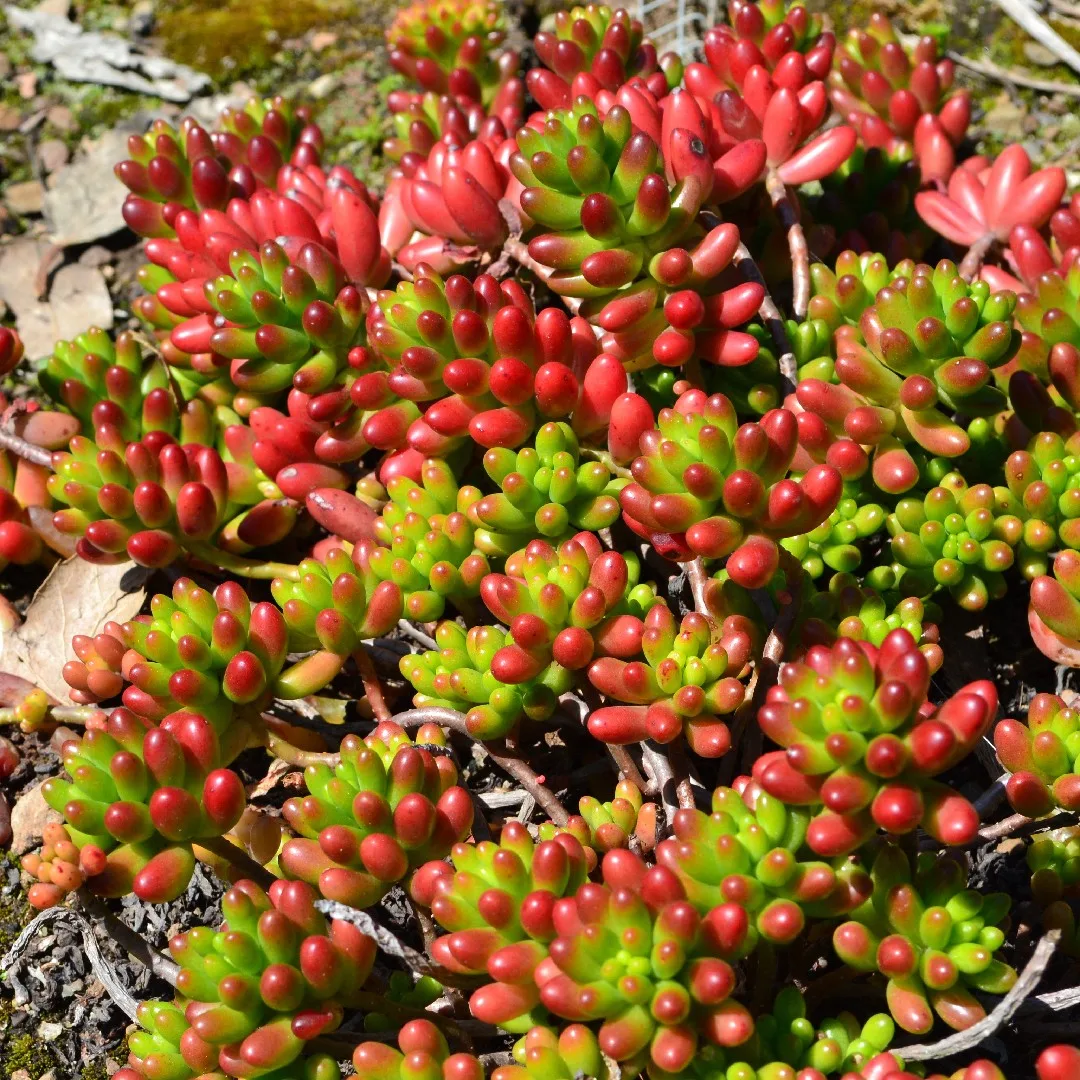
Sedum rubrotinctum is a low-growing succulent with cylindrical, fleshy leaves that are bright green with red tips, turning more intensely red under stress or in bright light. It produces small, star-shaped yellow flowers in summer. The plant forms a dense mat, making it an excellent ground cover. Its colorful foliage provides year-round ornamental interest.
Scientific classification
- Species
- Jelly Bean Plant (Sedum rubrotinctum)
- Genus
- Information to be completed
- Family
- Crassulaceae
- Non-toxic to humans and pets, though ingestion may cause mild stomach upset.
- Toxicity
- Succulent · Perennial
- Plant type
- 0.15 - 0.2 metres
- Height
- 0.3 - 0.6 metres
- Spread
- Evergreen
- Foliage
- Spreading
- Habit
- Spring · Summer · Autumn
- Season of interest
- Full sun
- Sunlight
- 15 – 25 °C
- Ideal temperature









Jelly Bean Plant pictures
Distribution of Jelly Bean Plant
Distribution map
Mexico (Puebla, Oaxaca)
Toxicity
Non-toxic to humans and pets, though ingestion may cause mild stomach upset.
Jelly Bean Plant care guide
- Water thoroughly then allow soil to dry completely before next watering
- Watering
- Full sun
- Sunlight
- 15 – 25 °C
- Ideal temperature

Watering
Water thoroughly then allow soil to dry completely before next watering
Fertilizing
 Fertilizing
Monthly during growing season (spring to autumn)
Pruning
 Pruning
Remove dead or leggy stems in spring to maintain a compact shape. Pinch back tips to encourage branching.
Propagation
 Propagation
Easily propagated by leaf or stem cuttings in spring or early summer. Place cuttings on dry, well-drained soil and keep in bright, indirect light until roots form. Water sparingly during rooting.
Growing
 Growing
Plant in well-drained, sandy or gritty soil in full sun to bring out the best red coloration. Water thoroughly but allow the soil to dry completely between waterings; reduce watering in winter. Apply a balanced liquid fertilizer monthly during the growing season (spring to autumn). Protect from frost; in cooler climates, grow in containers and overwinter indoors or in a greenhouse.
Common pests and diseases
Diseases
Susceptible to root rot if overwatered; ensure good drainage and avoid waterlogging. Powdery mildew may occur in humid conditions.
Pests
May attract mealybugs and aphids, especially indoors. Inspect regularly and treat with insecticidal soap if needed.
Explore the plant health library →




