
Million Hearts
Also known as: Million Hearts, Heart Leaf Dischidia, Ant Plant
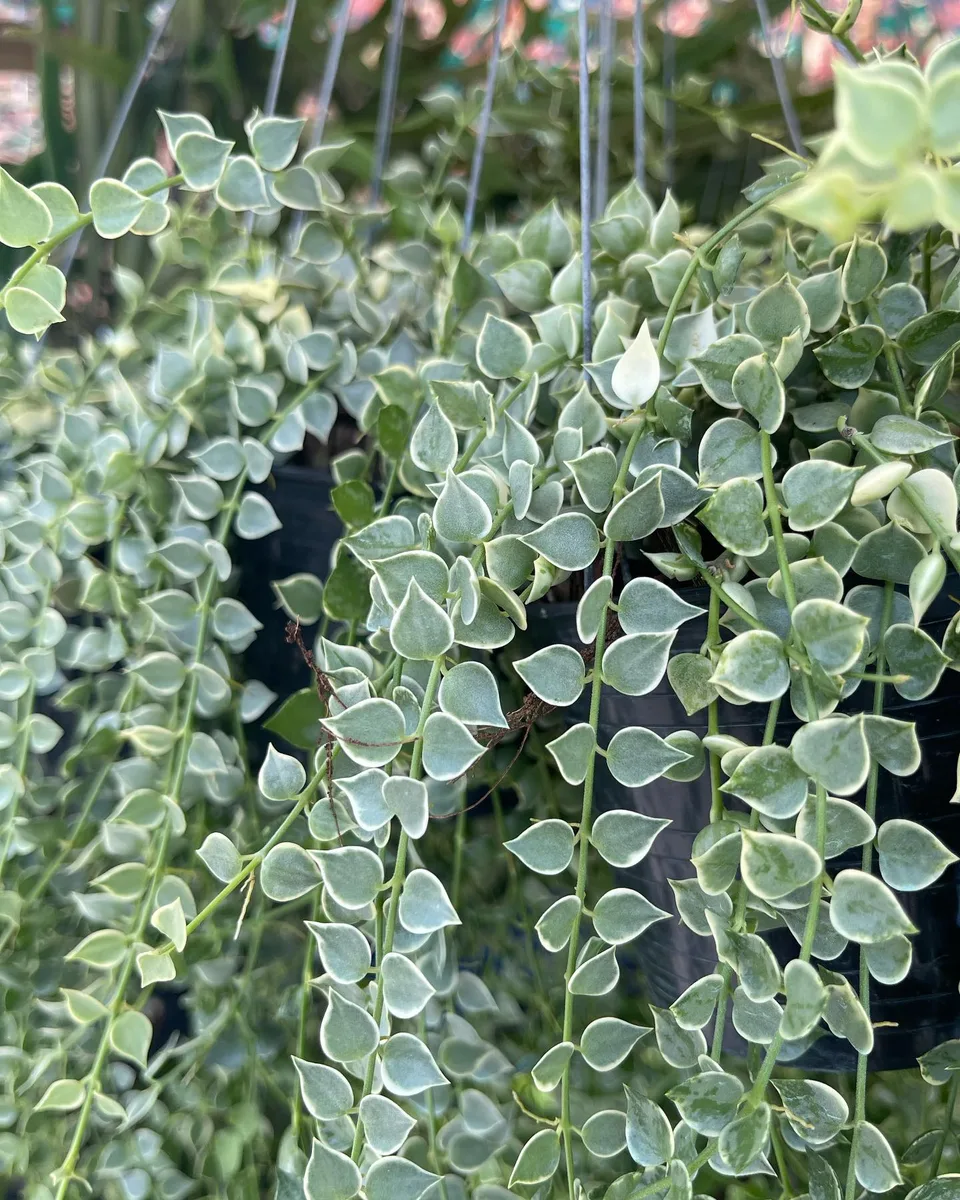
Dischidia ruscifolia, commonly known as Million Hearts, is a trailing or climbing succulent with slender, wiry stems and small, fleshy, heart-shaped leaves arranged in opposite pairs. The leaves are bright green with a subtle underside texture, and occasionally tiny white or creamy flowers appear in summer. This plant forms dense cascading mats, making it an excellent choice for hanging baskets or as a ground cover in tropical terrariums. Its compact size and charming foliage provide year-round ornamental interest.
Scientific classification
- Species
- Million Hearts (Dischidia ruscifolia)
- Genus
- Information to be completed
- Family
- Apocynaceae
- Non-toxic to humans and pets, but ingestion may cause mild digestive upset.
- Toxicity
- Cactus Succulent · Houseplants · Climber Wall Shrub
- Plant type
- 0.3 - 0.6 metres
- Height
- 0.6 - 1.0 metres
- Spread
- Evergreen
- Foliage
- Climbing · Trailing
- Habit
- Spring · Summer
- Season of interest
- Bright indirect light
- Sunlight
- 18 – 27 °C
- Ideal temperature









Million Hearts pictures
Distribution of Million Hearts
Distribution map
Philippines, Taiwan
Toxicity
Non-toxic to humans and pets, but ingestion may cause mild digestive upset.
Million Hearts care guide
- Water sparingly, allowing soil to dry out between waterings
- Watering
- Bright indirect light
- Sunlight
- 18 – 27 °C
- Ideal temperature

Watering
Water sparingly, allowing soil to dry out between waterings
Fertilizing
 Fertilizing
Monthly during growing season (spring and summer)
Pruning
 Pruning
Prune back leggy or overly long stems in early spring to encourage bushier growth. Remove any dead or yellowing leaves as needed.
Propagation
 Propagation
Propagate by stem cuttings in spring or early summer. Take a cutting with at least two nodes, remove the lower leaves, and let the cut end callus for a day before inserting into moist succulent mix. Keep in bright, indirect light and maintain moderate humidity until roots develop. Cuttings root within 2-4 weeks at temperatures around 20-25°C.
Growing
 Growing
Grow Dischidia ruscifolia in bright, indirect light; avoid direct midday sun which can scorch the leaves. Use a well-draining, porous potting mix such as a cactus or succulent blend. Water thoroughly when the top 2-3 cm of soil feels dry, then allow the pot to drain completely; reduce watering in winter. Fertilize monthly during the growing season with a balanced liquid fertilizer diluted to half strength. This plant is not frost-tolerant and must be kept indoors where temperatures remain above 15°C. It benefits from occasional misting or a pebble tray in dry indoor air.
Common pests and diseases
Diseases
Susceptible to root rot if overwatered or kept in poorly drained soil. Fungal leaf spot may occur in overly humid conditions with poor air circulation.
Pests
May occasionally attract mealybugs, scale insects, or spider mites, especially in dry indoor environments. Regular inspection and prompt treatment with insecticidal soap or neem oil are recommended.
Explore the plant health library →




