
Wax Plant
Also known as: Wax Plant, Wax Flower, Porcelain Flower
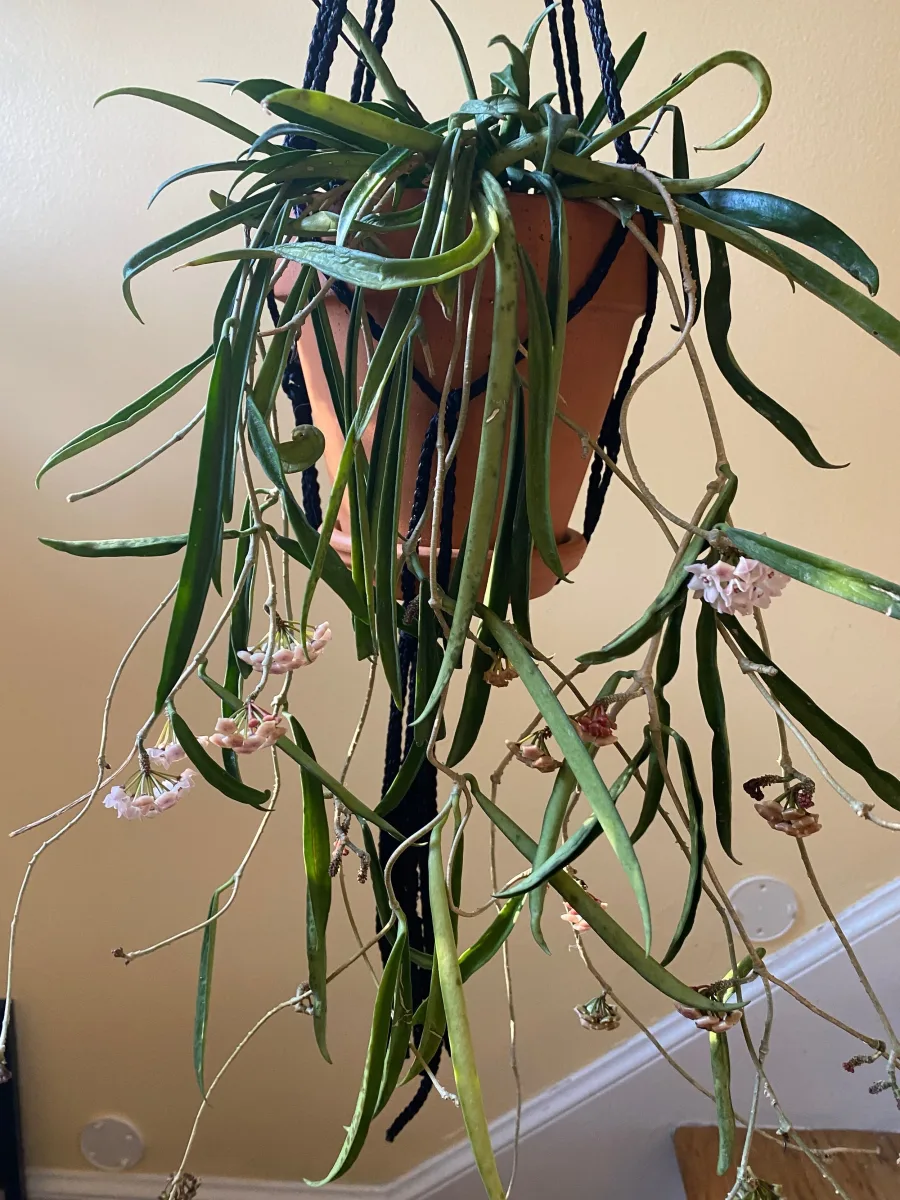
Hoya longifolia is a climbing or trailing succulent vine with long, narrow, fleshy leaves. Its star-shaped flowers are white or pale pink with a red center, forming dense umbels and emitting a sweet fragrance. The waxy texture of the blooms gives it the common name 'Wax Plant'. It is an excellent houseplant for hanging baskets or trellises.
Scientific classification
- Species
- Wax Plant (Hoya longifolia)
- Genus
- Information to be completed
- Family
- Apocynaceae
- Non-toxic
- Toxicity
- Cactus Succulent · Climber Wall Shrub · Houseplants
- Plant type
- 1.5 - 3 metres
- Height
- 0.5 - 1 metres
- Spread
- Evergreen
- Foliage
- Climbing · Trailing
- Habit
- Summer
- Season of interest
- Bright indirect light
- Sunlight
- Information to be completed
- Ideal temperature









Wax Plant pictures
Distribution of Wax Plant
Distribution map
Indonesia, Philippines, Southeast Asia
Toxicity
Non-toxic
Wax Plant care guide
- Water when top inch of soil is dry, allow to drain
- Watering
- Bright indirect light
- Sunlight

Watering
Water when top inch of soil is dry, allow to drain
Fertilizing
 Fertilizing
Every 2 weeks during growing season
Pruning
 Pruning
Prune lightly in early spring to remove dead or leggy growth and maintain shape. Can be trimmed after flowering to encourage branching.
Propagation
 Propagation
Propagate from stem cuttings taken in spring or summer. Use sections with 2-3 nodes, remove lower leaves, and insert into moist cutting compost. Keep warm (20-25°C) and maintain high humidity until roots develop.
Growing
 Growing
Grow in bright indirect light; direct sun may scorch leaves. Use a well-drained, peat-based compost. Water thoroughly when the top inch of soil feels dry, allowing excess to drain; reduce watering in winter. Apply a balanced liquid fertilizer every two weeks during the growing season. Maintain a minimum winter temperature of 10°C (50°F) to avoid damage.
Common pests and diseases
Diseases
Susceptible to root rot if overwatered; also prone to botrytis in humid conditions. Ensure good drainage and air circulation.
Pests
May be infested by mealybugs, scale insects, and spider mites. Regularly inspect and treat promptly.
Explore the plant health library →




