
String of Dolphins
Also known as: String of Dolphins, Dolphin Plant, Dolphin Succulent
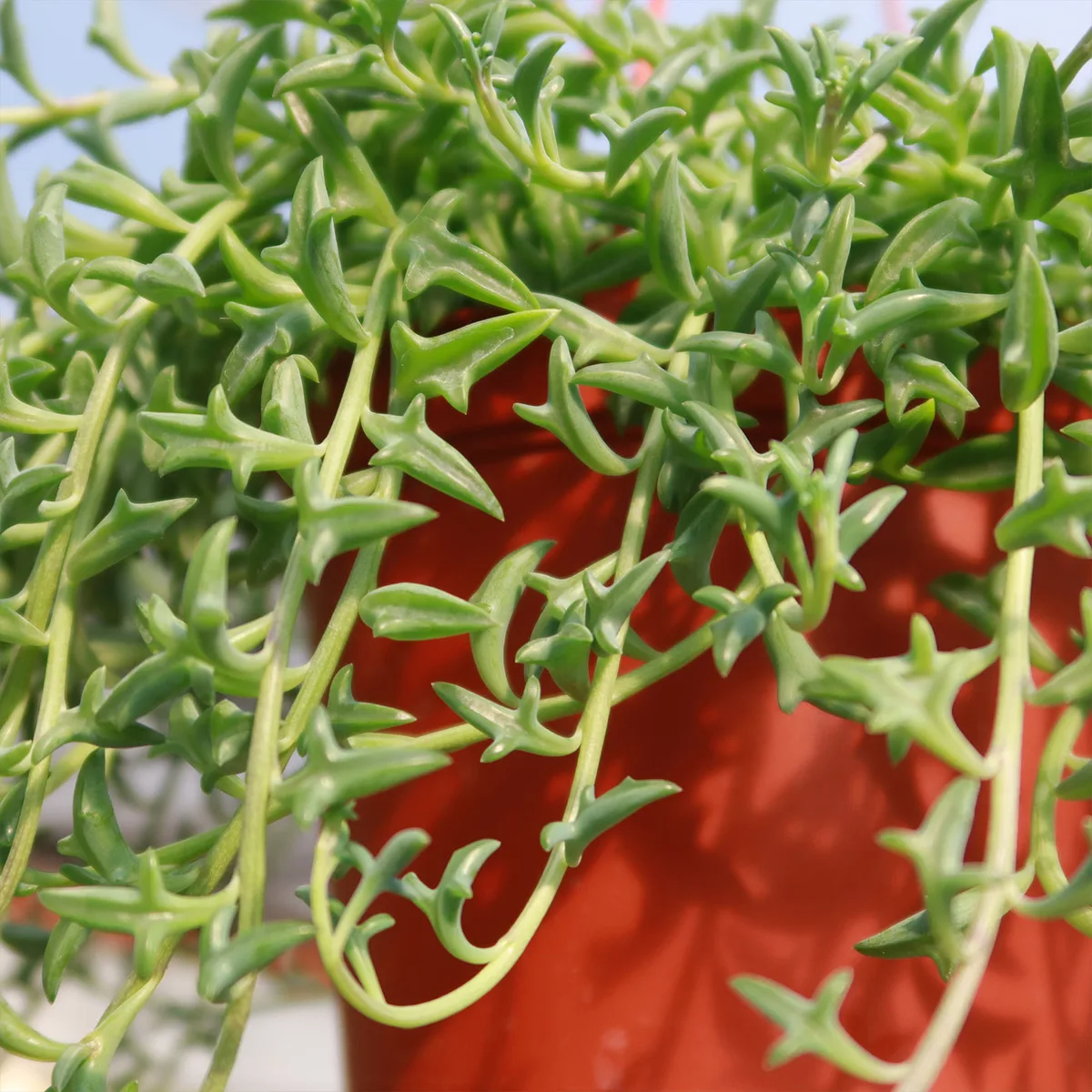
Senecio peregrinus, commonly known as String of Dolphins, is a trailing succulent with unique leaves shaped like small dolphins. The leaves are green with purple or pinkish margins when stressed. In spring and summer it may produce small white or pale yellow composite flowers, though it is primarily grown for its whimsical foliage. The stems can reach up to 60 cm long, cascading beautifully from hanging baskets.
Scientific classification
- Species
- String of Dolphins (Senecio peregrinus)
- Genus
- Information to be completed
- Family
- Asteraceae
- Toxic if ingested; contains pyrrolizidine alkaloids that can cause liver damage in humans and pets.
- Toxicity
- Succulent · Houseplants
- Plant type
- 0.3 - 0.6 metres
- Height
- 0.3 - 0.6 metres
- Spread
- Evergreen
- Foliage
- Trailing
- Habit
- Spring · Summer
- Season of interest
- Bright indirect light
- Sunlight
- 15 – 25 °C
- Ideal temperature









String of Dolphins pictures
Distribution of String of Dolphins
Distribution map
- Native
- Introduced
- Cultivated
Source:WCVP v16 · Royal Botanic Gardens, Kew · CC BY 3.0 · Boundaries:WGSRPD / TDWG
Toxicity
Toxic if ingested; contains pyrrolizidine alkaloids that can cause liver damage in humans and pets.
String of Dolphins care guide
- Water deeply when soil is completely dry, then allow to dry out before next watering.
- Watering
- Bright indirect light
- Sunlight
- 15 – 25 °C
- Ideal temperature

Watering
Water deeply when soil is completely dry, then allow to dry out before next watering.
Fertilizing
 Fertilizing
Once a month during spring and summer with a diluted succulent fertilizer.
Pruning
 Pruning
Prune back any leggy or damaged stems in spring to encourage bushier growth. Remove spent flower stalks if desired.
Propagation
 Propagation
Propagate by stem cuttings or leaf cuttings in spring or early summer. Take a 5-10 cm stem cutting, allow the cut end to callous for a day, then insert into moist succulent mix. Keep in bright indirect light and maintain humidity until roots form, usually within 2-3 weeks. Leaves can also be twisted off and placed on soil to root.
Growing
 Growing
Grow in well-drained cactus or succulent potting mix. Place in bright indirect light; avoid prolonged direct sun which can scorch leaves. Water thoroughly only when the soil is completely dry, typically every 1-2 weeks in summer and less in winter. Fertilize with a balanced liquid succulent fertilizer once a month during the growing season. Keep above 10°C in winter; it is not frost hardy. Ensure good air circulation to prevent rot.
Common pests and diseases
Diseases
Susceptible to root rot if overwatered or kept in poorly draining soil. Powdery mildew may occur in stagnant humid conditions.
Pests
Common pests include mealybugs, aphids, and spider mites. Regularly inspect and treat with insecticidal soap or neem oil if needed.
Explore the plant health library →




