
Dragon Fruit Cactus
Also known as: Dragon fruit cactus, Pitaya, Strawberry pear
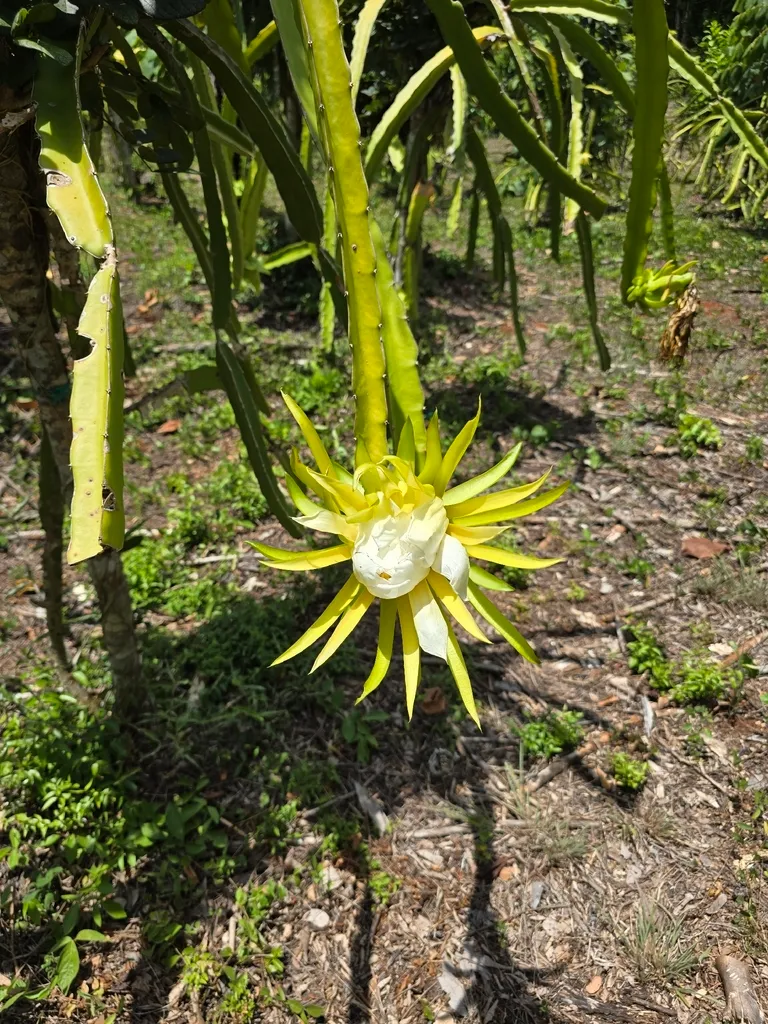
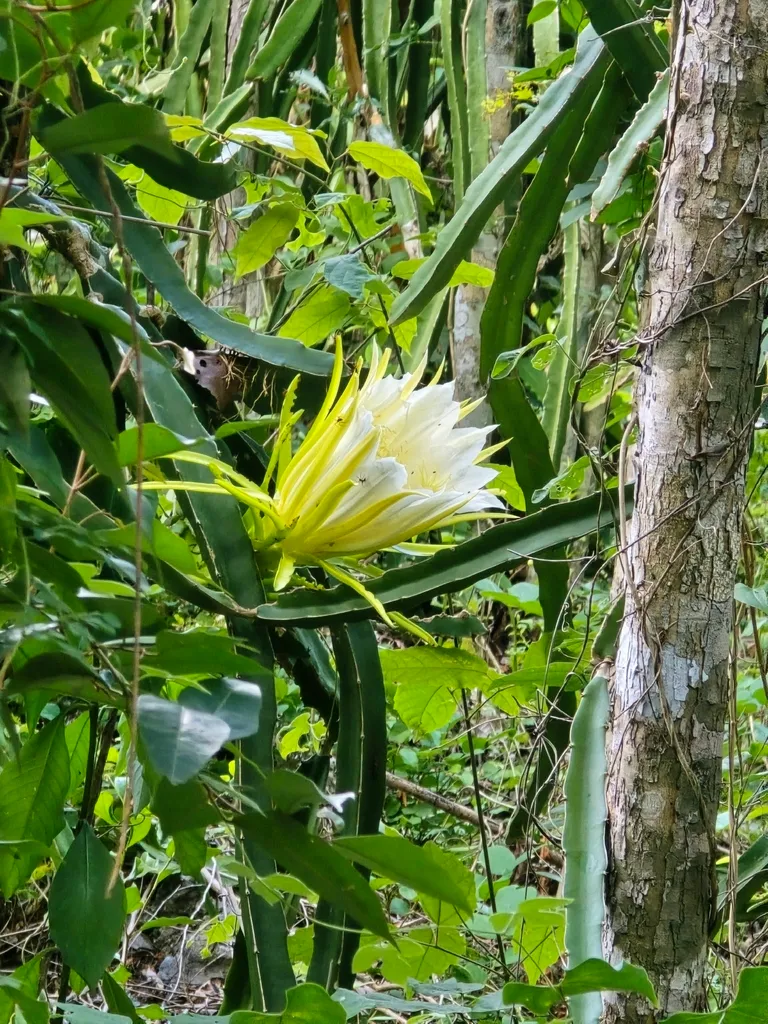
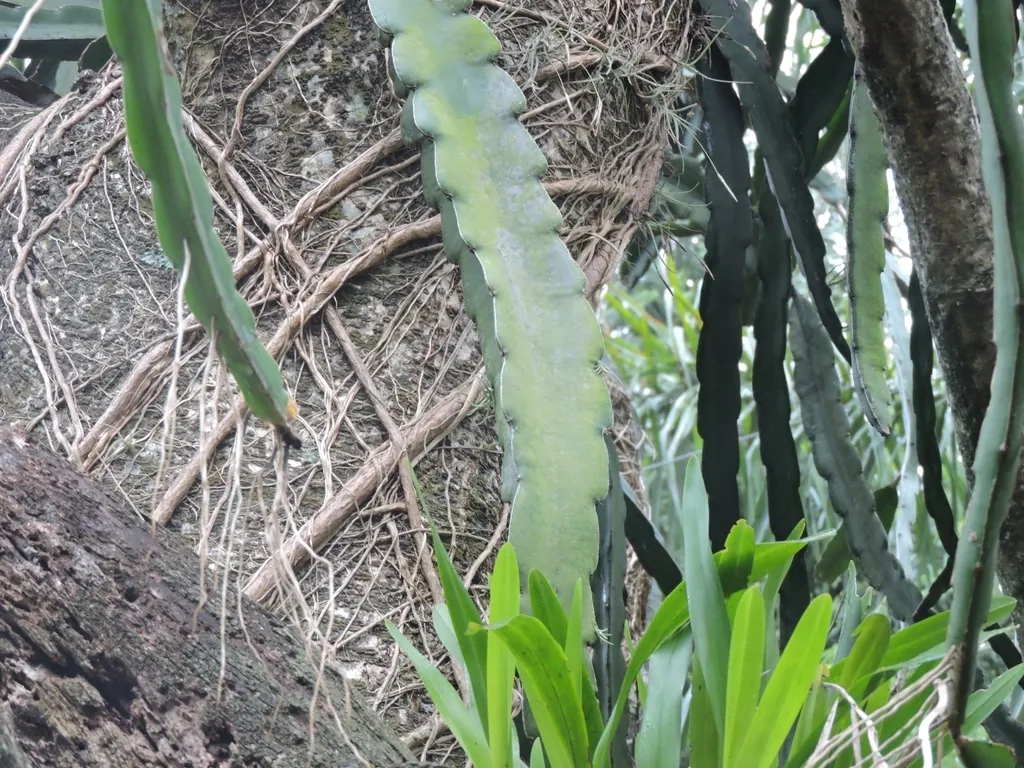
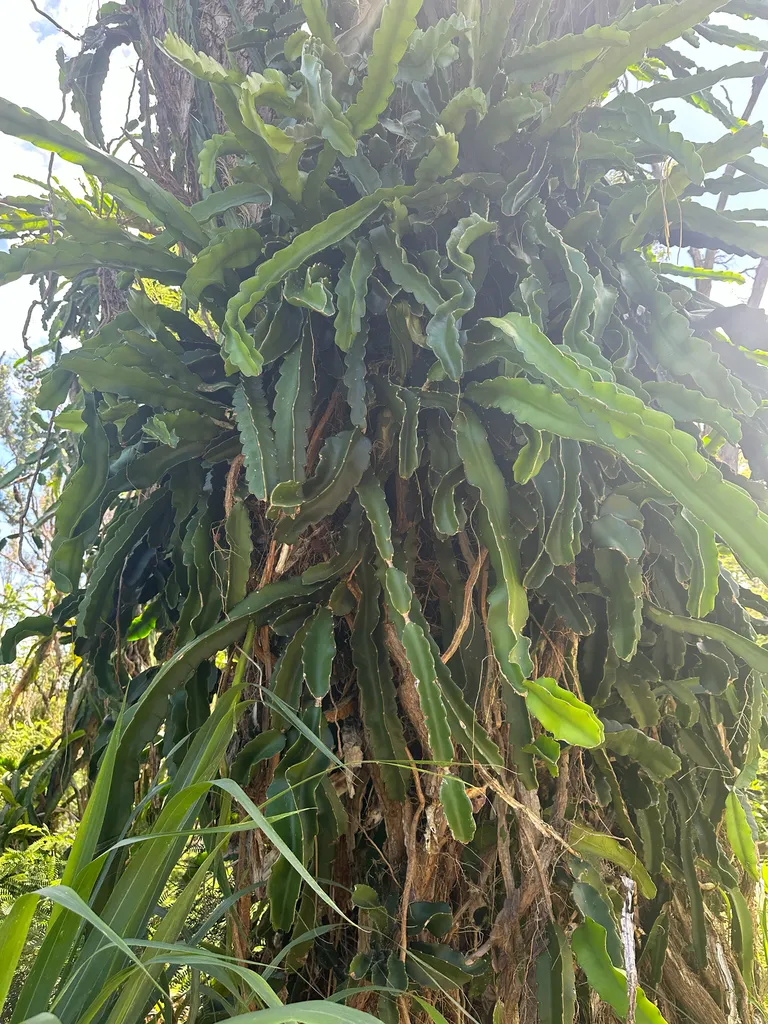
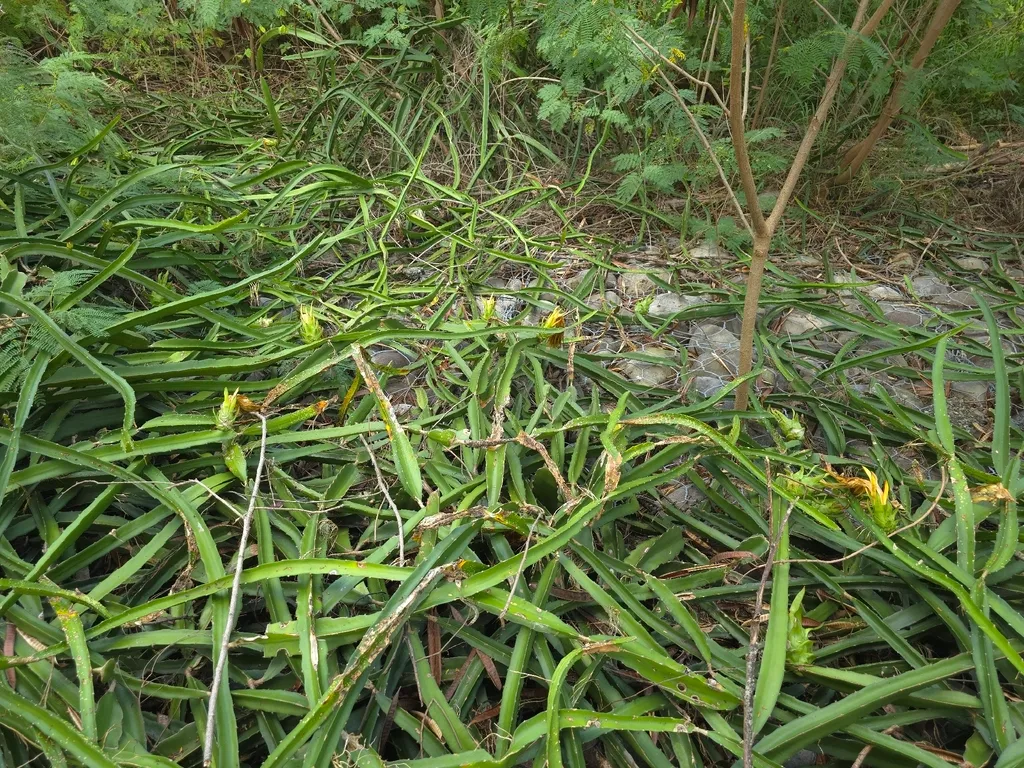
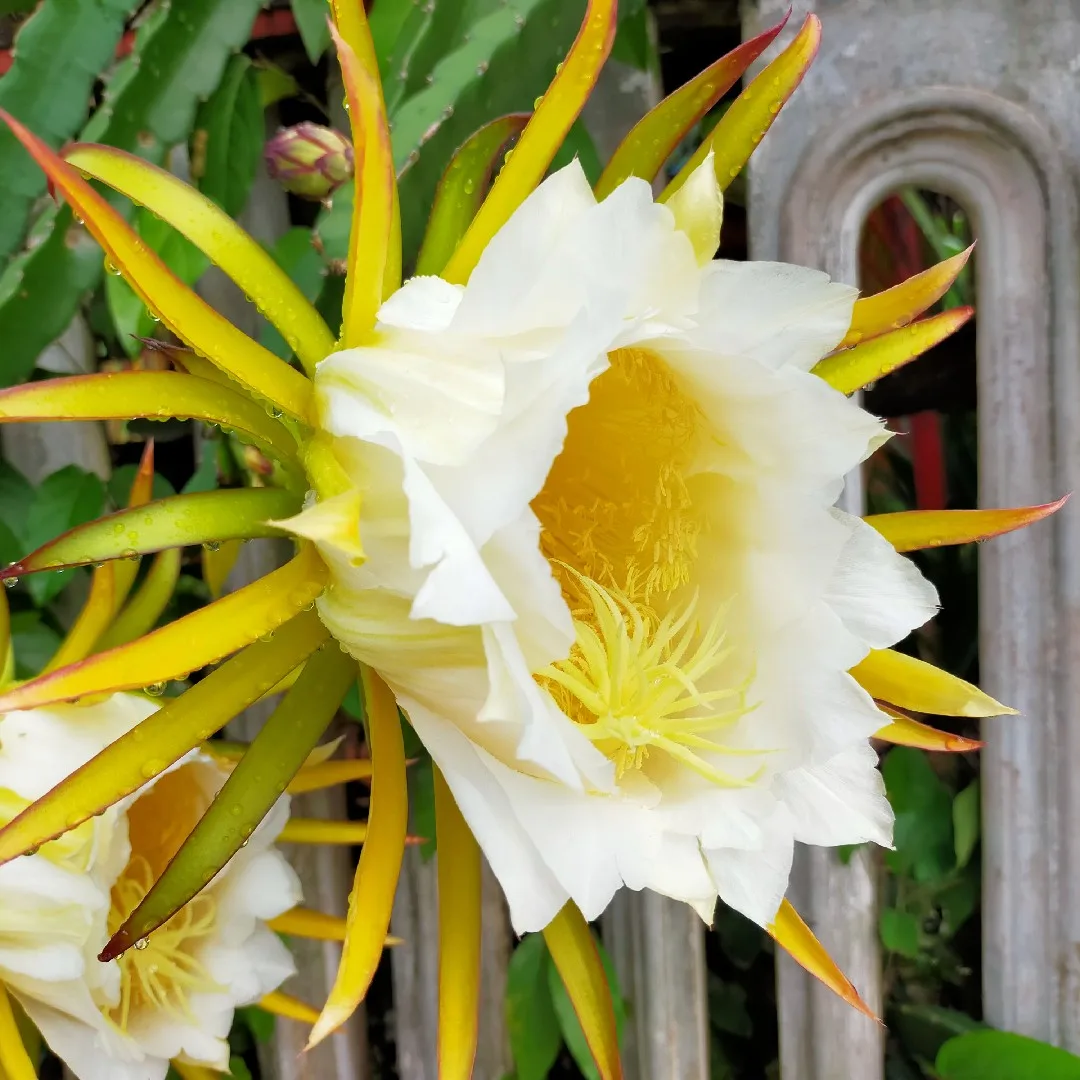
Selenicereus undatus, commonly known as dragon fruit cactus, is a sprawling, climbing cactus with thick, three-angled, jointed stems that produce aerial roots. It is renowned for its spectacular nocturnal flowers, up to 30 cm across, with white petals and numerous yellow stamens, which are often fragrant. The edible fruit, known as dragon fruit or pitaya, is an oval berry with bright red skin and overlapping green scales, containing sweet white or pink flesh dotted with tiny black seeds. This fast-growing epiphytic cactus makes an attractive ornamental for warm climates or conservatories.
Scientific classification
- Species
- Dragon Fruit Cactus (Selenicereus undatus)
- Genus
- Information to be completed
- Family
- Cactaceae
- Non-toxic to humans and pets.
- Toxicity
- Cactus Succulent · Climber · Fruit Edible
- Plant type
- 2 - 4 metres
- Height
- 1 - 2 metres
- Spread
- Evergreen
- Foliage
- Climbing
- Habit
- Summer · Autumn
- Season of interest
- Full sun
- Sunlight
- 20 – 30 °C
- Ideal temperature









Dragon Fruit Cactus pictures
Distribution of Dragon Fruit Cactus
Distribution map
- Native
- Introduced
- Cultivated
Source:WCVP v16 · Royal Botanic Gardens, Kew · CC BY 3.0 · Boundaries:WGSRPD / TDWG
Toxicity
Non-toxic to humans and pets.
Dragon Fruit Cactus care guide
- Water thoroughly when the soil surface is dry to the touch; reduce watering in winter to prevent root rot.
- Watering
- Full sun
- Sunlight
- 20 – 30 °C
- Ideal temperature

Watering
Water thoroughly when the soil surface is dry to the touch; reduce watering in winter to prevent root rot.
Fertilizing
 Fertilizing
Every 2-4 weeks during the growing season with a balanced or high-potassium fertilizer.
Pruning
 Pruning
Prune in late winter or early spring to remove dead, damaged, or overcrowded stems. This encourages new growth and maintains a manageable shape.
Propagation
 Propagation
Propagate by stem cuttings in spring. Select a healthy segment 20-30 cm long, allow the cut end to callus for 3-5 days in a dry, shaded place, then insert into well-drained cactus compost. Keep warm (20-25°C) and lightly moist until roots develop, which usually takes 2-4 weeks.
Growing
 Growing
Grow in a warm, sunny position with well-drained, slightly acidic soil. Water regularly during the growing season but allow the compost to dry out between waterings in winter. Provide support such as a trellis for climbing stems. Feed with a high-potassium fertilizer every 2–4 weeks from spring to autumn. Protect from frost; in cooler climates grow in a heated greenhouse or as a houseplant. Mulch to retain moisture and suppress weeds.
Common pests and diseases
Diseases
Susceptible to root rot if overwatered or grown in poorly drained soil. Anthracnose may also occur, causing dark lesions on stems and fruit. Good air circulation and proper watering minimize these issues.
Pests
Common pests include scale insects, mealybugs, and spider mites. Check regularly and treat with insecticidal soap or neem oil if infestation appears.
Explore the plant health library →




