
chrysanthemum 'Shepherd'
Also known as: Information to be completed
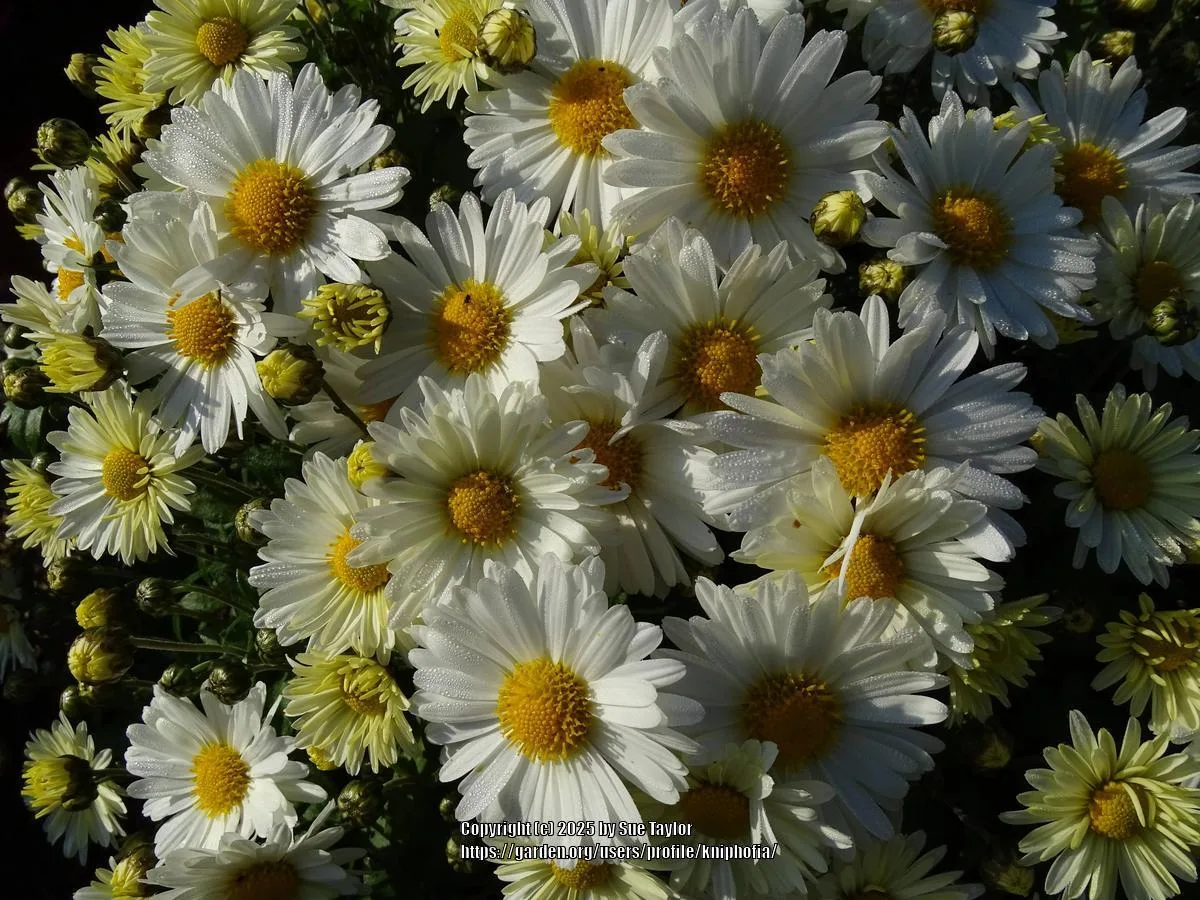
Shepherd' is an upright, mounded cultivar forming a compact dome to around 18cm high. It produces single, daisy-like flowers in autumn with white ray florets, sometimes splashed with pink, surrounding a yellow centre
Scientific classification
- Species
- chrysanthemum 'Shepherd' (Chrysanthemum 'Shepherd')
- Genus
- Chrysanthemum
- Family
- Asteraceae
- Skin allergen. Wear gloves and other protective equipment when handling
- Toxicity
- Conservatory Greenhouse · Herbaceous Perennial
- Plant type
- 0.1-0.5 metres
- Height
- 0.1-0.5 metres
- Spread
- Deciduous
- Foliage
- Bushy
- Habit
- Spring · Summer · Autumn
- Season of interest
- Full sun
- Sunlight
- Information to be completed
- Ideal temperature









chrysanthemum 'Shepherd' pictures
Distribution of chrysanthemum 'Shepherd'
Distribution map
Information to be completed
Information to be completed
Culture
Information to be completed
Toxicity
Skin allergen. Wear gloves and other protective equipment when handling
Quick identification of chrysanthemum 'Shepherd'
Information to be completed
chrysanthemum 'Shepherd' care guide
- Even consistent damp soil, water at base to prevent petal spotting
- Watering
- Full sun
- Sunlight
- Information to be completed
- Ideal temperature

Watering
Even consistent damp soil, water at base to prevent petal spotting
Fertilizing
 Fertilizing
Bloom boosting diluted feed biweekly until autumn frost arrives
Pruning
 Pruning
Pinch out cuttings-raised plants at the start of summer to encourage bushiness
Propagation
 Propagation
Propagate by basal cuttings in early spring
Growing
 Growing
Suited to pot cultivation for flowering outdoors this cultivar is considered half-hardy needing winter protection. Water regularly and feed until flower buds colour up. See chrysanthemum cultivation
People also ask
Information to be completed
Common pests and diseases
Diseases
May be susceptible to glasshouse grey mould, powdery mildews and chrysanthemum white rust
Pests
May be susceptible to chrysanthemum leaf miner, glasshouse whitefly and aphids
Explore the plant health library →




