
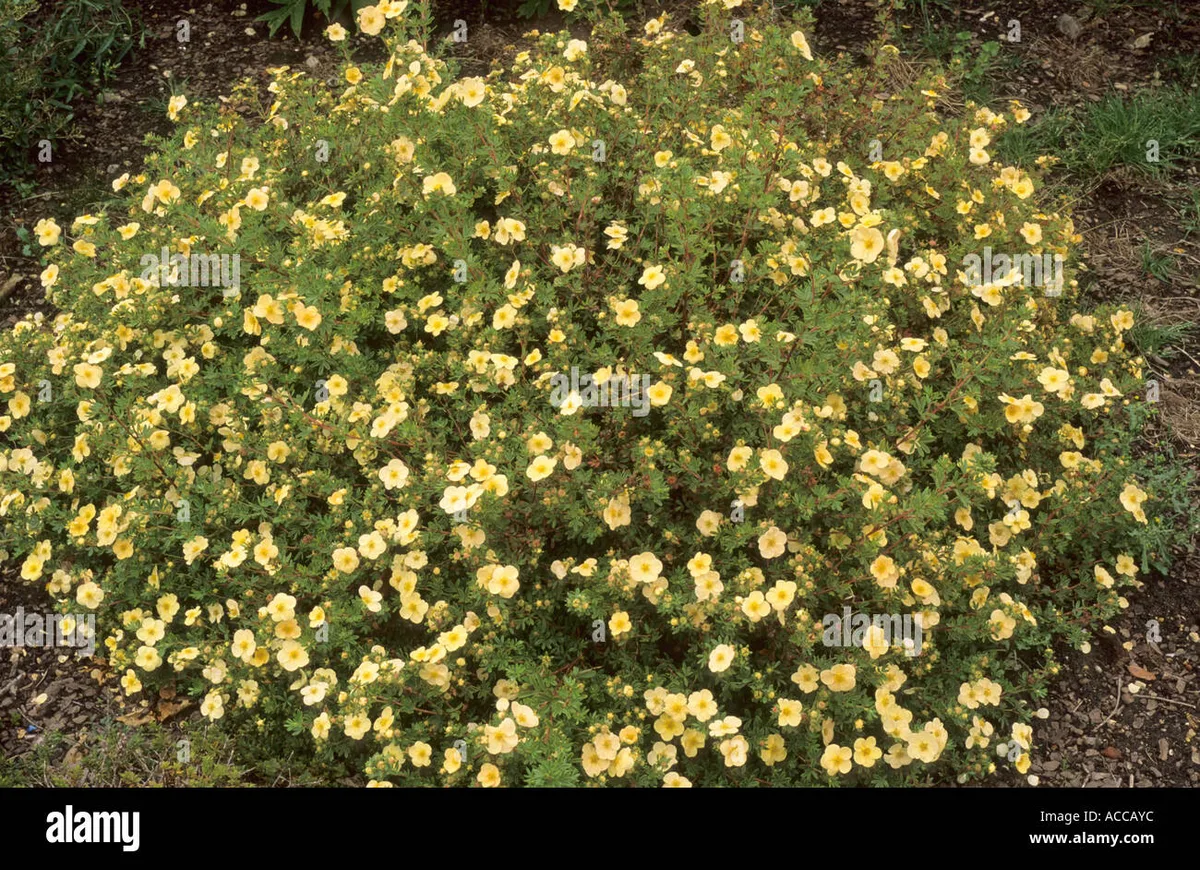
shrubby cinquefoil 'Bewerley Surprise'
Also known as: Information to be completed
A bushy shrub with green foliage divided into 5-7 narrow leaflets and cream or pale yellow flowers flushed with pink from early summer into autumn
Scientific classification
- Species
- shrubby cinquefoil 'Bewerley Surprise' (Potentilla fruticosa 'Bewerley Surprise')
- Genus
- Potentilla
- Family
- Rosaceae
- Order
- Rosales
- Class
- Magnoliopsida
- Phylum
- Magnoliophyta
- Fruit are ornamental - not to be eaten. Wear gloves and other protective equipment when handling
- Toxicity
- Shrubs
- Plant type
- 0.5-1 metres
- Height
- 0.5-1 metres
- Spread
- Deciduous
- Foliage
- Bushy
- Habit
- Spring · Summer · Autumn
- Season of interest
- Full sun · Partial shade
- Sunlight
- Information to be completed
- Ideal temperature









shrubby cinquefoil 'Bewerley Surprise' pictures
Distribution of shrubby cinquefoil 'Bewerley Surprise'
Distribution map
- Native
- Introduced
- Cultivated
Source:WCVP v16 · Royal Botanic Gardens, Kew · CC BY 3.0 · Boundaries:WGSRPD / TDWG
Toxicity
Fruit are ornamental - not to be eaten. Wear gloves and other protective equipment when handling
shrubby cinquefoil 'Bewerley Surprise' care guide
- Water deeply once the top 2–3 cm of soil dries out; tolerant of short dry periods.
- Watering
- Full sun · Partial shade
- Sunlight

Watering
Water deeply once the top 2–3 cm of soil dries out; tolerant of short dry periods.
Fertilizing
 Fertilizing
Apply a slow-release balanced fertilizer in early spring, and again in summer.
Pruning
 Pruning
Shorten flowered shoots to about 1.5–2.5 cm from the previous year's growth. If flowering is on last year's growth, prune after flowering; if on current-year growth, prune the following early to mid-spring.
Propagation
 Propagation
Propagate by softwood cuttings
Growing
 Growing
Easy to grow in most soils but flowers fade more rapidly in full sun and last longer in moist soils
Common pests and diseases
Diseases
May sometimes be susceptible to honey fungus
Pests
Generally trouble free
Explore the plant health library →




