
purple meadow rue
Also known as: Information to be completed
T. dasycarpum produces upright purple stems to 2m tall withlacy mid-green leaves; nodding flowers ofpurplish-white have showy yellowstamens and areborne in early summer
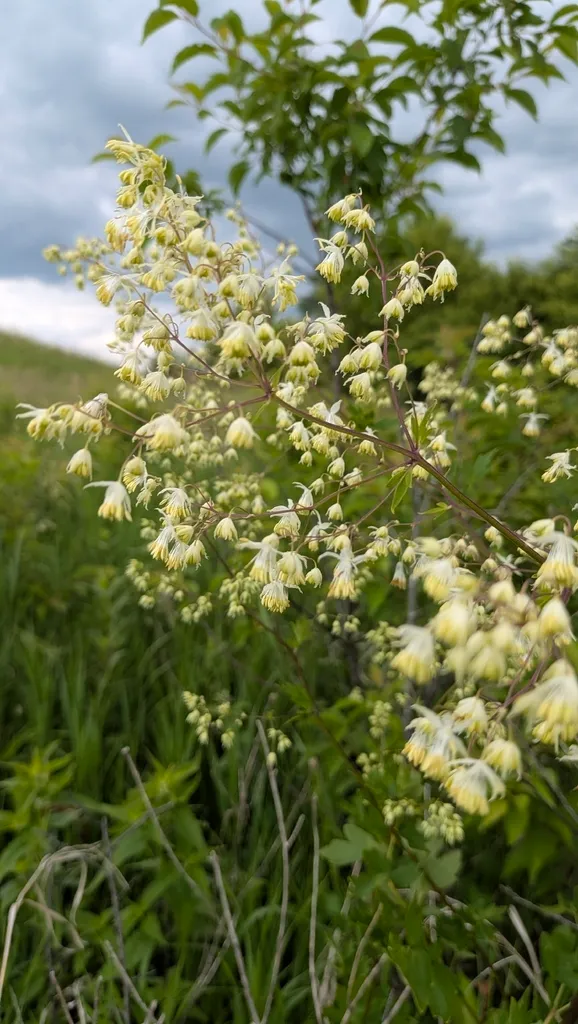
Scientific classification
- Species
- purple meadow rue (Thalictrum dasycarpum)
- Genus
- Thalictrum
- Family
- Ranunculaceae
- Order
- Ranunculales
- Class
- Magnoliopsida
- Phylum
- Magnoliophyta
- Contact with foliage may irritate skin. Wear gloves and other protective equipment when handling
- Toxicity
- Herbaceous Perennial
- Plant type
- 1.5-2.5 metres
- Height
- 0.5-1 metres
- Spread
- Deciduous
- Foliage
- Columnar upright
- Habit
- Spring · Summer · Autumn
- Season of interest
- Full sun · Partial shade
- Sunlight
- Information to be completed
- Ideal temperature









purple meadow rue pictures
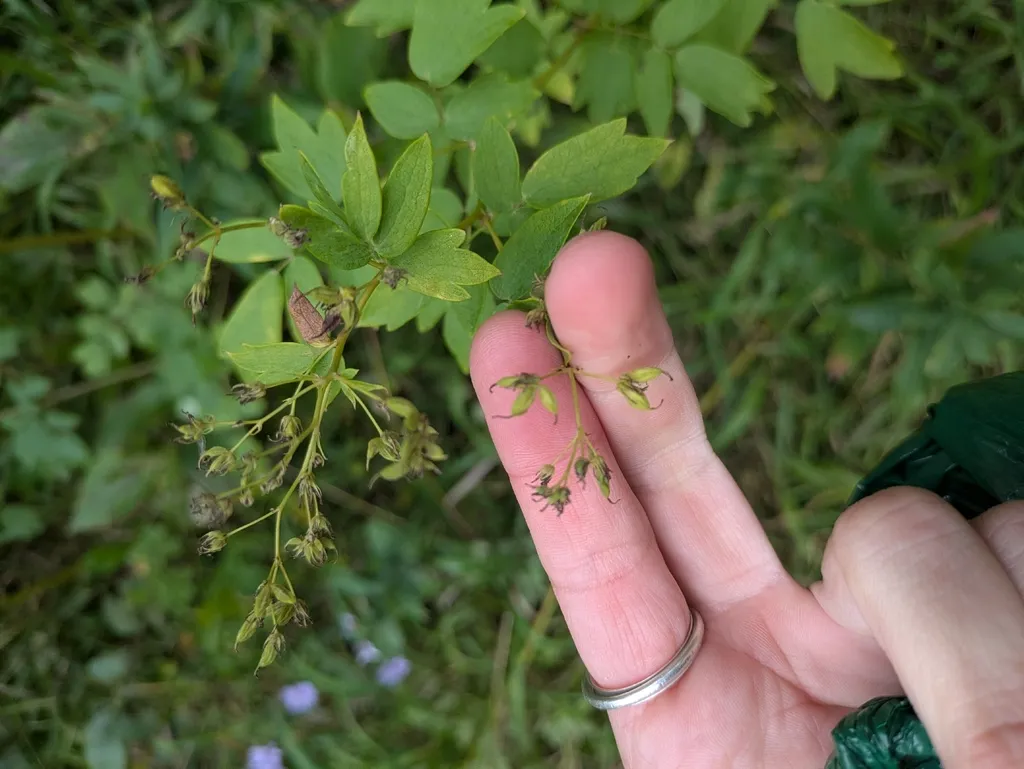
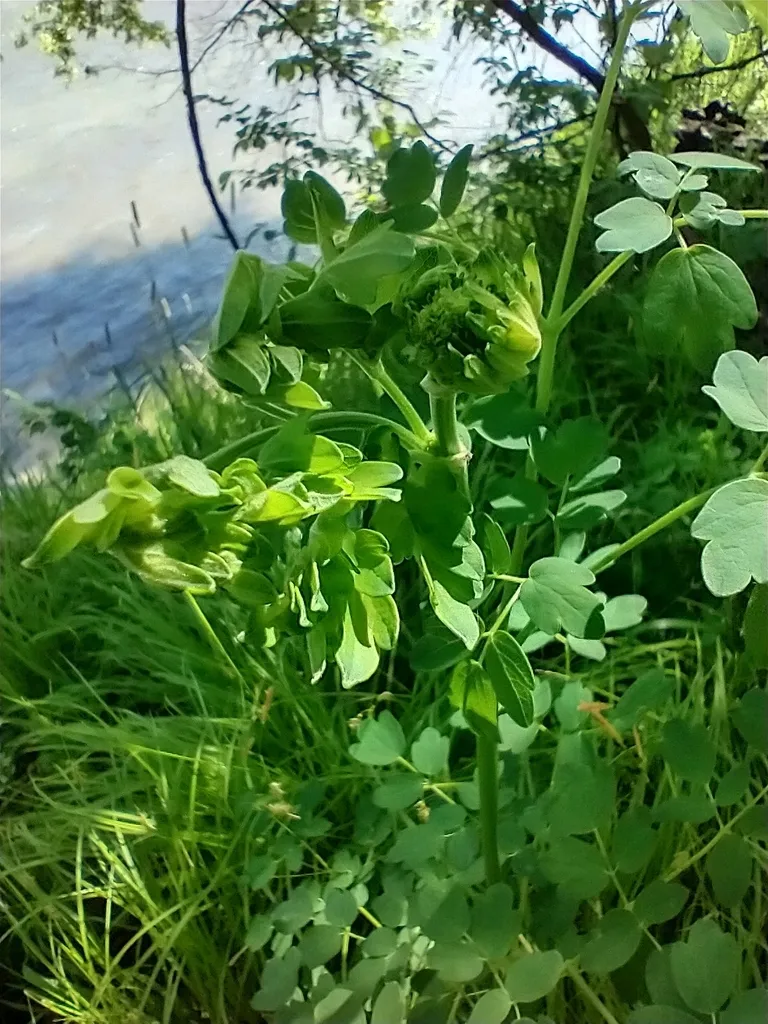
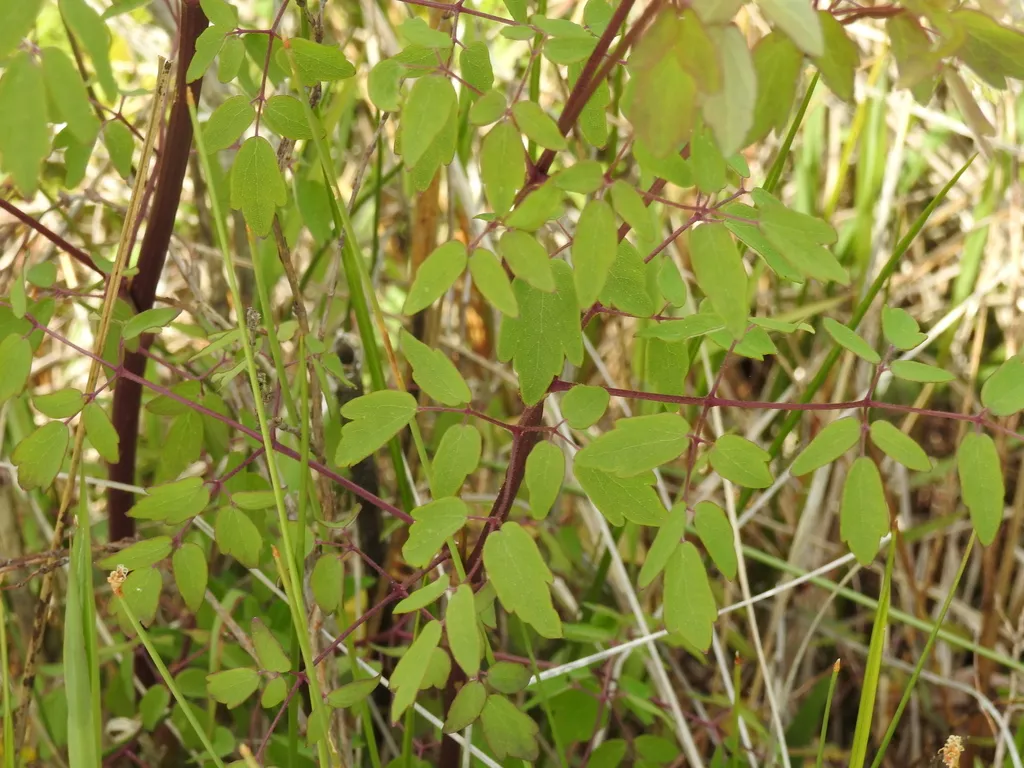
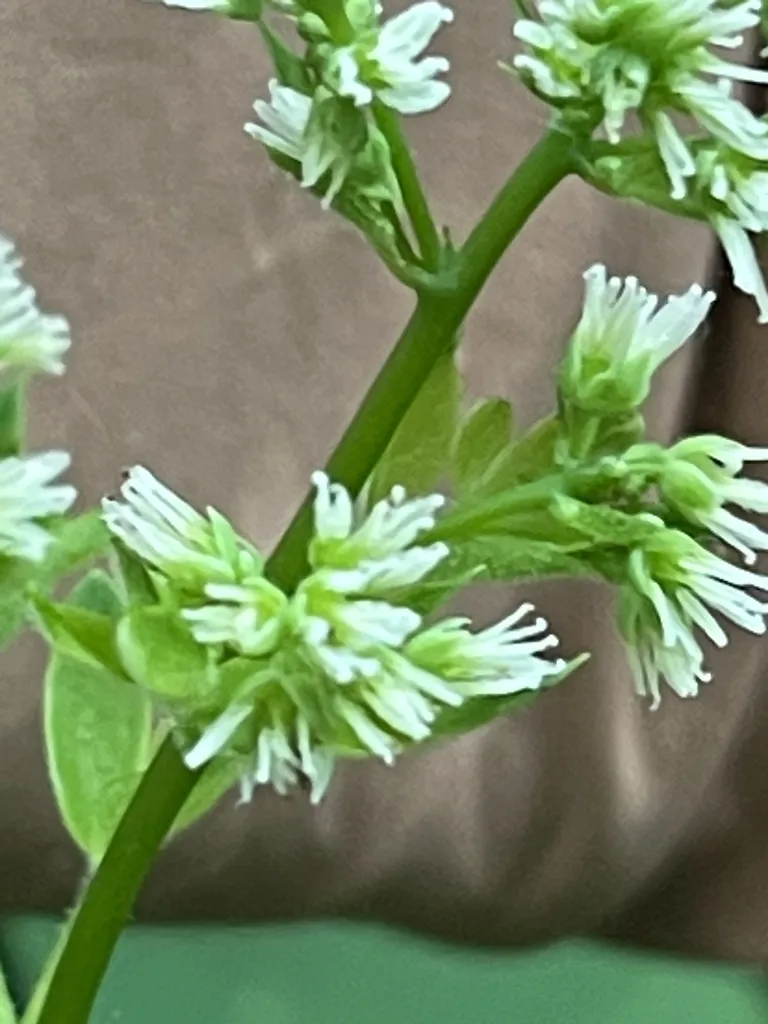
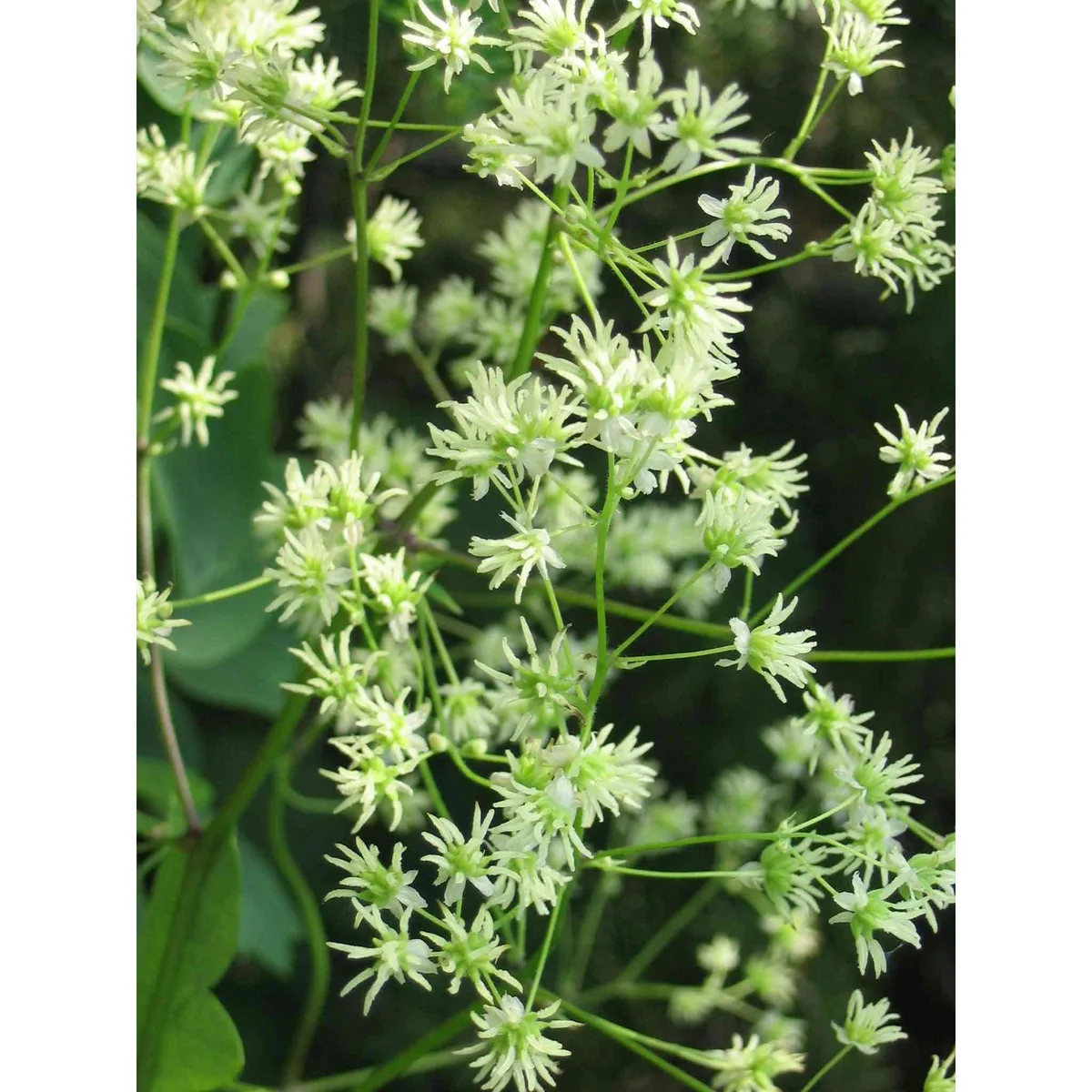
Distribution of purple meadow rue
Distribution map
- Native
- Introduced
- Cultivated
Source:WCVP v16 · Royal Botanic Gardens, Kew · CC BY 3.0 · Boundaries:WGSRPD / TDWG
Toxicity
Contact with foliage may irritate skin. Wear gloves and other protective equipment when handling
purple meadow rue care guide
- Moderate regular watering, allowing brief slight drying between soakings
- Watering
- Full sun · Partial shade
- Sunlight

Watering
Moderate regular watering, allowing brief slight drying between soakings
Fertilizing
 Fertilizing
Balanced perennial feed every four weeks from spring through summer
Pruning
 Pruning
Cut down stems once flowering is over
Propagation
 Propagation
Propagate by seed in pots in a cold frame as soon as seed is ripe or in early spring. Propagate by division in spring as new growth begins
Growing
 Growing
Grow in moist, humus-rich soil in partial shade; may need staking in fertile conditions. See staking perennials for further advice.
Common pests and diseases
Diseases
Susceptible to powdery mildews in dry conditions
Pests
Slugs may be a problem
Explore the plant health library →




