
Thamnochortus insignis
Also known as: Information to be completed
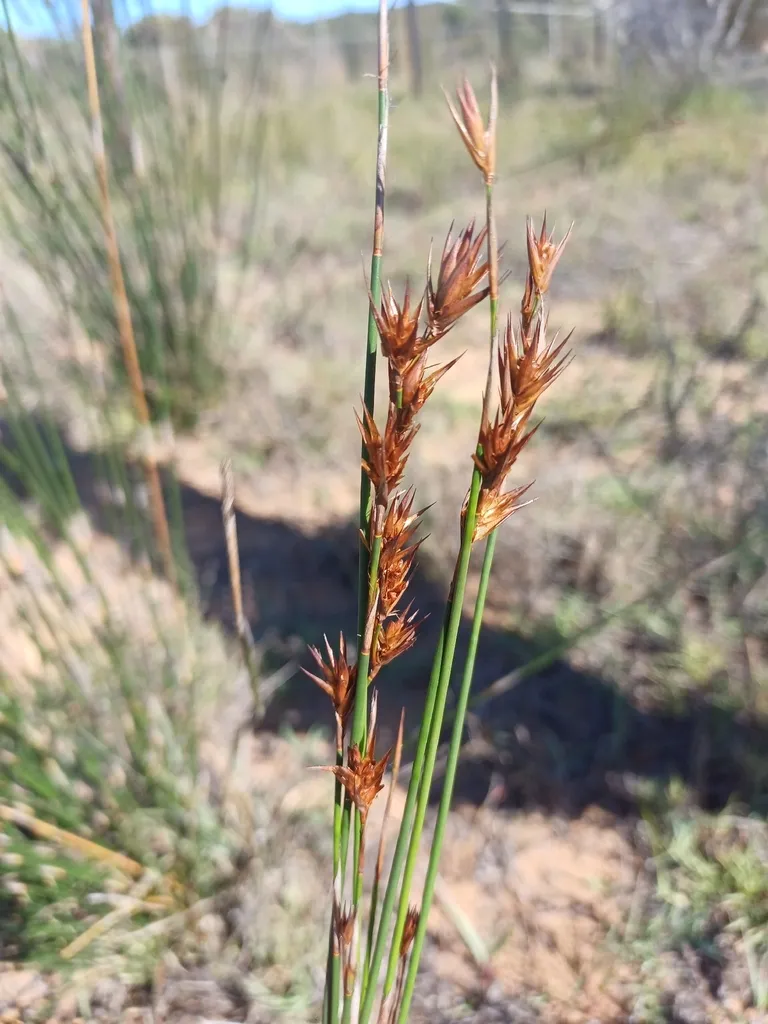
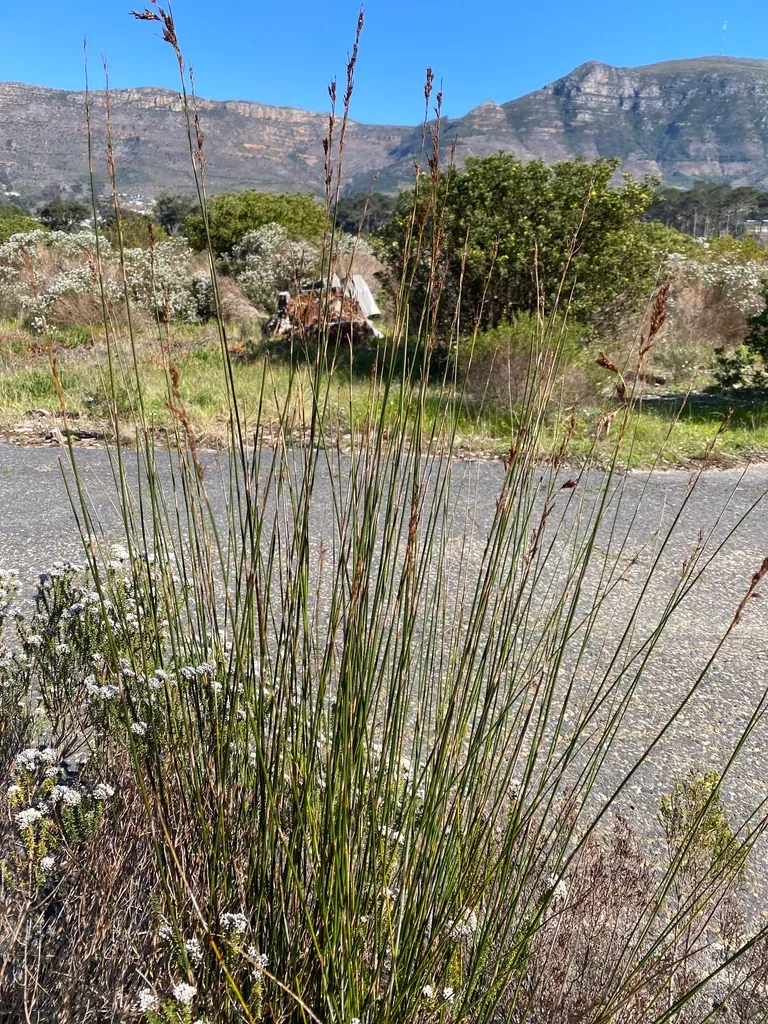
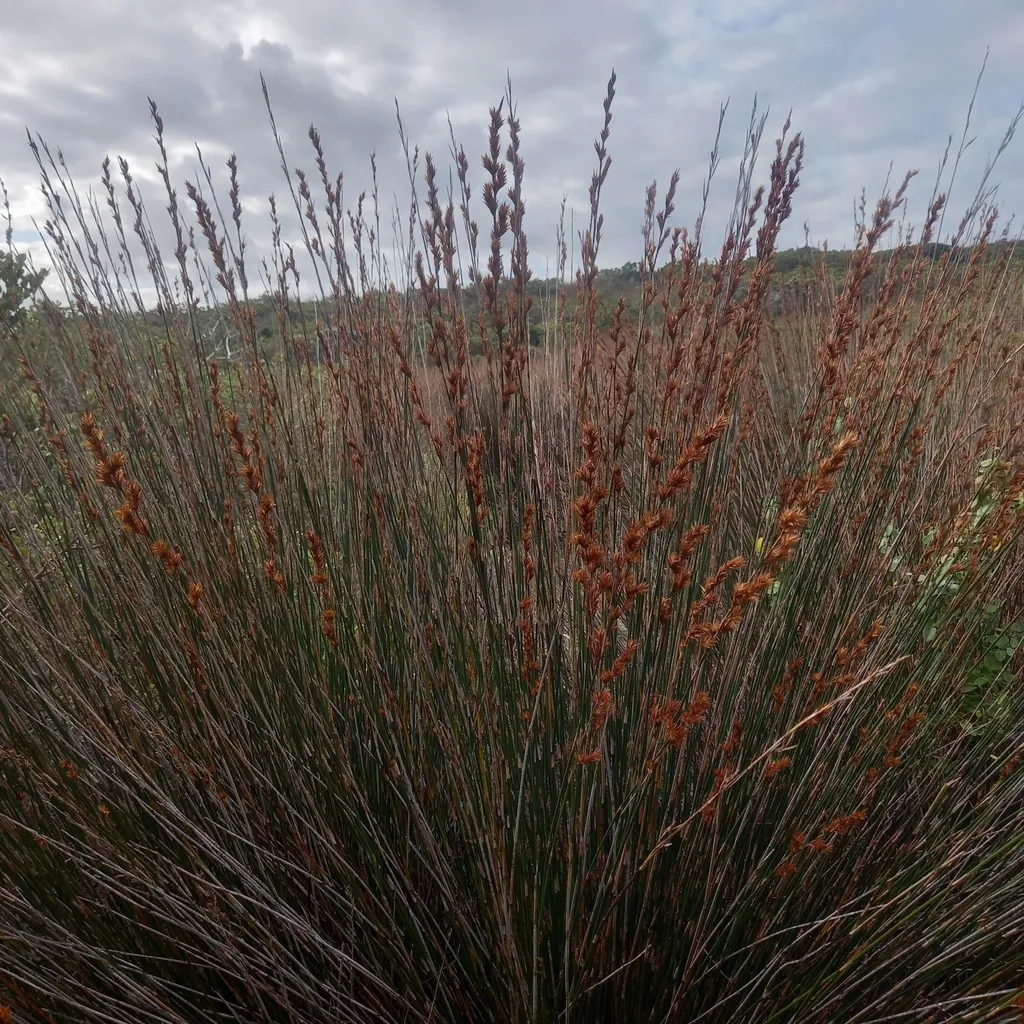
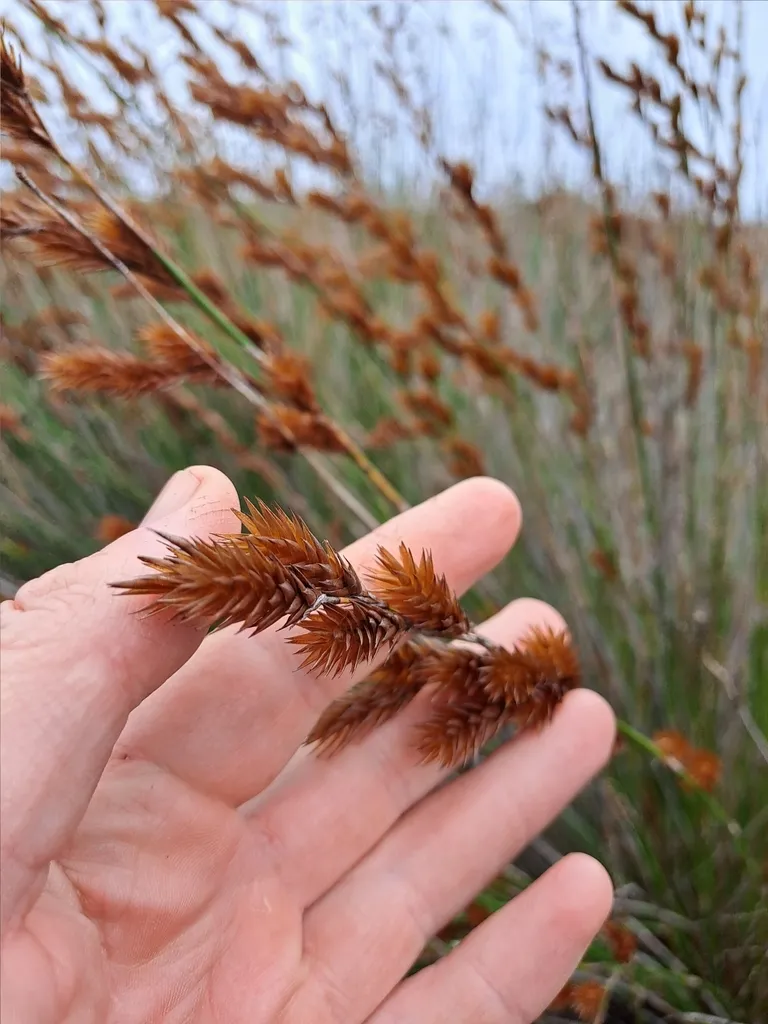
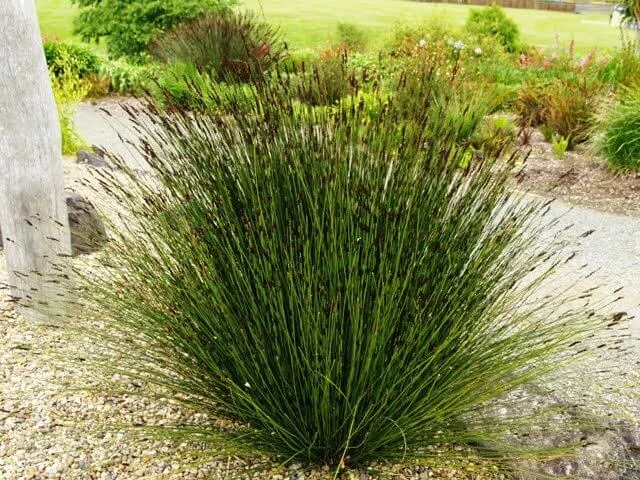
Tufted, evergreen perennial about 1.5m tall, with unbranched, smooth, dark green canes (culms) growing from vigorous rhizomes. Upright, grassy, mid-brown female spikelets and pendent mid-brown spikelets, in flowerheads, the florets 2-3mm wide and long, are produced in midsummer on separate plants
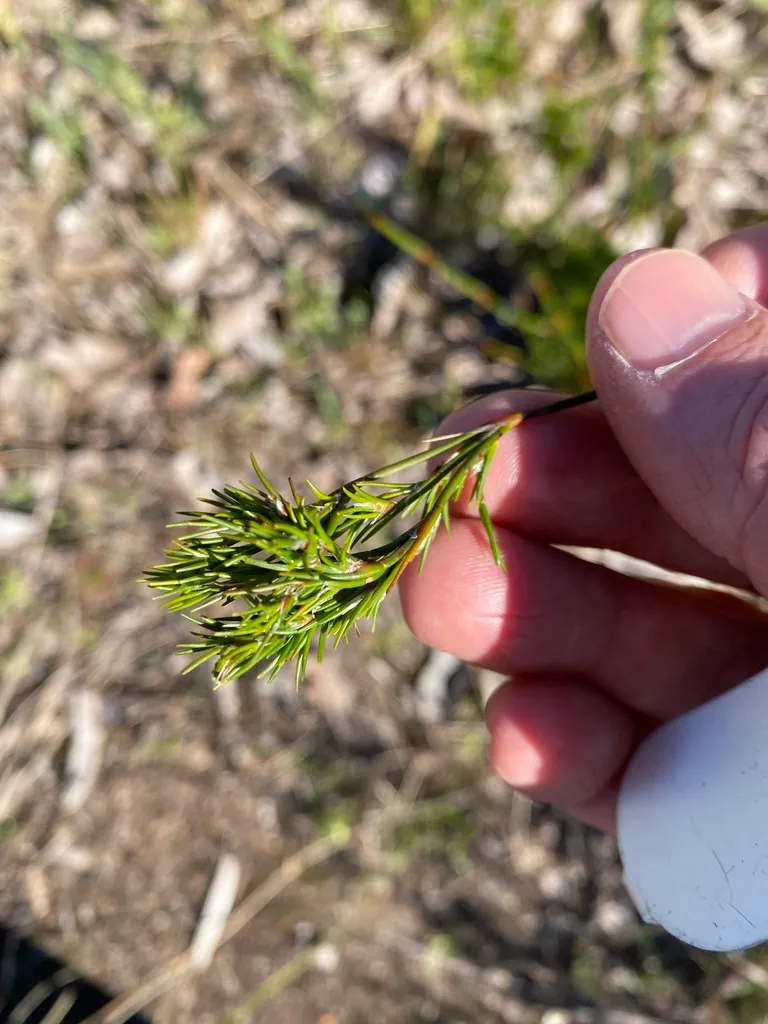
Scientific classification
- Species
- Thamnochortus insignis (Thamnochortus insignis)
- Genus
- Thamnochortus
- Family
- Restionaceae
- Information to be completed
- Toxicity
- Herbaceous Perennial · Grass Like
- Plant type
- 1-1.5 metres
- Height
- 1.5-2.5 metres
- Spread
- Evergreen
- Foliage
- Tufted
- Habit
- Spring · Summer · Autumn · Winter
- Season of interest
- Full sun
- Sunlight
- Information to be completed
- Ideal temperature









Thamnochortus insignis pictures
Distribution of Thamnochortus insignis
Distribution map
Southern Africa (Cape)
Information to be completed
Culture
Information to be completed
Toxicity
Information to be completed
Quick identification of Thamnochortus insignis
Information to be completed
Thamnochortus insignis care guide
- Moderate regular watering, avoid prolonged drought or waterlogging
- Watering
- Full sun
- Sunlight
- Information to be completed
- Ideal temperature

Watering
Moderate regular watering, avoid prolonged drought or waterlogging
Fertilizing
 Fertilizing
Balanced feed in spring and light repeat in growth season
Pruning
 Pruning
No pruning required
Propagation
 Propagation
Propagate by division of rhizomes in spring
Growing
 Growing
Grow in well-drained acid soil in sun, tolerant of alkaline soils and salt or sand laden winds. Suited to growing in warmer, frost free areas. May be too wide-spreading for greenhouse cultivation
People also ask
Information to be completed
Common pests and diseases
Diseases
Generally disease-free
Pests
Generally pest-free but may be susceptible to glasshouse whitefly and red spider mite if grown under glass
Explore the plant health library →




