
Solanum pseudocapsicum [Variegated]
Also known as: Information to be completed
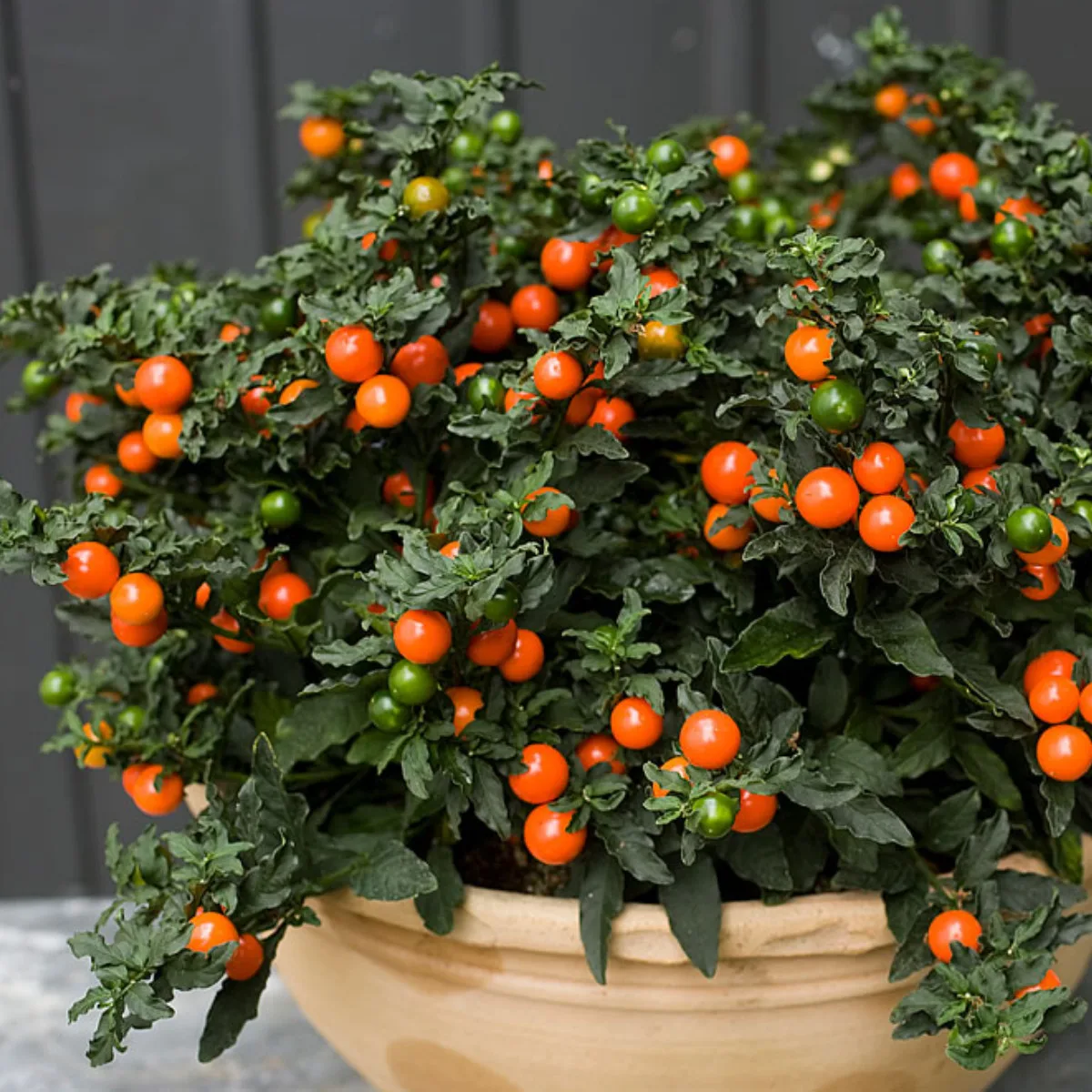
A small ornamental shrub with variegated leaves, green with cream edges. White flowers are followed by poisonous fruits which are initially white with green stripes, ripening to orange. Suitable for container growing. Can be placed outside during summer and kept indoors or in a greenhouse over winter
Scientific classification
- Species
- Solanum pseudocapsicum [Variegated] (Solanum pseudocapsicum [Variegated])
- Genus
- Solanum
- Family
- Solanaceae
- Harmful if eaten. Wear gloves and other protective equipment when handling
- Toxicity
- Conservatory Greenhouse · Houseplants · Shrubs
- Plant type
- 0.1-0.5 metres
- Height
- 0.1-0.5 metres
- Spread
- Evergreen
- Foliage
- Bushy
- Habit
- Spring · Summer · Autumn · Winter
- Season of interest
- Full sun · Partial shade
- Sunlight
- Information to be completed
- Ideal temperature









Solanum pseudocapsicum [Variegated] pictures
Distribution of Solanum pseudocapsicum [Variegated]
Distribution map
Information to be completed
Information to be completed
Culture
Information to be completed
Toxicity
Harmful if eaten. Wear gloves and other protective equipment when handling
Quick identification of Solanum pseudocapsicum [Variegated]
Information to be completed
Solanum pseudocapsicum [Variegated] care guide
- Keep moisture even through flowering and fruiting, avoiding hard dry swings
- Watering
- Full sun · Partial shade
- Sunlight
- Information to be completed
- Ideal temperature

Watering
Keep moisture even through flowering and fruiting, avoiding hard dry swings
Fertilizing
 Fertilizing
Tomato or pepper feed every one to two weeks in fruiting season
Pruning
 Pruning
No regular pruning required
Propagation
 Propagation
Propagate by semi-ripe cuttings
Growing
 Growing
Can be grown outside during summer. May survive outside during winter in mild areas in sheltered gardens but will perform better if taken into a cool conservatory or greenhouse. Needs a bright, sunny position to flower well, but may need moving out of direct sunlight in summer to avoid sun scorch on leaves
People also ask
Information to be completed
Common pests and diseases
Diseases
May be susceptible to honey fungus (rarely)
Pests
May be susceptible to aphids and glasshouse red spider mite
Explore the plant health library →




