
nemesia white
Also known as: Information to be completed
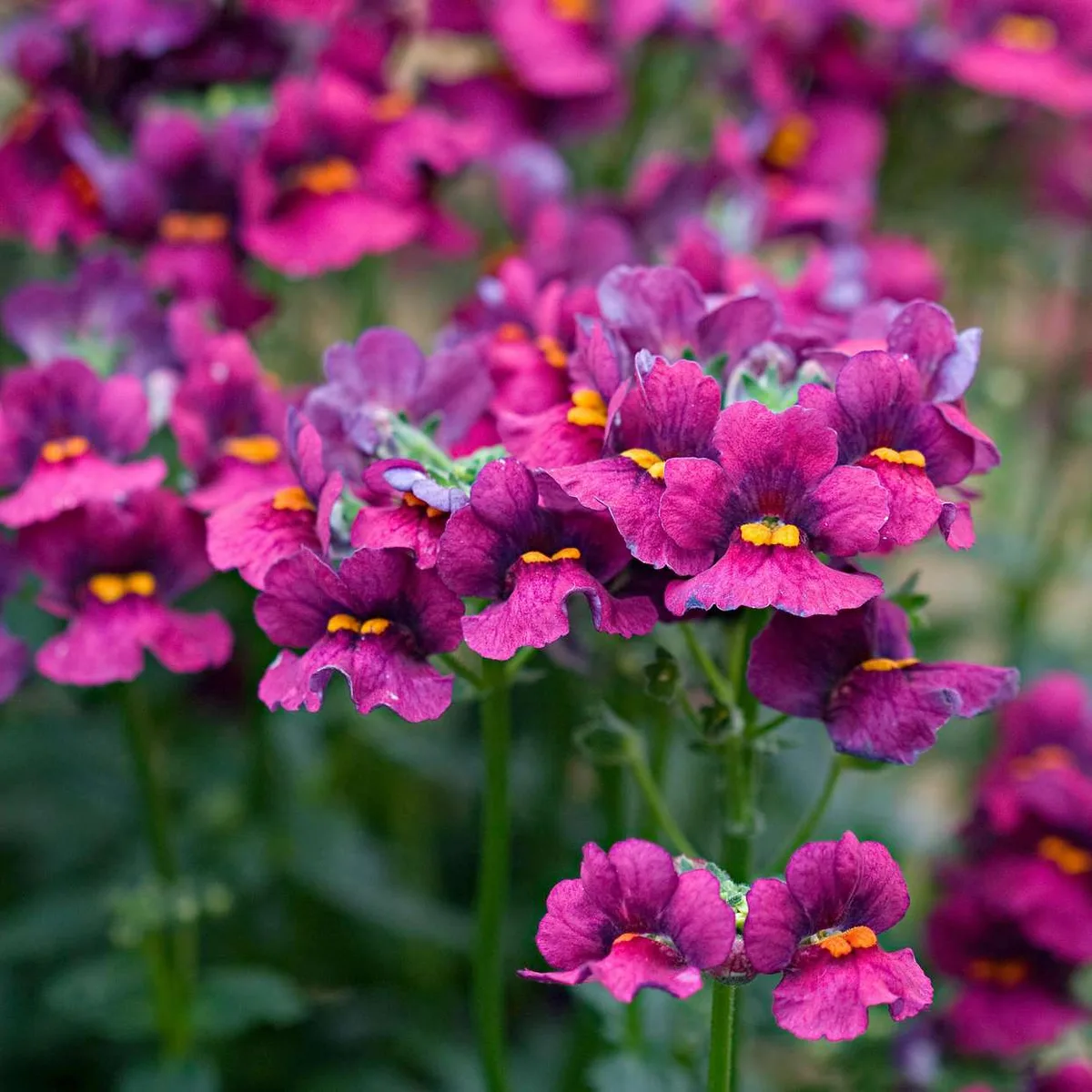
A robust and compact, bushy, half-hardy perennial. Has small lance-shaped, toothed dark green green leaves and terminal racemes of scented two-lipped tubular white flowers with a soft yellow protuberance in the centre from late spring to early autumn.
Scientific classification
- Species
- nemesia white (Nemesia [White])
- Genus
- Nemesia
- Family
- Scrophulariaceae
- Information to be completed
- Toxicity
- Annual Biennial · Herbaceous Perennial
- Plant type
- 0.1-0.5 metres
- Height
- 0.1-0.5 metres
- Spread
- Deciduous
- Foliage
- Bushy
- Habit
- Spring · Summer · Autumn
- Season of interest
- Full sun · Partial shade
- Sunlight
- Information to be completed
- Ideal temperature









nemesia white pictures
Distribution of nemesia white
Distribution map
Information to be completed
Information to be completed
Culture
Information to be completed
Toxicity
Information to be completed
Quick identification of nemesia white
Information to be completed
nemesia white care guide
- Keep compost lightly moist, never fully drying out while blooming
- Watering
- Full sun · Partial shade
- Sunlight
- Information to be completed
- Ideal temperature

Watering
Keep compost lightly moist, never fully drying out while blooming
Fertilizing
 Fertilizing
Weak flowering feed every two to three weeks in active bloom
Pruning
 Pruning
Pinch out growing tips to produce a bushier plant. Cut back in summer for a second flush of flowering, alternatively trim off spent flowers to promote continuous flowering
Propagation
 Propagation
Propagate by seed and softwood cuttings in spring or late summer
Growing
 Growing
Will grow well in moist but well-drained, fertile, slightly acidic soil in full sun. Partial afternoon shade will make flowers last longer. If growing in containers add one application of slow release fertilizer to encourage steadier performance. Overwinter in a greenhouse or in a frost free environment
People also ask
Information to be completed
Common pests and diseases
Diseases
Generally disease free but may be susceptible to root and foot rot in very wet conditions
Pests
Generally pest-free but may be susceptible to aphids
Explore the plant health library →




