
Abyssinian gladiolus
Also known as: Information to be completed
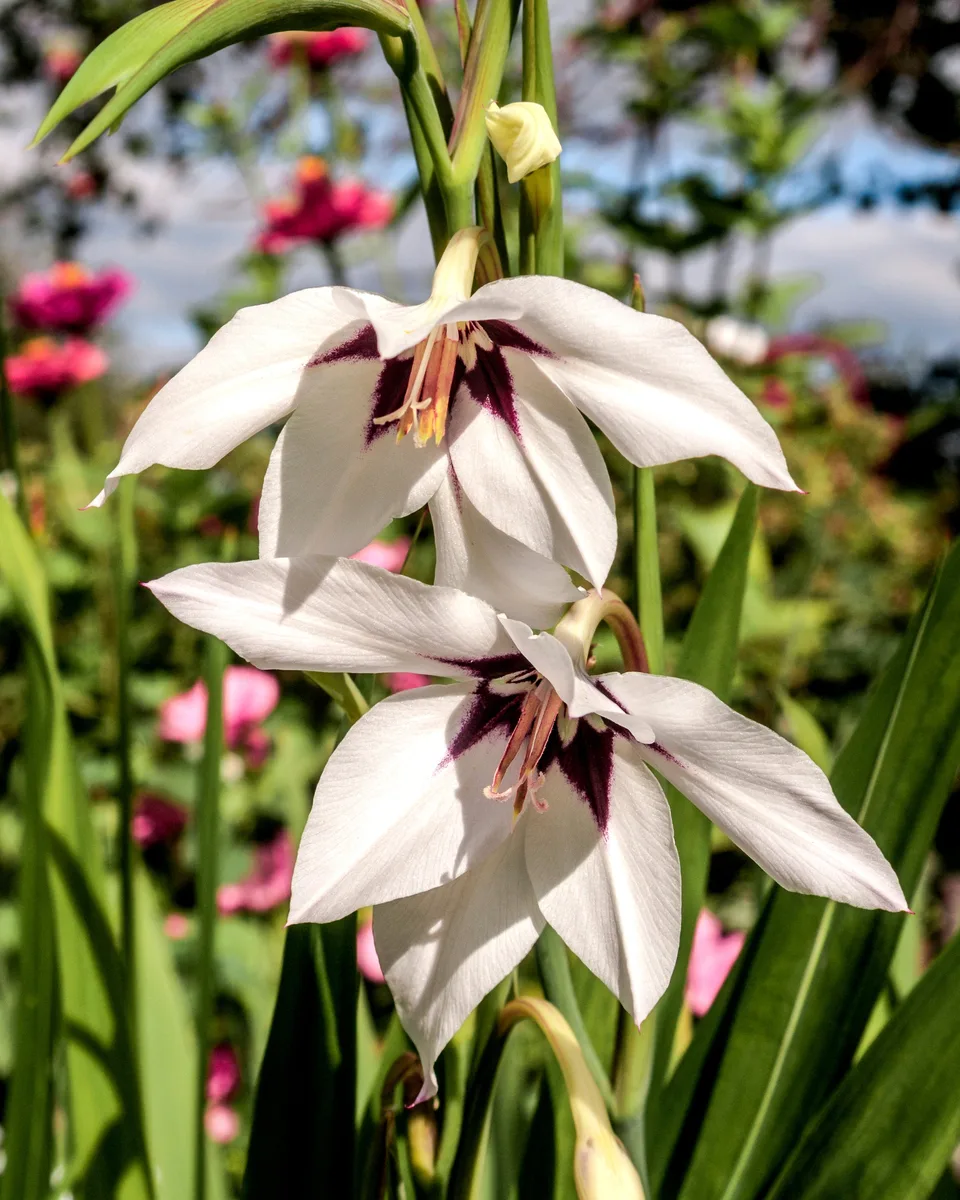
A perennial to 1m, with long grassy leaves and erect stems each bearing several fragrant, hooded white flowers 5cm in width, carried on arching, slender tubes and prominently blotched purple in throat
Scientific classification
- Species
- Abyssinian gladiolus (Gladiolus murielae)
- Genus
- Gladiolus
- Family
- Iridaceae
- Ornamental bulbs, not to be eaten. Wear gloves and other protective equipment when handling]
- Toxicity
- Bulbs
- Plant type
- 0.5-1 metres
- Height
- 0-0.1 metre
- Spread
- Deciduous
- Foliage
- Columnar upright
- Habit
- Spring · Summer
- Season of interest
- Full sun
- Sunlight
- Information to be completed
- Ideal temperature









Abyssinian gladiolus pictures
Distribution of Abyssinian gladiolus
Distribution map
East Africa
Information to be completed
Culture
Information to be completed
Toxicity
Ornamental bulbs, not to be eaten. Wear gloves and other protective equipment when handling]
Quick identification of Abyssinian gladiolus
Information to be completed
Abyssinian gladiolus care guide
- Moderate regular watering, avoid prolonged drought or waterlogging
- Watering
- Full sun
- Sunlight
- Information to be completed
- Ideal temperature

Watering
Moderate regular watering, avoid prolonged drought or waterlogging
Fertilizing
 Fertilizing
Balanced feed in spring and light repeat in growth season
Pruning
 Pruning
No pruning required
Propagation
 Propagation
Propagate by separating cormlets when dormant
Growing
 Growing
Plant 10 to 16cm deep on a bed of sharp sand in fertile, well-drained soil. Lift when foliage dies back, discard old corms and store new corms in a dry frost-free place until planting in the spring. In milder areas a thick dry winter mulch may suffice
People also ask
Information to be completed
Common pests and diseases
Diseases
May be susceptible to gladiolus corm rot, grey moulds (Botrytis), Fusarium bulb rot, gladiolus core rot, gladiolus dry rot, gladiolus scab and neck rot, fungal leaf spot, and virus diseases
Pests
May be susceptible to gladiolus thrip, aphids and slugs
Explore the plant health library →




