
Organ Mountain glory bush
Also known as: Information to be completed
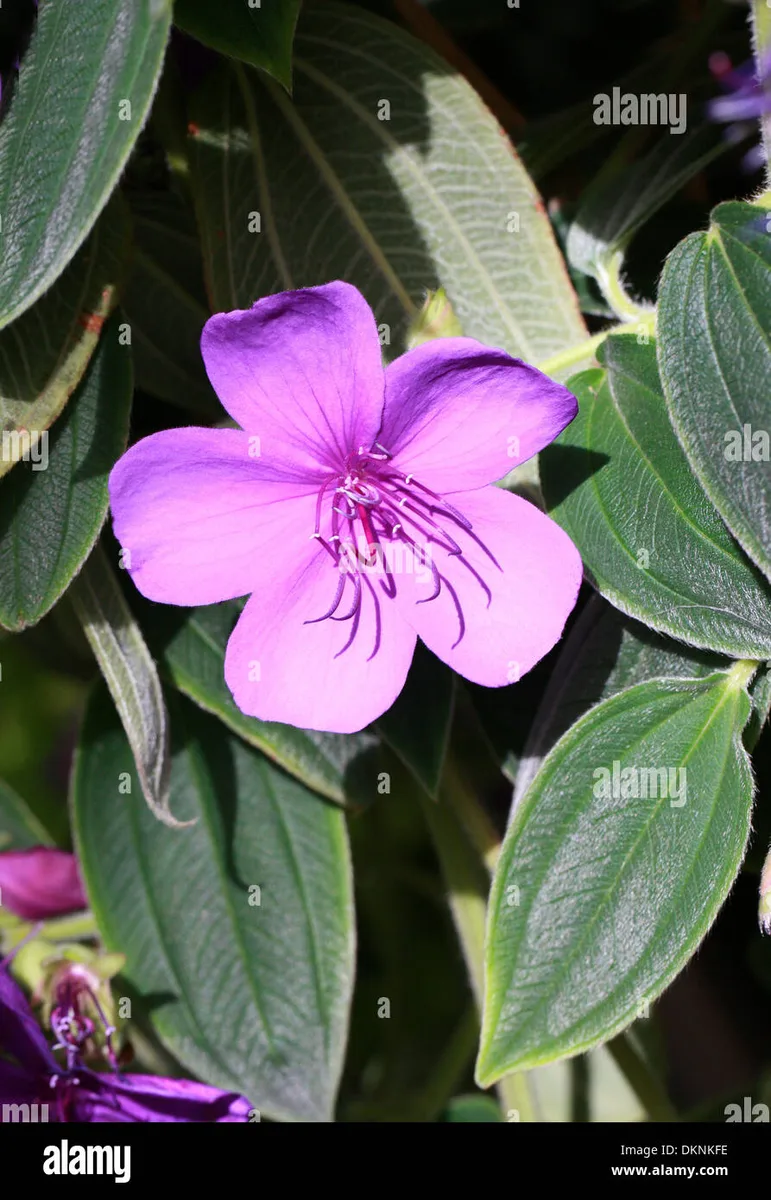
A bushy, evergreen, hairy-stemmed shrub to 5m tall with ovate to oblong, green hairy leaves that may turn shades of red and orange with age. The saucer-shaped, bluish-purple flowers, each to 10cm or more in diameter, are borne in terminal clusters from summer into autumn
Scientific classification
- Species
- Organ Mountain glory bush (Tibouchina organensis)
- Genus
- Tibouchina
- Family
- Melastomataceae
- Order
- Myrtales
- Class
- Magnoliopsida
- Phylum
- Magnoliophyta
- Information to be completed
- Toxicity
- Conservatory Greenhouse · Shrubs
- Plant type
- 4-8 metres
- Height
- 2.5-4 metres
- Spread
- Evergreen
- Foliage
- Bushy
- Habit
- Spring · Summer · Autumn · Winter
- Season of interest
- Full sun
- Sunlight
- Information to be completed
- Ideal temperature









Organ Mountain glory bush pictures
Distribution of Organ Mountain glory bush
Distribution map
- Native
- Introduced
- Cultivated
Source:WCVP v16 · Royal Botanic Gardens, Kew · CC BY 3.0 · Boundaries:WGSRPD / TDWG
Organ Mountain glory bush care guide
- Moderate regular watering, allowing brief slight drying between soakings
- Watering
- Full sun
- Sunlight

Watering
Moderate regular watering, allowing brief slight drying between soakings
Fertilizing
 Fertilizing
Balanced perennial feed every four weeks from spring through summer
Pruning
 Pruning
Prune lightly as needed to remove unwanted shoots and keep the shrub in shape. Prune in mid- to late spring.
Propagation
 Propagation
Propagate by seed sown in spring or by softwood or semi-hardwood cuttings taken in late spring and summer, respectively
Growing
 Growing
Under glass grow in loam-based compost in full light with shade from hot sun. Water freely in summer but keep just moist in winter. Can be grown outdoors in moist, fertile, well drained soil in frost-free area
Common pests and diseases
Diseases
May be affected by oedema under glass
Pests
May be attacked by aphids, mealybugs and glasshouse whitefly
Explore the plant health library →




