
glory bush
Also known as: lasiandra; pleroma; princess flower; purple glory tree
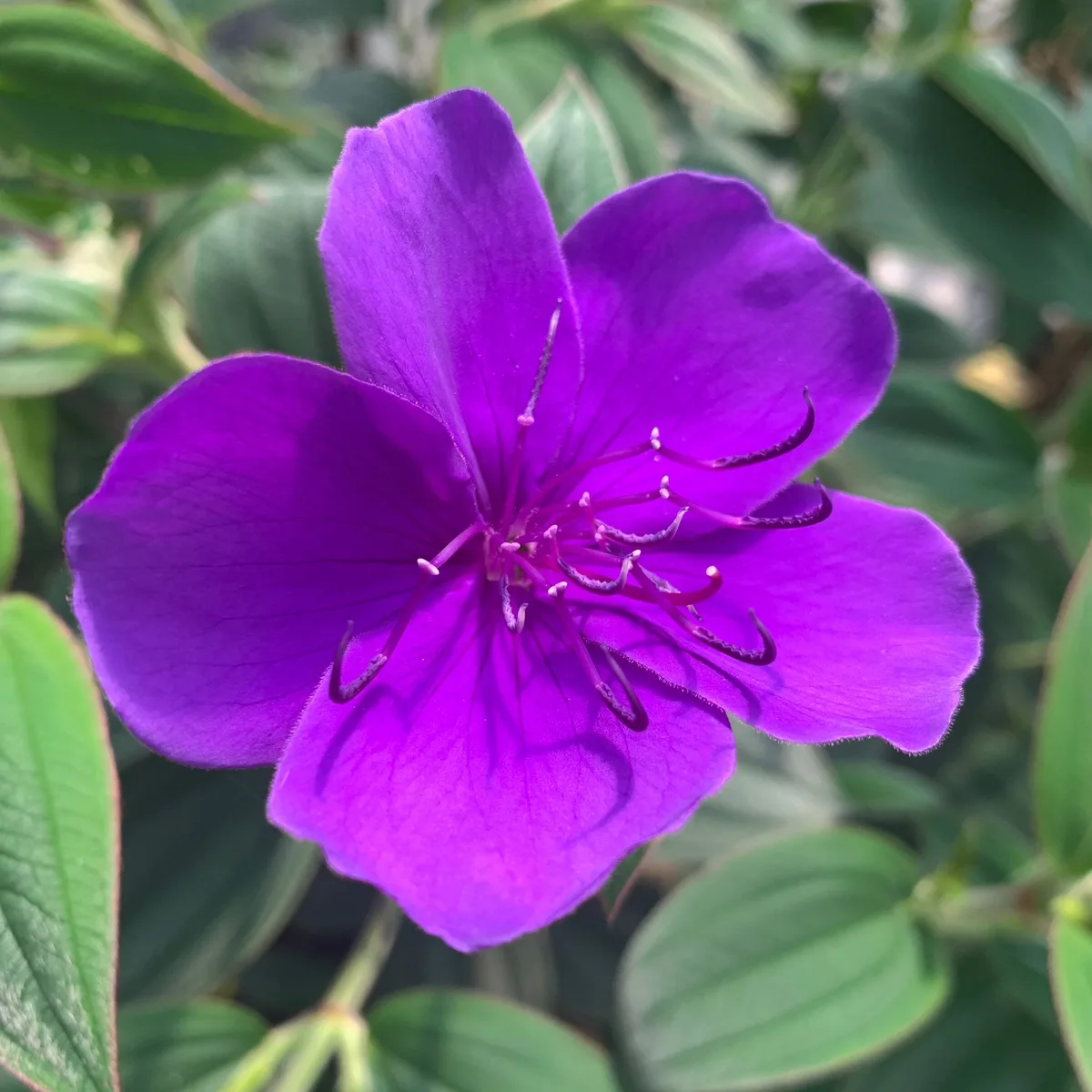
T. urvilleana is a lax evergreen shrub to 4m or more, with elliptic, softly hairy leaves with prominent longitudinal veins and rich violet-purple flowers 6-10cm across, with exserted, blackish stamens
Scientific classification
- Species
- glory bush (Tibouchina urvilleana)
- Genus
- Tibouchina
- Family
- Melastomataceae
- Order
- Myrtales
- Class
- Magnoliopsida
- Phylum
- Magnoliophyta
- Information to be completed
- Toxicity
- Shrubs · Conservatory Greenhouse
- Plant type
- 2.5-4 metres
- Height
- 1.5-2.5 metres
- Spread
- Evergreen
- Foliage
- Bushy
- Habit
- Spring · Summer · Autumn · Winter
- Season of interest
- Full sun
- Sunlight
- Information to be completed
- Ideal temperature









glory bush pictures
Distribution of glory bush
Distribution map
- Native
- Introduced
- Cultivated
Source:WCVP v16 · Royal Botanic Gardens, Kew · CC BY 3.0 · Boundaries:WGSRPD / TDWG
glory bush care guide
- Maintain evenly moist soil, avoid full drying during active blooming phase
- Watering
- Full sun
- Sunlight

Watering
Maintain evenly moist soil, avoid full drying during active blooming phase
Fertilizing
 Fertilizing
Tropical shrub dilute feed every three weeks spring through autumn
Pruning
 Pruning
Prune lightly as needed to remove unwanted shoots and keep the shrub in shape. Prune in mid- to late spring.
Propagation
 Propagation
Propagate by seed sown at 16°C in spring or strike softwood cuttings in late spring and semi-hardwood cuttings in summer, both with bottom heat
Growing
 Growing
Under glass grow in loam-based compost in full light with shade from hot sun. Water freely in summer but keep just moist in winter. Can be grown outdoors in moist, fertile, well drained soil in frost-free area
Common pests and diseases
Diseases
May be affected by oedema under glass
Pests
May be attacked by aphids, mealybugs and glasshouse whitefly
Explore the plant health library →




