
Baptisia australis 'Caspian Blue'
Also known as: Information to be completed
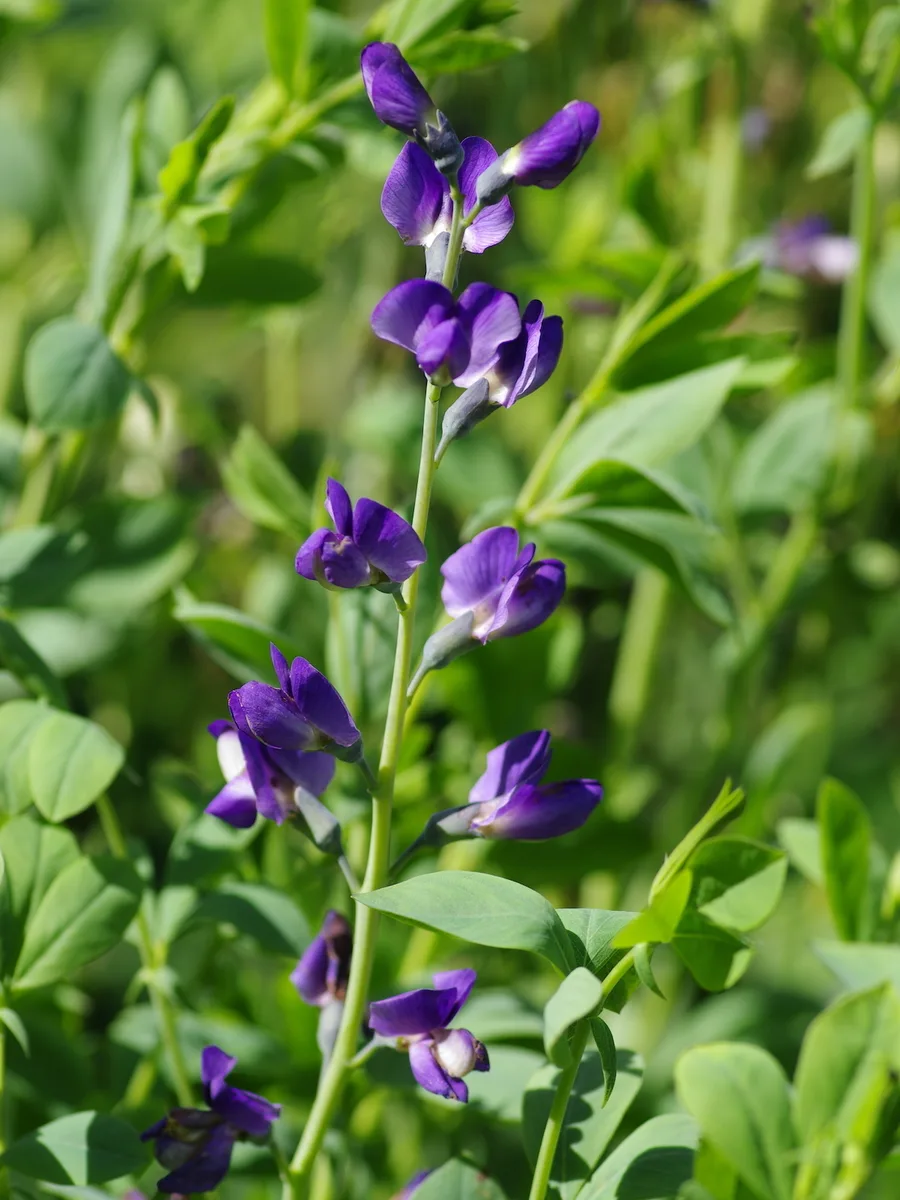
An herbaceous perennial, forming a clump to around 1m high, with upright stems bearing leaves divided into three clover-like leaflets. Tall clusters of deep violet-blue flowers are produced in late spring or early summer, followed by dark grey seed pods
Scientific classification
- Species
- Baptisia australis 'Caspian Blue' (Baptisia australis 'Caspian Blue')
- Genus
- Baptisia
- Family
- Fabaceae
- Order
- Fabales
- Class
- Magnoliopsida
- Phylum
- Magnoliophyta
- Information to be completed
- Toxicity
- Herbaceous Perennial
- Plant type
- 0.5-1 metres
- Height
- 0.1-0.5 metres
- Spread
- Deciduous
- Foliage
- Clump forming
- Habit
- Spring · Summer · Autumn
- Season of interest
- Full sun
- Sunlight
- Information to be completed
- Ideal temperature









Baptisia australis 'Caspian Blue' pictures
Distribution of Baptisia australis 'Caspian Blue'
Distribution map
- Native
- Introduced
- Cultivated
Source:WCVP v16 · Royal Botanic Gardens, Kew · CC BY 3.0 · Boundaries:WGSRPD / TDWG
Baptisia australis 'Caspian Blue' care guide
- Moderate regular watering, avoid prolonged drought or waterlogging
- Watering
- Full sun
- Sunlight

Watering
Moderate regular watering, avoid prolonged drought or waterlogging
Fertilizing
 Fertilizing
Balanced feed in spring and light repeat in growth season
Pruning
 Pruning
No pruning required, though plants can be trimmed back after flowering to maintain a compact shape, unless seed pods are required
Propagation
 Propagation
Propagate by seed or by softwood or semi-ripe cuttings. Plants grown from seed may take a few years to flower
Growing
 Growing
Thrives in deep, well-drained, preferably sandy soil in an open, sunny position. Plants can be slow to establish, and dislike being disturbed, but mature plants have good drought tolerance
Common pests and diseases
Diseases
Generally disease-free
Pests
Generally pest-free
Explore the plant health library →




