
clematis [Alan Bloom]
Also known as: Information to be completed
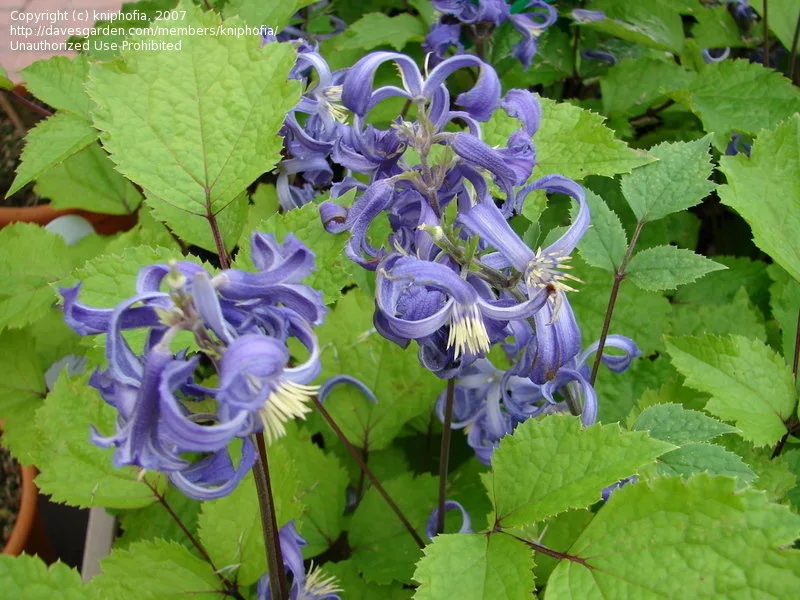
A bushy, non-climbing clematis, with relatively large, mid-green leaves with prominent veins. Clusters of scented, blue-purple, tubular flowers with recurved petals are carried above the foliage on dark stems from mid-summer to early autumn, and followed by fluffy, silvery seedheads
Scientific classification
- Species
- clematis [Alan Bloom] (Clematis tubulosa Alan Bloom ('Alblo'))
- Genus
- Clematis
- Family
- Ranunculaceae
- Order
- Ranunculales
- Class
- Magnoliopsida
- Phylum
- Tracheophyta
- Skin irritant. Wear gloves and other protective equipment when handling
- Toxicity
- Herbaceous Perennial
- Plant type
- 0.5-1 metres
- Height
- 0.5-1 metres
- Spread
- Deciduous
- Foliage
- Bushy
- Habit
- Spring · Summer · Autumn · Winter
- Season of interest
- Full sun
- Sunlight
- Information to be completed
- Ideal temperature









clematis [Alan Bloom] pictures
Toxicity
Skin irritant. Wear gloves and other protective equipment when handling
clematis [Alan Bloom] care guide
- Deep regular watering, keeping roots cool and never chronically dry
- Watering
- Full sun
- Sunlight

Watering
Deep regular watering, keeping roots cool and never chronically dry
Fertilizing
 Fertilizing
Balanced clematis feed monthly in spring, higher potash before bloom
Pruning
 Pruning
Clematis pruning: group three
Propagation
 Propagation
Propagate by division or basal cuttings in spring
Growing
 Growing
Plant with the crown at soil level, in moisture-retentive, well-drained soil in full sun. See clematis cultivation for more advice
Common pests and diseases
Diseases
May be susceptible to honey fungus (rarely), clematis wilt and clematis slime flux
Pests
May be susceptible to aphid, caterpillar, slug and snail damage on young growth; petals may be susceptible to earwigs
Explore the plant health library →




