
saw-toothed azara 'Andes Gold'
Also known as: Information to be completed
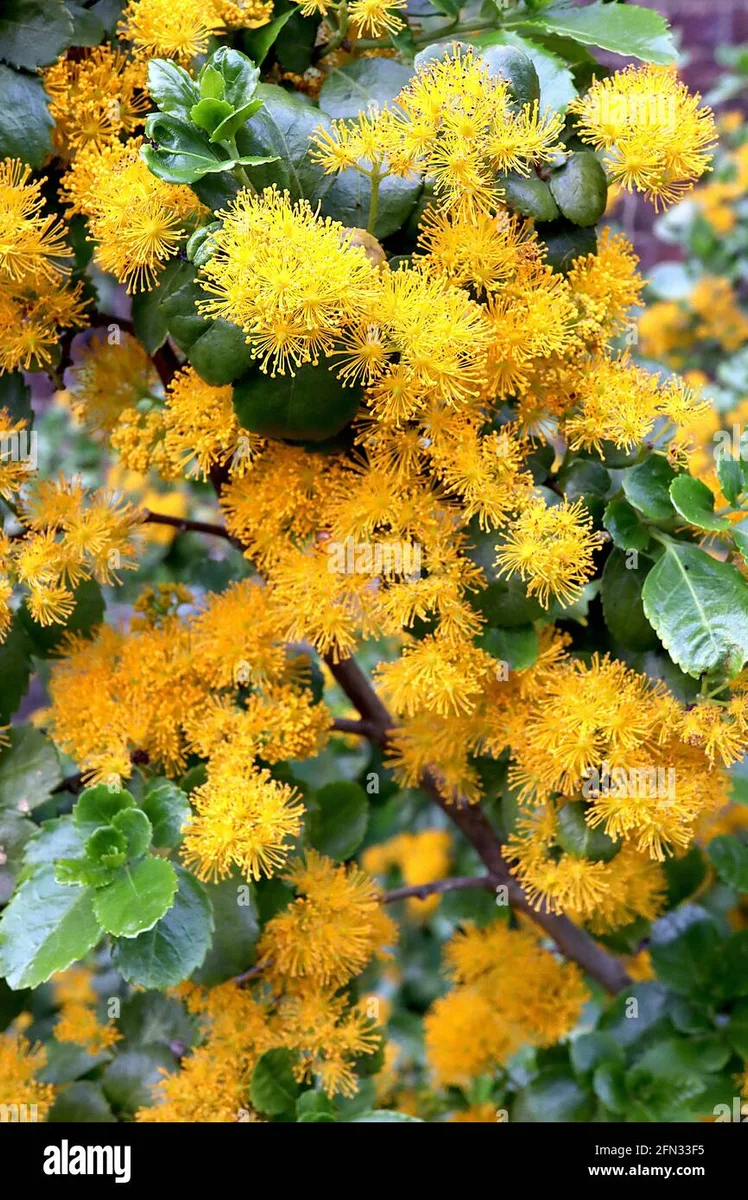
An evergreen shrub or small tree, up to 5m high, with glossy, oval, serrated leaves and fragrant yellow flowers in late spring or early summer; after hot summers the flowers may be followed by white fruits
Scientific classification
- Species
- saw-toothed azara 'Andes Gold' (Azara serrata 'Andes Gold')
- Genus
- Azara
- Family
- Salicaceae
- Order
- Malpighiales
- Class
- Magnoliopsida
- Phylum
- Magnoliophyta
- Information to be completed
- Toxicity
- Shrubs · Trees
- Plant type
- 4-8 metres
- Height
- 2.5-4 metres
- Spread
- Evergreen
- Foliage
- Columnar upright
- Habit
- Spring · Summer · Autumn · Winter
- Season of interest
- Full sun · Partial shade
- Sunlight
- Information to be completed
- Ideal temperature









saw-toothed azara 'Andes Gold' pictures
Distribution of saw-toothed azara 'Andes Gold'
Distribution map
- Native
- Introduced
- Cultivated
Source:WCVP v16 · Royal Botanic Gardens, Kew · CC BY 3.0 · Boundaries:WGSRPD / TDWG
saw-toothed azara 'Andes Gold' care guide
- Moderate regular watering, allowing brief slight drying between soakings
- Watering
- Full sun · Partial shade
- Sunlight

Watering
Moderate regular watering, allowing brief slight drying between soakings
Fertilizing
 Fertilizing
Balanced perennial feed every four weeks from spring through summer
Pruning
 Pruning
Usually little pruning is needed. Lightly shape if necessary, removing dead, damaged or diseased shoots. Prune after flowering.
Propagation
 Propagation
Propagate by semi-ripe cuttings or by layering
Growing
 Growing
Grow in a sheltered position in sun or partial shade in a deep, humus-rich soil; it will flower more prolifically when grown against a south-facing or south-west-facing wall than in the open. In cold climates grow in a cool greenhouse, in a high-fertility loam-based mix, and water plentifully in the growing season
Common pests and diseases
Diseases
May be susceptible to honey fungus in gardens where it is present but insufficient data to determine degree of susceptibility
Pests
Generally pest-free
Explore the plant health library →




