
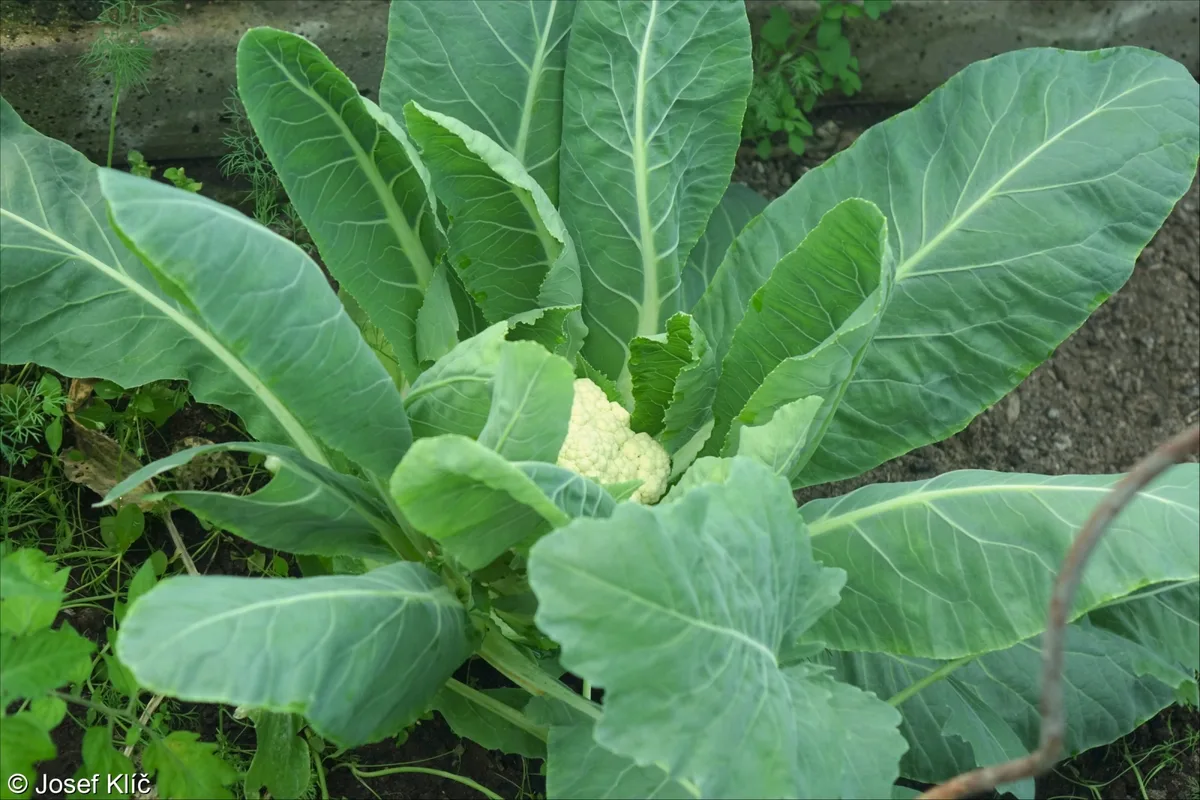
cauliflower 'Moby Dick'
Also known as: Information to be completed
A reliable Autumn-Winter cauliflower variety that produces crisp and sweet tasting, dense white curds on robust plants that stand well until harvest. It is noted for its good performance and can be harvested between September and December
Scientific classification
- Species
- cauliflower 'Moby Dick' (Brassica oleracea 'Moby Dick')
- Genus
- Brassica
- Family
- Brassicaceae
- Order
- Brassicales
- Class
- Magnoliopsida
- Phylum
- Tracheophyta
- Information to be completed
- Toxicity
- Annual Biennial
- Plant type
- 0.1-0.5 metres
- Height
- 0.1-0.5 metres
- Spread
- Deciduous
- Foliage
- Clump forming
- Habit
- Summer · Autumn · Winter
- Season of interest
- Full sun
- Sunlight
- Information to be completed
- Ideal temperature









cauliflower 'Moby Dick' pictures
Distribution of cauliflower 'Moby Dick'
Distribution map
- Native
- Introduced
- Cultivated
Source:WCVP v16 · Royal Botanic Gardens, Kew · CC BY 3.0 · Boundaries:WGSRPD / TDWG
cauliflower 'Moby Dick' care guide
- Consistently moist soil, regular watering to support leaf vegetable growth
- Watering
- Full sun
- Sunlight

Watering
Consistently moist soil, regular watering to support leaf vegetable growth
Fertilizing
 Fertilizing
Nitrogen-rich vegetable feed every two weeks throughout growth cycle
Pruning
 Pruning
No pruning required
Propagation
 Propagation
Propagate by seed. See sowing vegetable seeds or sowing seeds indoors
Growing
 Growing
Grow in fertile, moist but well drained soil in full sun. Sow indoors between March and April and transplant out in early Summer. Or sow direct between March and May in a well prepared seedbed in drills. Also suitable for container growing - 4 plants to a 45cm container. See vegetable cultivation
Common pests and diseases
Diseases
May be susceptible to black rot, clubroot, downy mildew, grey mould, foot and root rot, leaf spot, white blister
Pests
May be susceptible to birds, cabbage caterpillars, cabbage gall weevil, cabbage root fly, cabbage whitefly, cutworms, flea beetle, mealy cabbage aphid, slugs and snails, swede midge
Explore the plant health library →




