
dwarf globeflower
Also known as: Information to be completed
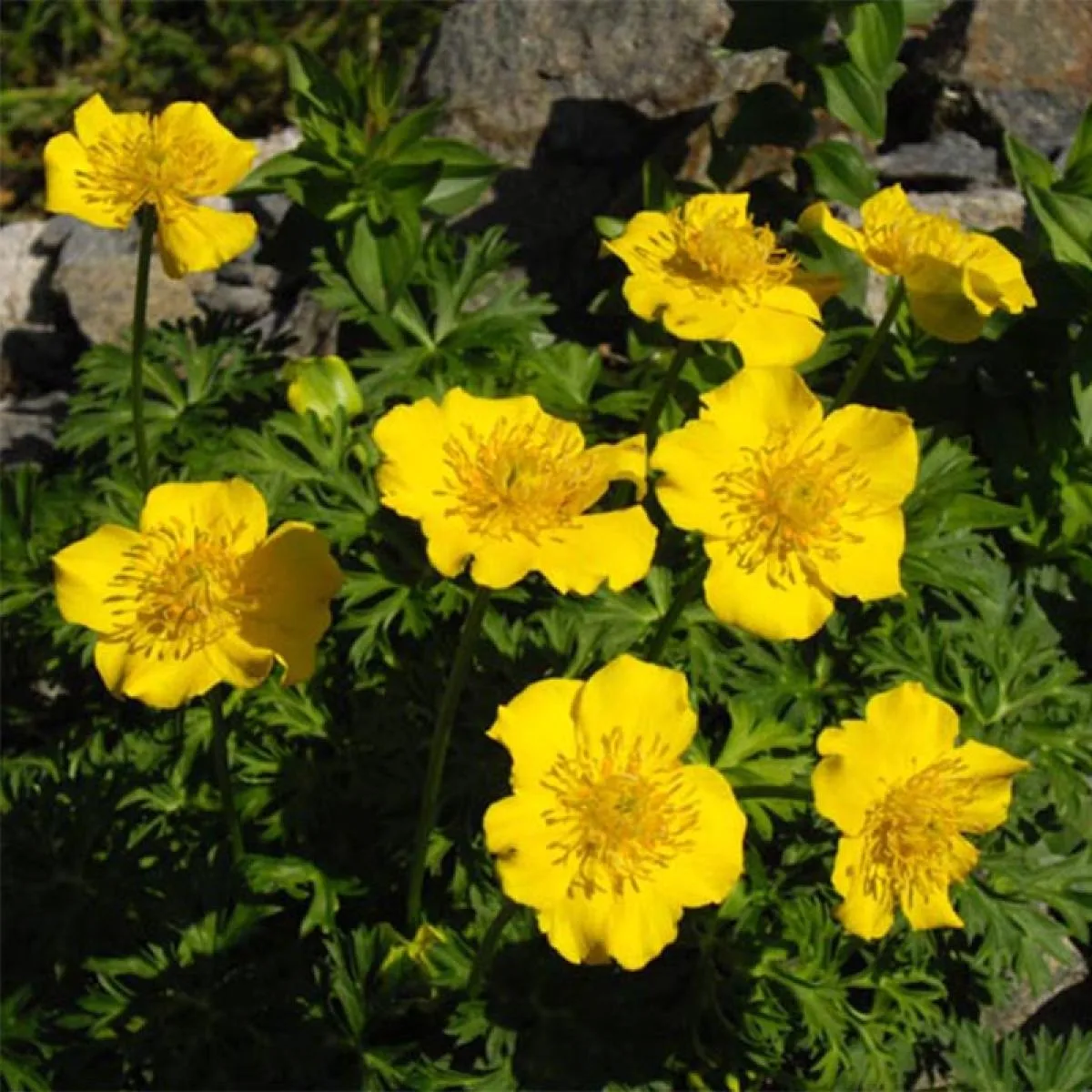
T. pumilus is a compact perennial to 25cm in height, forming a clump of glossy foliage, with bowl-shaped yellow flowers 4cm across, usually flushed red on the outside, in late spring and early summer
Scientific classification
- Species
- dwarf globeflower (Trollius pumilus)
- Genus
- Trollius
- Family
- Ranunculaceae
- Information to be completed
- Toxicity
- Alpine Rockery · Bogs · Herbaceous Perennial
- Plant type
- 0.1-0.5 metres
- Height
- 0.1-0.5 metres
- Spread
- Deciduous
- Foliage
- Clump forming
- Habit
- Spring · Summer · Autumn
- Season of interest
- Full sun · Partial shade
- Sunlight
- Information to be completed
- Ideal temperature









dwarf globeflower pictures
Distribution of dwarf globeflower
Distribution map
Himalaya and Eastern Tibet
Information to be completed
Culture
Information to be completed
Toxicity
Information to be completed
Quick identification of dwarf globeflower
Information to be completed
dwarf globeflower care guide
- Cool evenly moist soil, guard against full root ball desiccation
- Watering
- Full sun · Partial shade
- Sunlight
- Information to be completed
- Ideal temperature

Watering
Cool evenly moist soil, guard against full root ball desiccation
Fertilizing
 Fertilizing
Weak aquatic perennial feed monthly spring through early fall
Pruning
 Pruning
Cut stems back hard after first flush of flowers
Propagation
 Propagation
Propagate by seed or division after flowering
Growing
 Growing
Suitable for a moist area or bog garden or for naturalizing in a damp meadow garden
People also ask
Information to be completed
Common pests and diseases
Diseases
May be subject to powdery mildews
Pests
Generally pest-free
Explore the plant health library →




