
flame nasturtium
Also known as: flame creeper; flame Indian cress; Scottish flame flower; flame flower
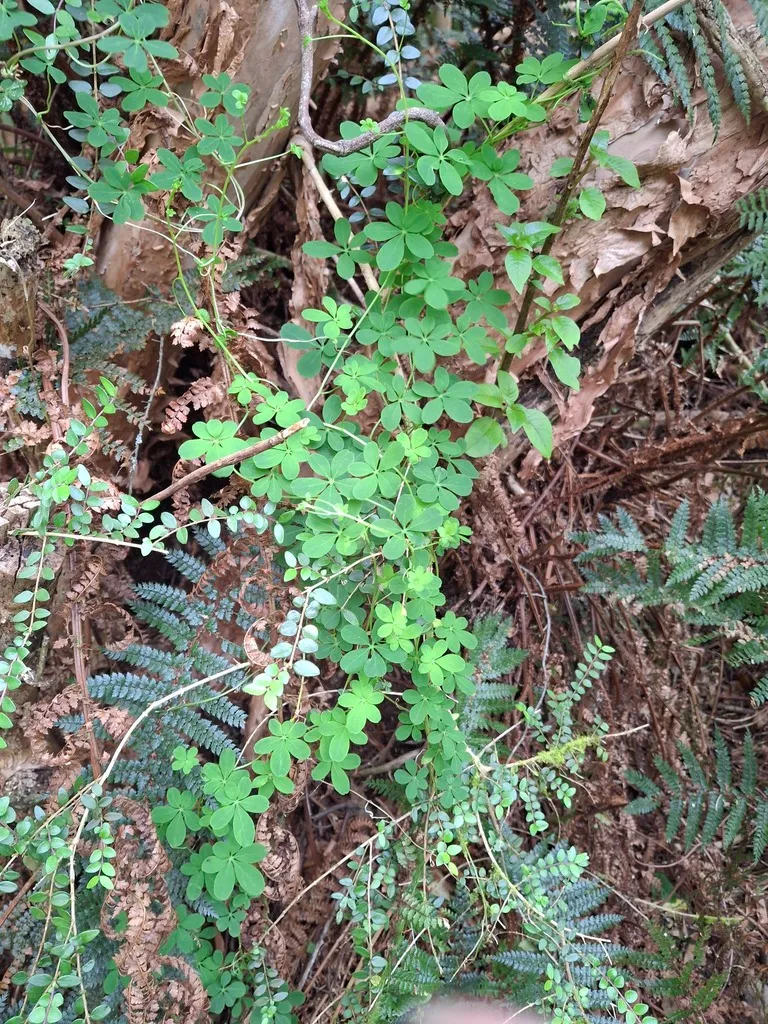
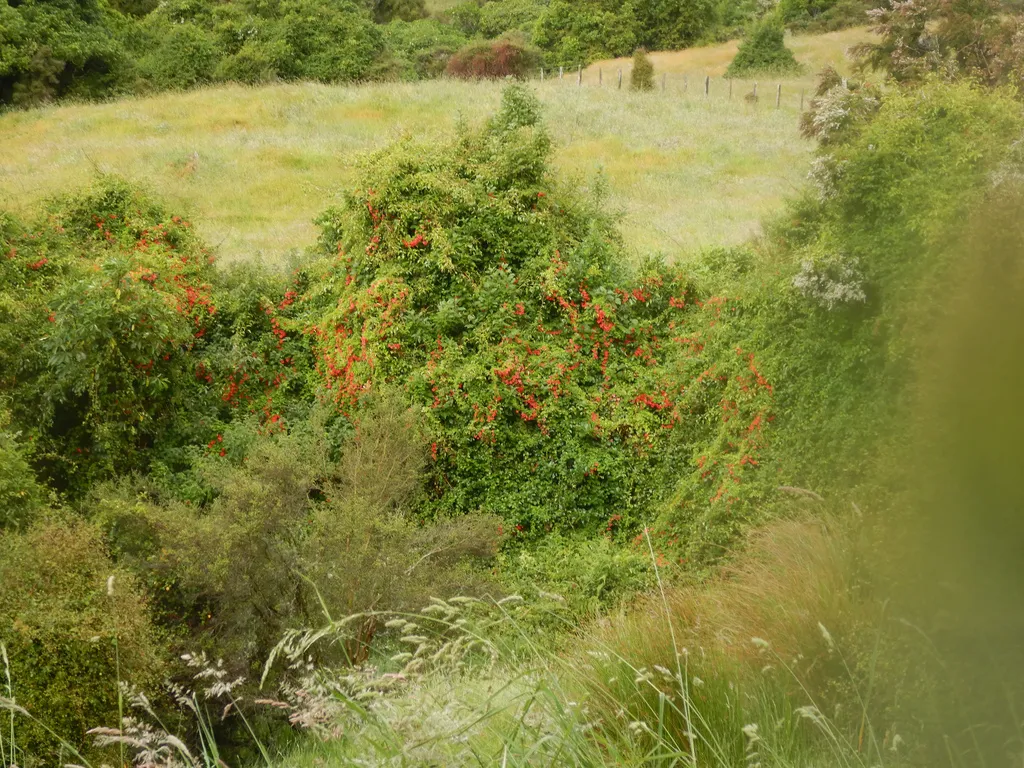
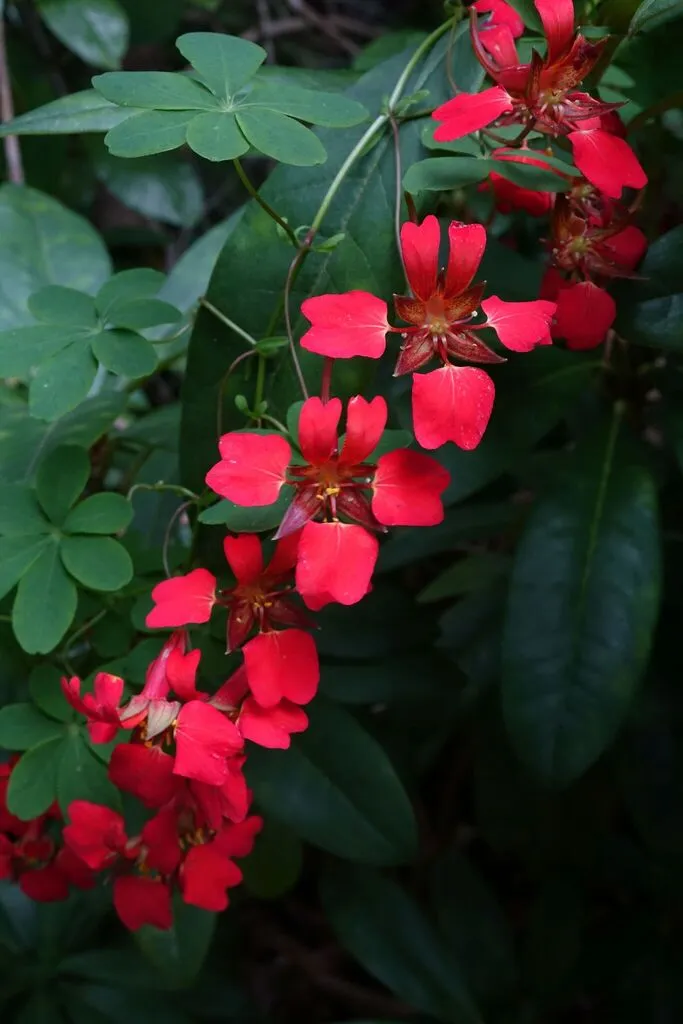
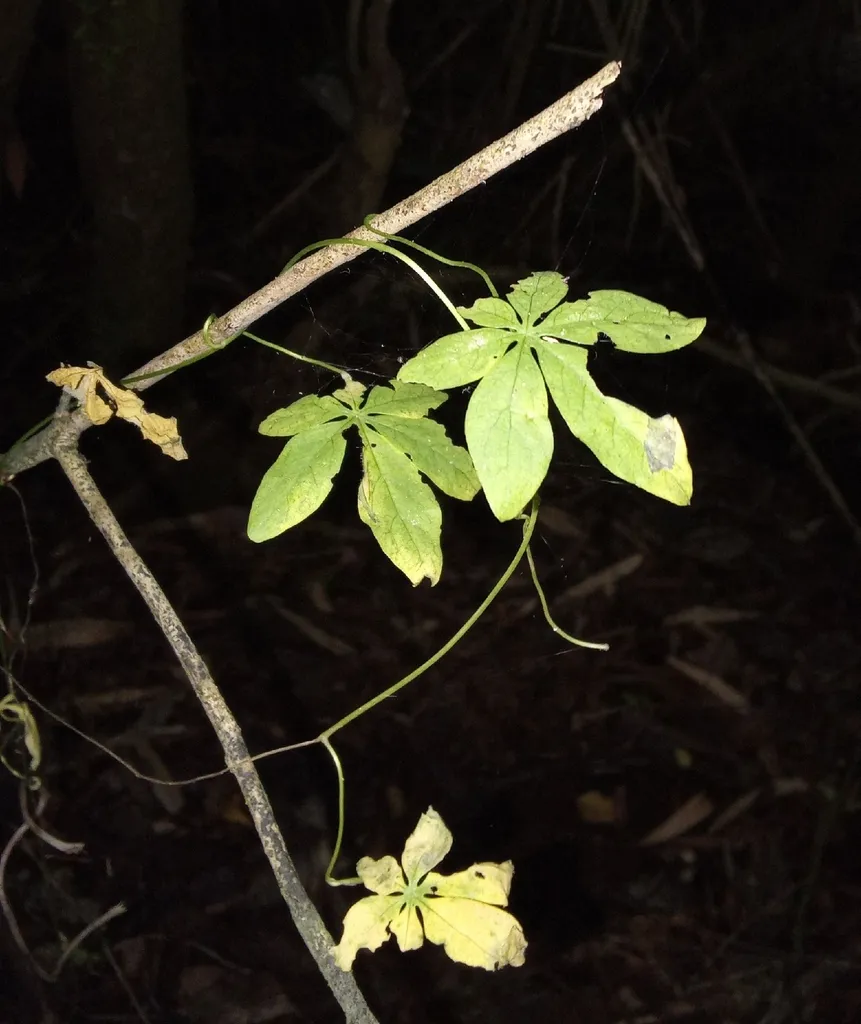
T. speciosum is a slender herbaceous climber to 3m, with long fleshy rhizomes and rounded leaves composed of 5-7 obovate leaflets. Long-spurred, bright scarlet flowers 2cm in width are followed by indigo blue berries held in red sepals
Scientific classification
- Species
- flame nasturtium (Tropaeolum speciosum)
- Genus
- Tropaeolum
- Family
- Tropaeolaceae
- Order
- Brassicales
- Class
- Magnoliopsida
- Phylum
- Magnoliophyta
- Skin allergen. Wear gloves and other protective equipment when handling
- Toxicity
- Herbaceous Perennial · Climber Wall Shrub
- Plant type
- 2.5-4 metres
- Height
- 0.5-1 metres
- Spread
- Deciduous
- Foliage
- Climbing
- Habit
- Summer · Autumn
- Season of interest
- Full sun · Partial shade
- Sunlight
- Information to be completed
- Ideal temperature









flame nasturtium pictures
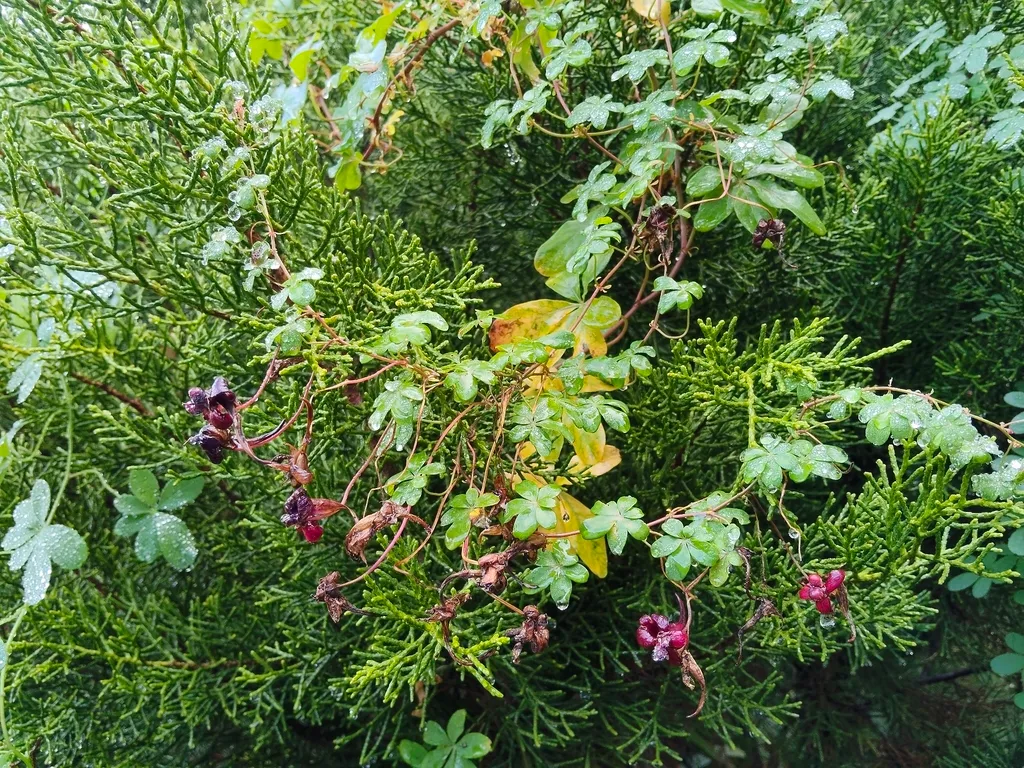
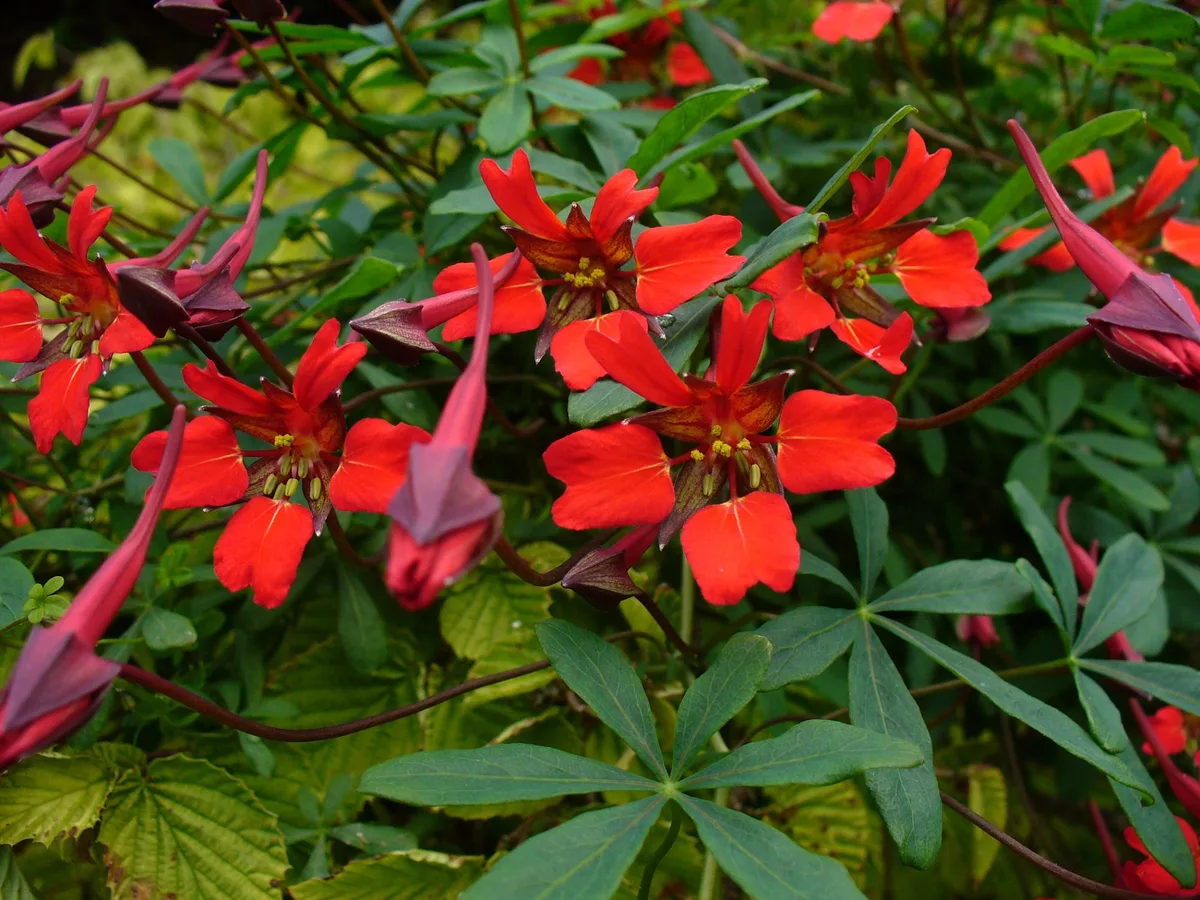
Distribution of flame nasturtium
Distribution map
- Native
- Introduced
- Cultivated
Source:WCVP v16 · Royal Botanic Gardens, Kew · CC BY 3.0 · Boundaries:WGSRPD / TDWG
Toxicity
Skin allergen. Wear gloves and other protective equipment when handling
flame nasturtium care guide
- Moderate regular watering, avoid prolonged drought or waterlogging
- Watering
- Full sun · Partial shade
- Sunlight

Watering
Moderate regular watering, avoid prolonged drought or waterlogging
Fertilizing
 Fertilizing
Balanced feed in spring and light repeat in growth season
Pruning
 Pruning
In early spring, cut the dead growth down to ground level
Propagation
 Propagation
Propagate by seed or division
Growing
 Growing
Thrives in gardens with cool, moist summers. Plant in cool, leafy or humus-rich soil where roots are in the shade with the plant growing into the sun or partial shade, can be grown up evergreen hedges
Common pests and diseases
Diseases
May be susceptible to virus diseases
Pests
May be susceptible to glasshouse whitefly and glasshouse red spider mite and whitefly
Explore the plant health library →




