
Hager's tulip
Also known as: Information to be completed
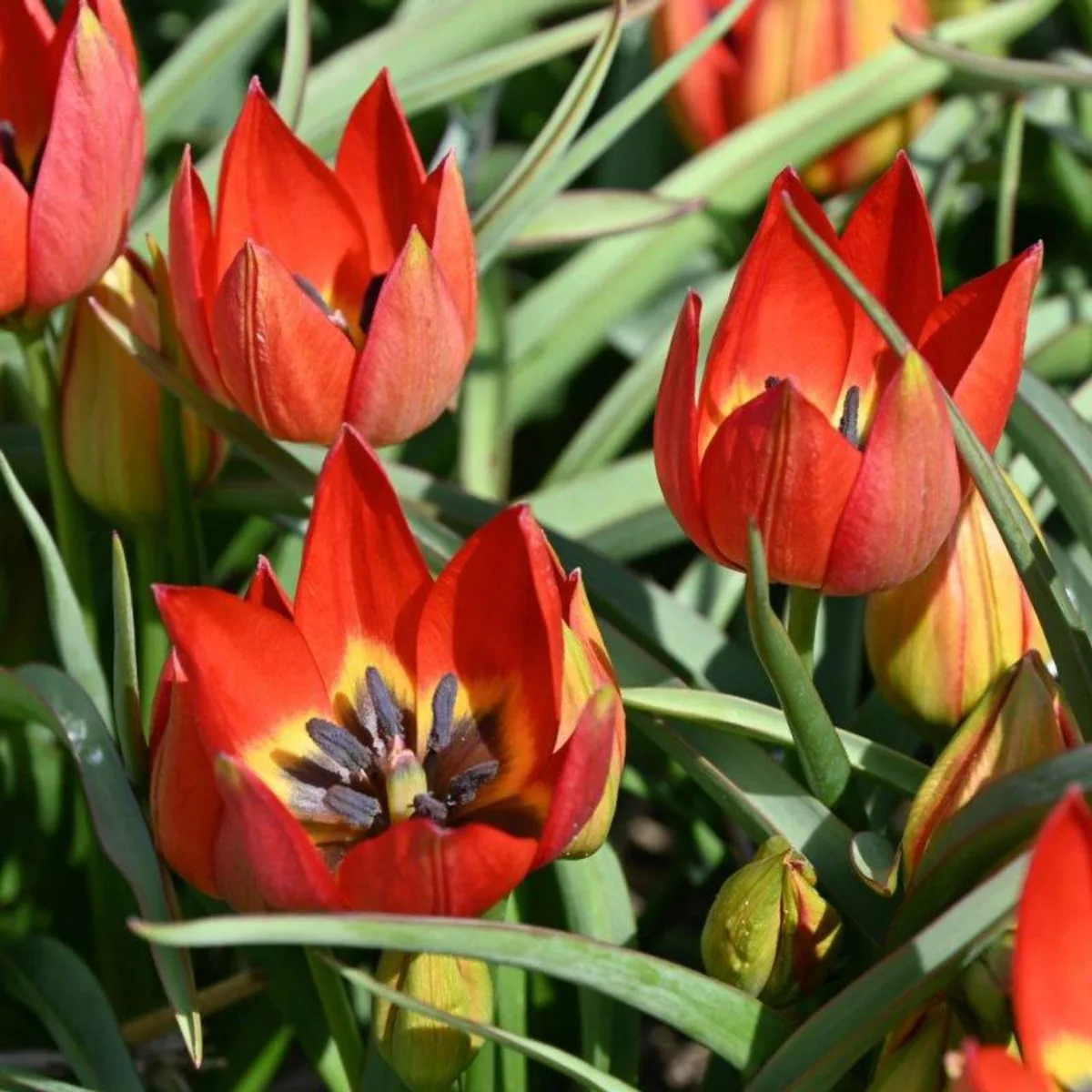
A compact perennial bulb up to around 20cm in height with grey-green strap-like foliage and dark red flowers, tinged with green inside appearing in mid-spring. A good variety for front of borders and for pots and containers
Scientific classification
- Species
- Hager's tulip (Tulipa hageri)
- Genus
- Tulipa
- Family
- Liliaceae
- Order
- Liliales
- Class
- Liliopsida
- Phylum
- Magnoliophyta
- Harmful if eaten, skin allergen. Wear gloves and other protective equipment when handling]
- Toxicity
- Bulbs
- Plant type
- 0.1-0.5 metres
- Height
- 0.1-0.5 metres
- Spread
- Deciduous
- Foliage
- Columnar upright
- Habit
- Spring
- Season of interest
- Full sun
- Sunlight
- Information to be completed
- Ideal temperature









Hager's tulip pictures
Distribution of Hager's tulip
Distribution map
- Native
- Introduced
- Cultivated
Source:WCVP v16 · Royal Botanic Gardens, Kew · CC BY 3.0 · Boundaries:WGSRPD / TDWG
Toxicity
Harmful if eaten, skin allergen. Wear gloves and other protective equipment when handling]
Hager's tulip care guide
- Regular damp soil in growth, fully dry dormant bulb tubers
- Watering
- Full sun
- Sunlight

Watering
Regular damp soil in growth, fully dry dormant bulb tubers
Fertilizing
 Fertilizing
Potassium-rich dilute liquid feed every two weeks pre-flower stage
Pruning
 Pruning
Deadhead after flowering
Propagation
 Propagation
Propagate by lifting and separating offsets; see bulb propagation
Growing
 Growing
Plant 10-15cm deep in fertile, well-drained soil in full sun. Protect from excessive wet and shelter from strong winds; see tulip cultivation
Common pests and diseases
Diseases
May be susceptible to tulip fire and bulb rot in poorly drained soil
Pests
May be susceptible to slugs, aphids and stem and bulb eelworm, squirrels may eat bulbs
Explore the plant health library →




