
Ficus palmeri
Also known as: Information to be completed
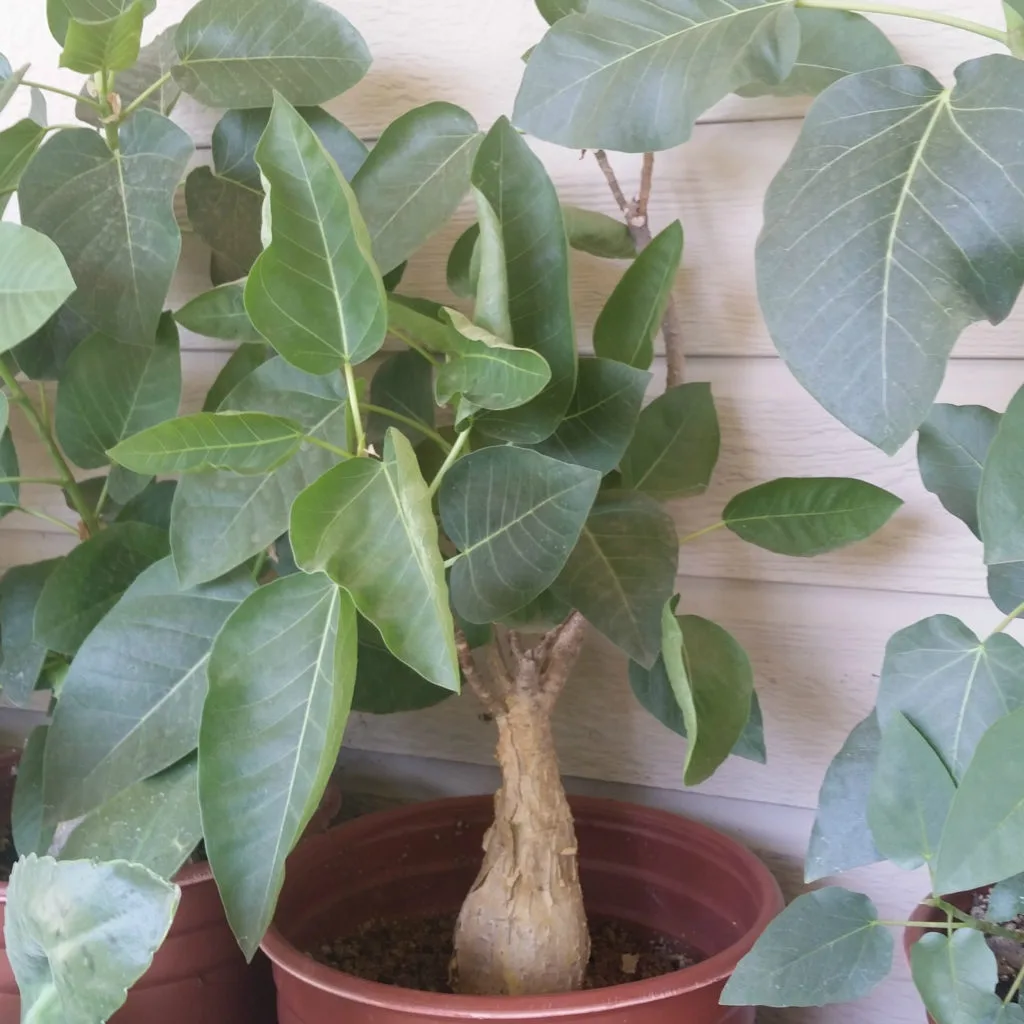
A hardy, evergreen tree which can grow up to 50m in height in its native Mexico, where the roots can gnarl and twist, stretching out over rocky terrain, and the bark and trunk can be bulbous and twisted in larger specimens, but generally would grow no more than around 2m in the UK where conditions are less favourable. Foliage is dark green and oval-shaped. Although fruits may rarely be produced they are small and inedible so this variety is grown as a specimen
Scientific classification
- Species
- Ficus palmeri (Ficus palmeri)
- Genus
- Ficus
- Family
- Moraceae
- Order
- Rosales
- Class
- Magnoliopsida
- Phylum
- Tracheophyta
- Skin allergen. Wear gloves and other protective equipment when handling
- Toxicity
- Houseplants · Conservatory Greenhouse · Trees
- Plant type
- Information to be completed
- Height
- Information to be completed
- Spread
- Evergreen
- Foliage
- Bushy
- Habit
- Information to be completed
- Season of interest
- Full sun · Partial shade
- Sunlight
- Information to be completed
- Ideal temperature









Ficus palmeri pictures
Distribution of Ficus palmeri
Distribution map
- Native
- Introduced
- Cultivated
Source:WCVP v16 · Royal Botanic Gardens, Kew · CC BY 3.0 · Boundaries:WGSRPD / TDWG
Toxicity
Skin allergen. Wear gloves and other protective equipment when handling
Ficus palmeri care guide
- Water when upper compost dries, never keep soggy
- Watering
- Full sun · Partial shade
- Sunlight

Watering
Water when upper compost dries, never keep soggy
Fertilizing
 Fertilizing
Balanced feed every few weeks in warm growing season
Pruning
 Pruning
Routine pruning is unnecessary; shorten overlong shoots to fit the available space. Prune in late winter.
Propagation
 Propagation
Propagate by seed or by semi-hardwood cuttings in spring or summer
Growing
 Growing
Grow indoors in loam-based moist but well-drained soil in filtered light. See fig cultivation or houseplant cultivation for further advice
Common pests and diseases
Diseases
May be susceptible to honey fungus
Pests
May be susceptible to glasshouse red spider mite, thrips, mealybugs and scale insects under glass
Explore the plant health library →




