
katsura 'Morioka Weeping'
Also known as: Information to be completed
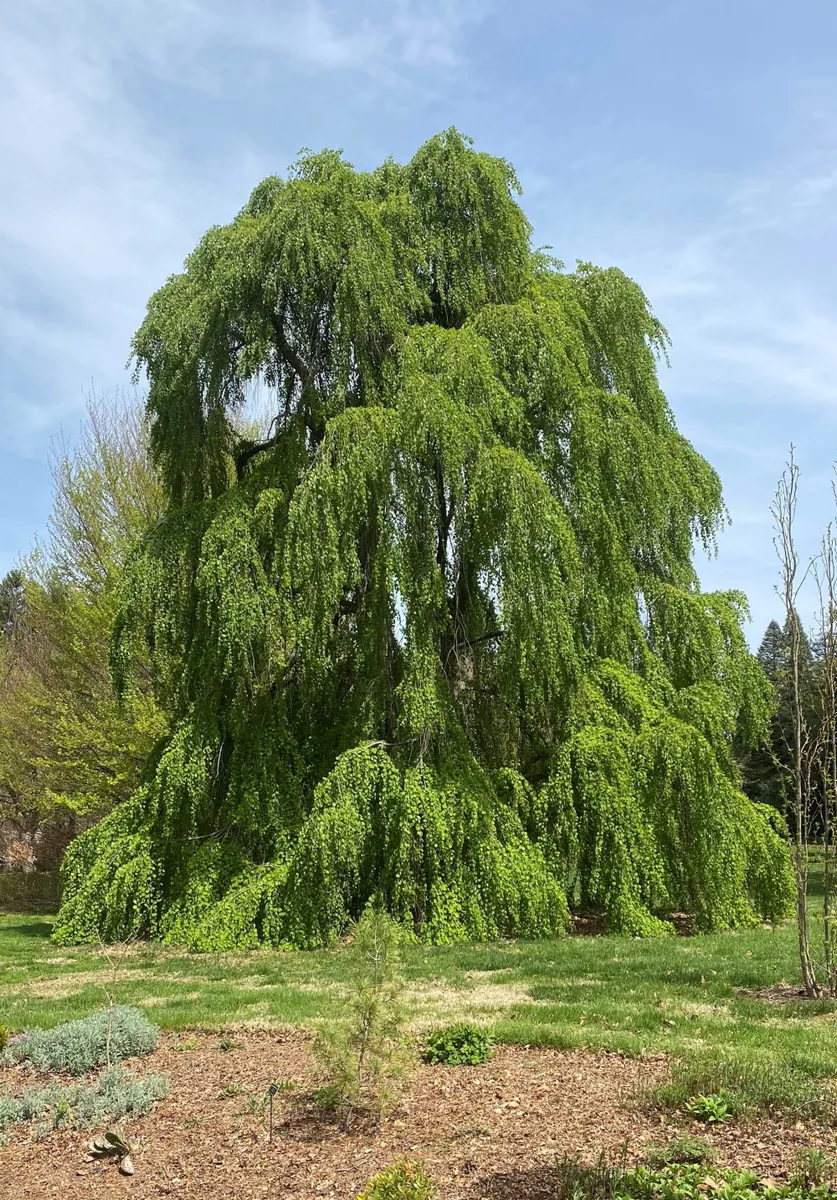
Morioka Weeping' is a deciduous tree with a dome-shaped, weeping habit and may eventually reach a height in excess of 20m. The heart-shaped leaves emerge reddish-purple in spring before turning blue-green; in autumn, the leaves turn shades of yellow and orange and may emit a burnt-sugar scent
Scientific classification
- Species
- katsura 'Morioka Weeping' (Cercidiphyllum japonicum 'Morioka Weeping')
- Genus
- Cercidiphyllum
- Family
- Cercidiphyllaceae
- Order
- Saxifragales
- Class
- Magnoliopsida
- Phylum
- Magnoliophyta
- Information to be completed
- Toxicity
- Trees
- Plant type
- Higher than 12 metres
- Height
- 2.5-4 metres
- Spread
- Deciduous
- Foliage
- Pendulous weeping
- Habit
- Autumn · Spring · Summer
- Season of interest
- Full sun · Partial shade
- Sunlight
- Information to be completed
- Ideal temperature









katsura 'Morioka Weeping' pictures
Distribution of katsura 'Morioka Weeping'
Distribution map
- Native
- Introduced
- Cultivated
Source:WCVP v16 · Royal Botanic Gardens, Kew · CC BY 3.0 · Boundaries:WGSRPD / TDWG
katsura 'Morioka Weeping' care guide
- Deep infrequent root irrigation, mulch protects roots summer heat drought
- Watering
- Full sun · Partial shade
- Sunlight

Watering
Deep infrequent root irrigation, mulch protects roots summer heat drought
Fertilizing
 Fertilizing
Large deciduous ornamental tree feed once yearly early spring growth
Pruning
 Pruning
Little pruning is needed. Remove diseased, damaged, crowded or crossing shoots and unwanted growth. Timing depends on the plant: generally late winter or early spring; plants prone to bleeding and deciduous magnolias need different timing, and deciduous azaleas and lilacs are pruned after flowering.
Propagation
 Propagation
Propagate by semi-hardwood cuttings
Growing
 Growing
Best grown in a woodland setting; the leaves may be damaged by late frosts. Prefers neutral or acid soil but will grow in alkaline soil too
Common pests and diseases
Diseases
May be susceptible to honey fungus
Pests
Generally pest-free
Explore the plant health library →




