
Camassia leichtlinii subsp. suksdorfii 'Electra'
Also known as: Information to be completed
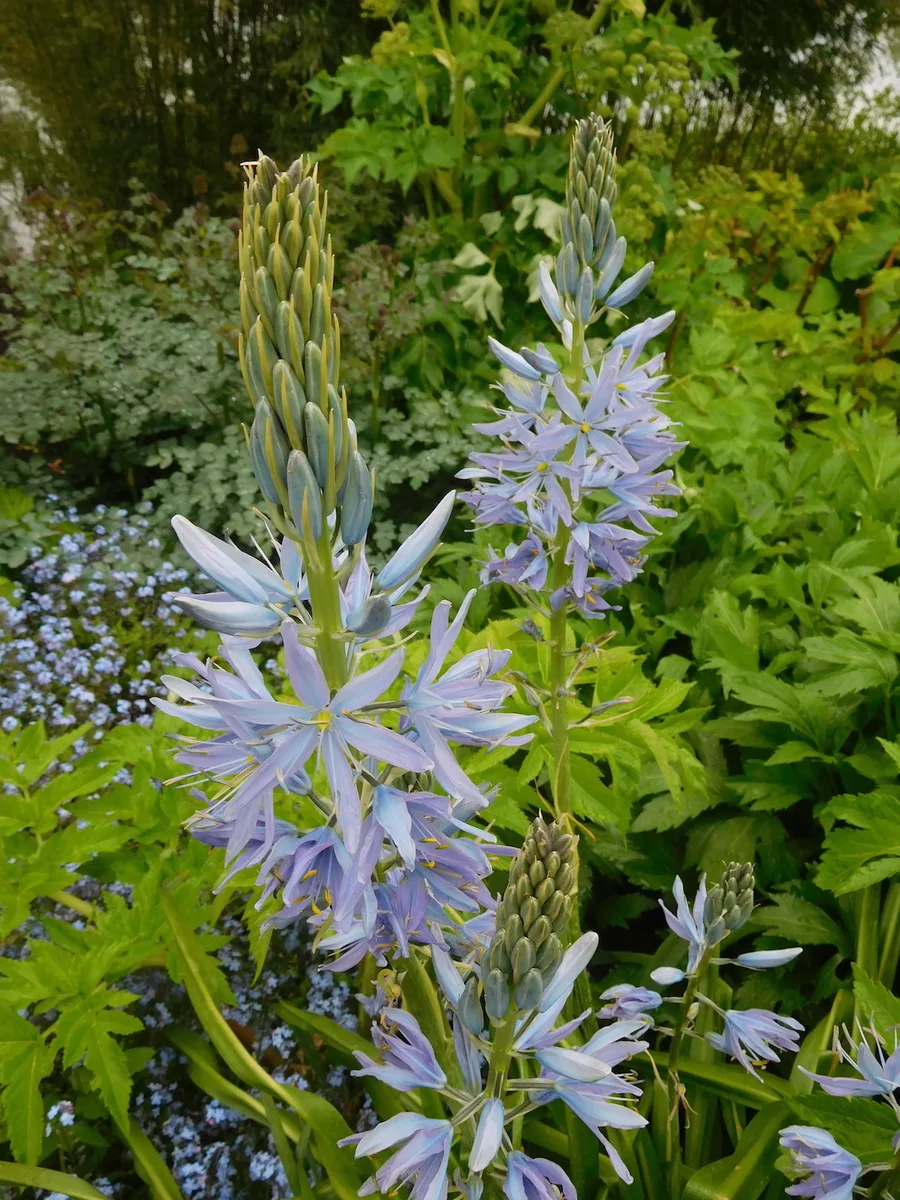
A deciduous, clump-forming perennial bulb with long, narrow, erect green foliage and from late spring into early summer, Large spikes of pale lilac-purple to amethyst blue, star-shaped flowers to around 100cm tall
Scientific classification
- Species
- Camassia leichtlinii subsp. suksdorfii 'Electra' (Camassia leichtlinii subsp. suksdorfii 'Electra')
- Genus
- Camassia
- Family
- Asparagaceae
- Order
- Asparagales
- Class
- Liliopsida
- Phylum
- Magnoliophyta
- Ornamental bulbs - not to be eaten. Wear gloves and other protective equipment when handling
- Toxicity
- Bulbs
- Plant type
- 0.5-1 metres
- Height
- 0.1-0.5 metres
- Spread
- Deciduous
- Foliage
- Clump forming · Columnar upright
- Habit
- Spring · Summer
- Season of interest
- Full sun · Partial shade
- Sunlight
- Information to be completed
- Ideal temperature









Camassia leichtlinii subsp. suksdorfii 'Electra' pictures
Distribution of Camassia leichtlinii subsp. suksdorfii 'Electra'
Distribution map
- Native
- Introduced
- Cultivated
Source:WCVP v16 · Royal Botanic Gardens, Kew · CC BY 3.0 · Boundaries:WGSRPD / TDWG
Toxicity
Ornamental bulbs - not to be eaten. Wear gloves and other protective equipment when handling
Camassia leichtlinii subsp. suksdorfii 'Electra' care guide
- Water moderately during growth, keep soil moist but not waterlogged.
- Watering
- Full sun · Partial shade
- Sunlight

Watering
Water moderately during growth, keep soil moist but not waterlogged.
Fertilizing
 Fertilizing
Apply a balanced bulb fertilizer in early spring and after flowering.
Pruning
 Pruning
No pruning required. Deadhead faded flower spikes
Propagation
 Propagation
Propagate by seed in containers in a cold frame as soon as ripe or remove offsets when dormant in summer - see bulb propagation
Growing
 Growing
Grow in moist but well-drained fertile, humus-rich soil in sun or part shade, providing a winter mulch. Plant bulbs 10cm deep in autumn. May have the potential to become a nuisance due to prolific self-seeding if not managed well
Common pests and diseases
Diseases
Generally disease-free
Pests
Generally pest-free
Explore the plant health library →




