
Magnolia 'Maxine Merrill'
Also known as: Information to be completed
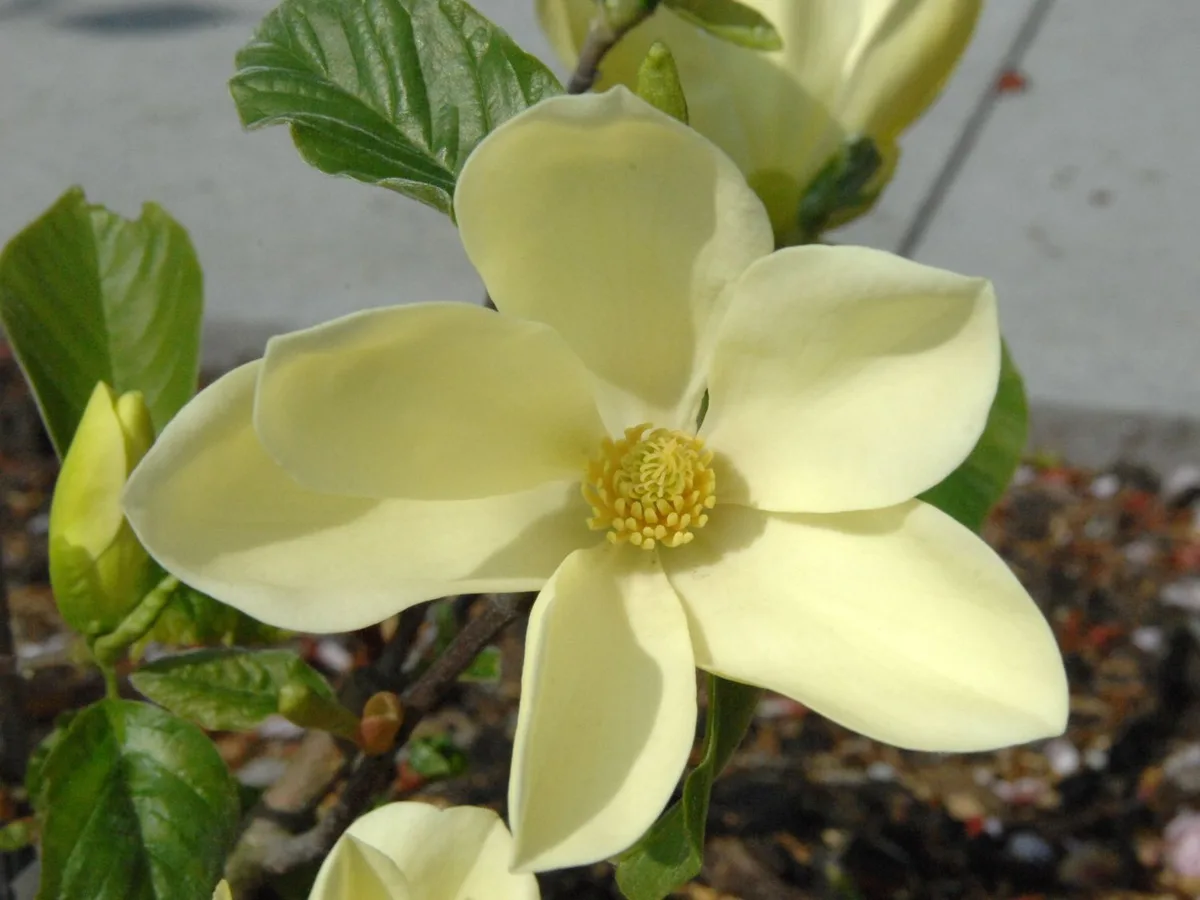
A mid-sized deciduous tree, to around 4m high in 10 years, and up to 10m high at maturity. It has a broadly conical habit, and large, oval-shaped green leaves that are flushed copper when young, and again in autumn. Flowers are fragrant, cup-shaped, with light yellow petals with pale cream insides; they are produced relatively early, before the leaves in spring, but usually last well in comparison to other cultivars
Scientific classification
- Species
- Magnolia 'Maxine Merrill' (Magnolia 'Maxine Merrill')
- Genus
- Magnolia
- Family
- Magnoliaceae
- Order
- Magnoliales
- Class
- Magnoliopsida
- Phylum
- Magnoliophyta
- Information to be completed
- Toxicity
- Trees
- Plant type
- 8-12 metres
- Height
- 4-8 metres
- Spread
- Deciduous
- Foliage
- Columnar upright · Bushy
- Habit
- Autumn · Spring · Summer
- Season of interest
- Full sun · Partial shade
- Sunlight
- Information to be completed
- Ideal temperature









Magnolia 'Maxine Merrill' pictures
Magnolia 'Maxine Merrill' care guide
- Infrequent deep watering, avoid constant saturated soil mix
- Watering
- Full sun · Partial shade
- Sunlight

Watering
Infrequent deep watering, avoid constant saturated soil mix
Fertilizing
 Fertilizing
Acid-loving magnolia feed once yearly early spring budding
Pruning
 Pruning
Minimal pruning required, see magnolia pruning. Deciduous magnolias should only be pruned between midsummer and early autumn
Propagation
 Propagation
Propagate by softwood cuttings in early summer or by semi-ripe cuttings in late summer
Growing
 Growing
Thrives in moist but well-drained, neutral to acid soil, in full sun or part shade with shelter from cold winds. Late frosts may damage flower buds. See magnolia cultivation for more advice
Common pests and diseases
Diseases
May be susceptible to coral spot, phytophthora, grey moulds, honey fungus, virus diseases or fungal leaf spot
Pests
May be susceptible to scale insects and capsid bug
Explore the plant health library →




