
tulip 'Cummins'
Also known as: Information to be completed
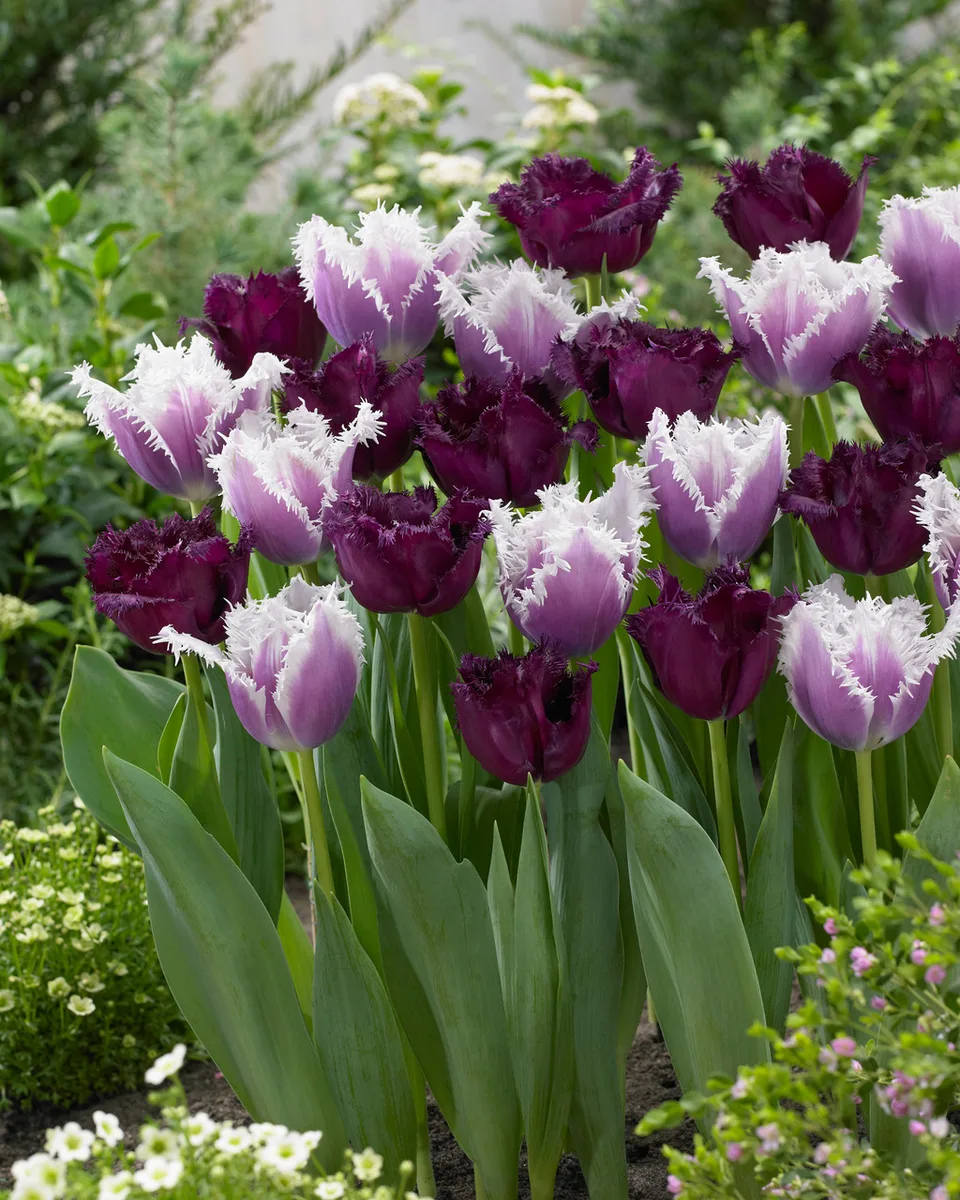
A fringed tulip with grey-green leaves and violet-pink, cup-shaped flowers, with a spiky white fringe, in late spring
Scientific classification
- Species
- tulip 'Cummins' (Tulipa 'Cummins')
- Genus
- Tulipa
- Family
- Liliaceae
- Harmful if eaten, skin allergen. Wear gloves and other protective equipment when handling]
- Toxicity
- Bulbs
- Plant type
- 0.5-1 metres
- Height
- 0.1-0.5 metres
- Spread
- Deciduous
- Foliage
- Clump forming
- Habit
- Spring
- Season of interest
- Full sun
- Sunlight
- Information to be completed
- Ideal temperature









tulip 'Cummins' pictures
Distribution of tulip 'Cummins'
Distribution map
Information to be completed
Information to be completed
Culture
Information to be completed
Toxicity
Harmful if eaten, skin allergen. Wear gloves and other protective equipment when handling]
Quick identification of tulip 'Cummins'
Information to be completed
tulip 'Cummins' care guide
- Moist soil pre-bloom, withhold all water once leaves wither fully
- Watering
- Full sun
- Sunlight
- Information to be completed
- Ideal temperature

Watering
Moist soil pre-bloom, withhold all water once leaves wither fully
Fertilizing
 Fertilizing
Two light high-phosphorus feeds before flower bud emergence in spring
Pruning
 Pruning
No pruning required
Propagation
 Propagation
Propagate by division of offsets, re-planting the larger bulbs and growing on the smaller bulbs in a nursery bed, or by bulb propagation
Growing
 Growing
Plant 15-20cm deep from mid-autumn to late autumn in beds or containers, in fertile, preferably neutral or alkaline soil that is free-draining but also able to hold moisture when the bulbs are in full growth, in full sun and with shelter from strong winds; lift bulbs in summer after the leaves have died down, and ripen them in a well-ventilated greenhouse; for more advice, see tulip cultivation
People also ask
Information to be completed
Common pests and diseases
Diseases
May be susceptible to tulip fire disease, tulip grey bulb rot, and virus diseases; bulbs in storage may be affected by blue mould
Pests
May be susceptible to slugs, aphids and stem and bulb eelworm; squirrels may eat the bulbs
Explore the plant health library →




