
Forrest's maple
Also known as: snake-bark maple
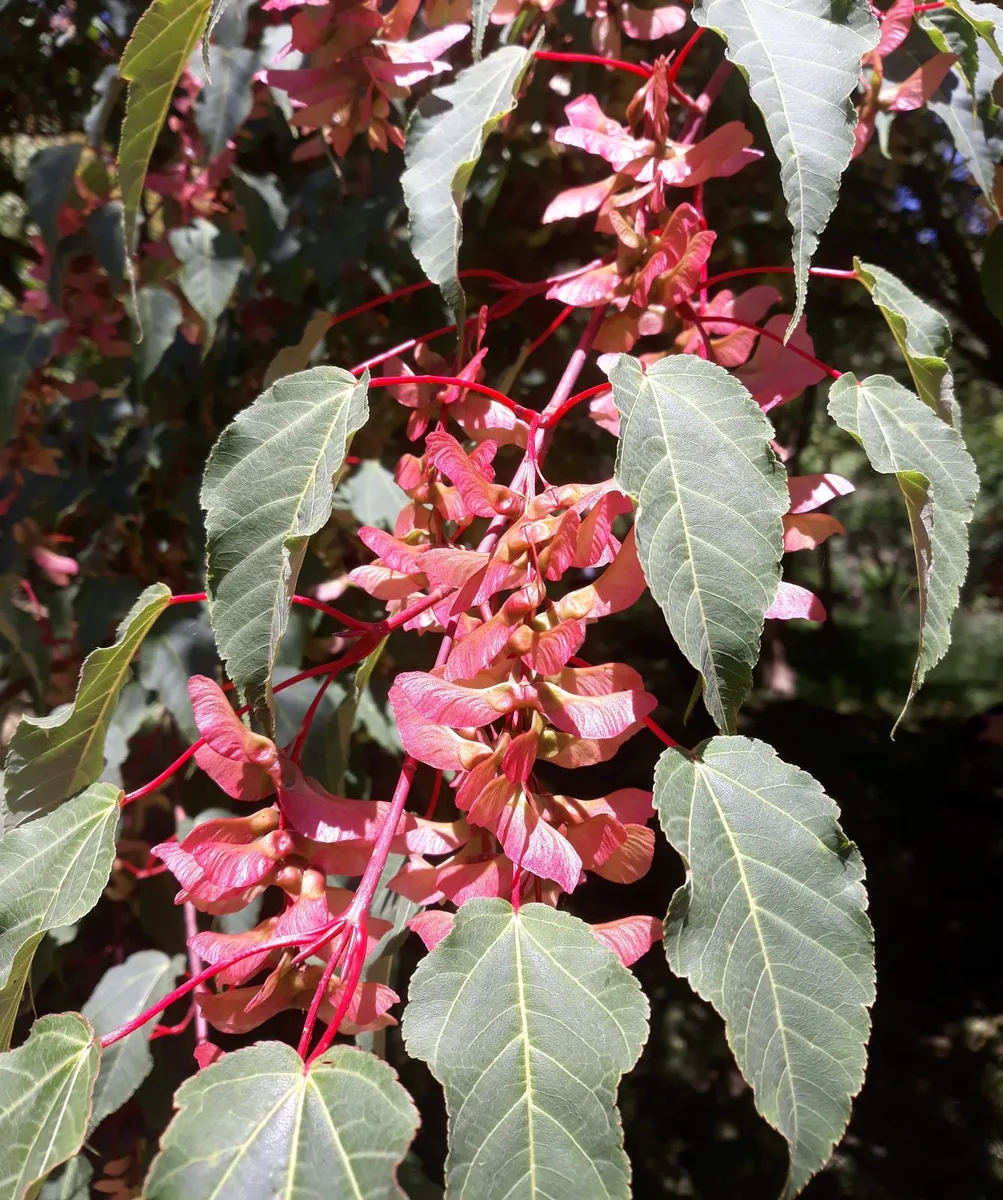
A spreading tree up to 10m tall with arching branches, red when young, then green with white stripes. The broad, three-lobed leaves open tinged with red, turn dark green in summer and orange-red in autumn. Hanging clusters of small, red and green flowers appear in spring followed by green and pink, two-winged fruit
Scientific classification
- Species
- Forrest's maple (Acer forrestii)
- Genus
- Acer
- Family
- Sapindaceae
- Information to be completed
- Toxicity
- Trees
- Plant type
- 8-12 metres
- Height
- wider than 8 metres
- Spread
- Deciduous
- Foliage
- Information to be completed
- Habit
- Autumn · Spring · Summer · Winter
- Season of interest
- Full sun · Partial shade
- Sunlight
- Information to be completed
- Ideal temperature









Forrest's maple pictures
Distribution of Forrest's maple
Distribution map
China
Information to be completed
Culture
Information to be completed
Toxicity
Information to be completed
Quick identification of Forrest's maple
Information to be completed
Forrest's maple care guide
- Deep regular watering, reduce irrigation volume during cold winter months
- Watering
- Full sun · Partial shade
- Sunlight
- Information to be completed
- Ideal temperature

Watering
Deep regular watering, reduce irrigation volume during cold winter months
Fertilizing
 Fertilizing
Balanced maple tree fertilizer applied once annually in early spring
Pruning
 Pruning
Little pruning is needed. Remove diseased, damaged, crowded or crossing shoots and unwanted growth. Prune from late autumn to mid-winter.
Propagation
 Propagation
Propagate by seed
Growing
 Growing
Grow in moist but well-drained, humus-rich soil with shelter from cold, drying wind
People also ask
Information to be completed
Common pests and diseases
Diseases
May be susceptible to Verticillium wilt, Acer leaf scorch and honey fungus
Pests
May be susceptible to Acer gall mite, aphids, caterpillars and horse chestnut scale
Explore the plant health library →




