
marigold 'Daisy May'
Also known as: Information to be completed
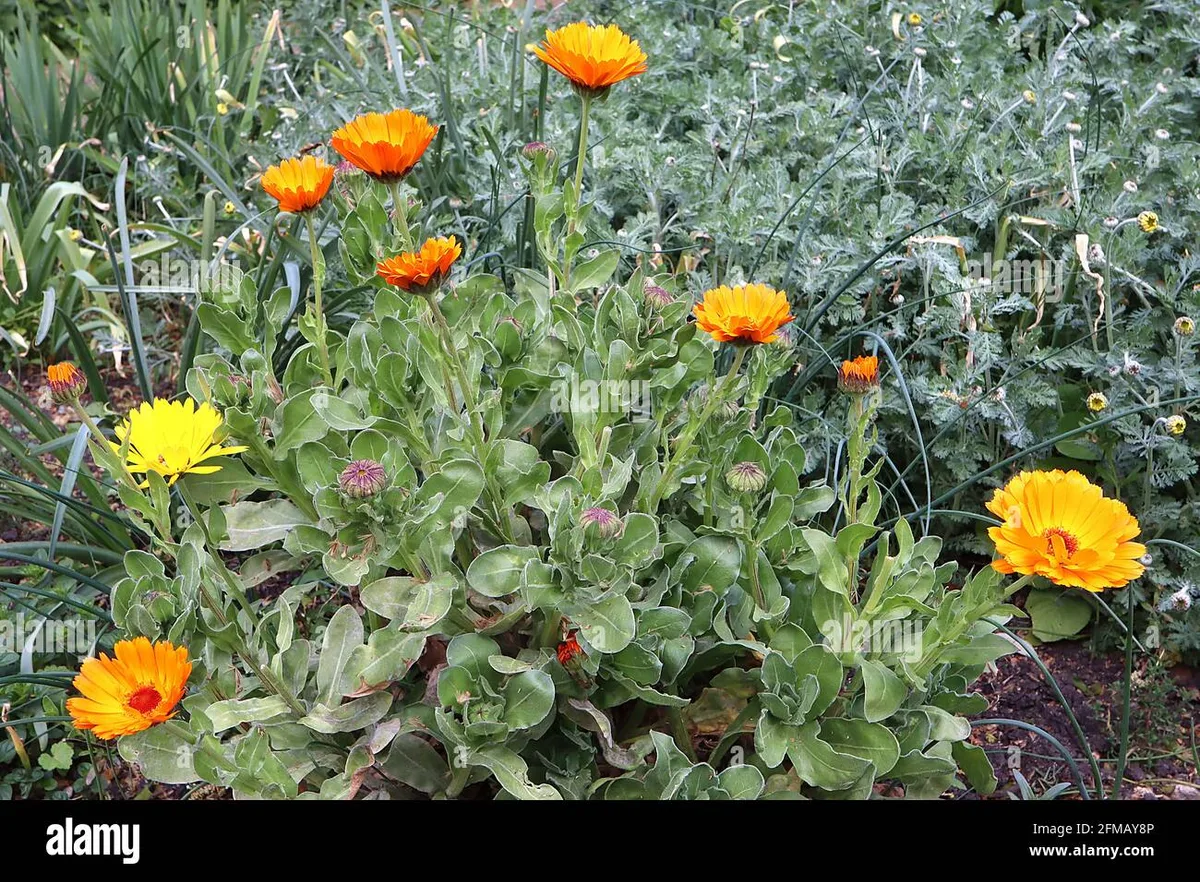
Daisy May' is a compact, bushy annual to around 25cm tall with aromatic, lance-shaped leaves and plentiful orange, daisy-like flowerheads borne over a long season
Scientific classification
- Species
- marigold 'Daisy May' (Calendula officinalis 'Daisy May')
- Genus
- Calendula
- Family
- Asteraceae
- Order
- Asterales
- Class
- Magnoliopsida
- Phylum
- Magnoliophyta
- Information to be completed
- Toxicity
- Annual Biennial
- Plant type
- 0.1-0.5 metres
- Height
- 0.1-0.5 metres
- Spread
- Deciduous
- Foliage
- Bushy
- Habit
- Spring · Summer · Autumn
- Season of interest
- Full sun · Partial shade
- Sunlight
- Information to be completed
- Ideal temperature









marigold 'Daisy May' pictures
Distribution of marigold 'Daisy May'
Distribution map
- Native
- Introduced
- Cultivated
Source:WCVP v16 · Royal Botanic Gardens, Kew · CC BY 3.0 · Boundaries:WGSRPD / TDWG
marigold 'Daisy May' care guide
- Water deeply after topsoil dries fully each irrigation cycle
- Watering
- Full sun · Partial shade
- Sunlight

Watering
Water deeply after topsoil dries fully each irrigation cycle
Fertilizing
 Fertilizing
Low-strength calendula feed every two weeks spring summer
Pruning
 Pruning
Deadhead regularly; cut back after flowering
Propagation
 Propagation
Propagate by seed sown in situ in spring or autumn
Growing
 Growing
Grow in a light, poor to moderately fertile, free-draining soil in full sun or partial shade. Deadhead regularly to prolong flowering and pinch out terminal shoots to encourage bushy growth. Good for cut flowers
Common pests and diseases
Diseases
May be affected by powdery mildews and a virus
Pests
Can get aphids
Explore the plant health library →




