
Chinese rice-paper plant 'Rex'
Also known as: Information to be completed
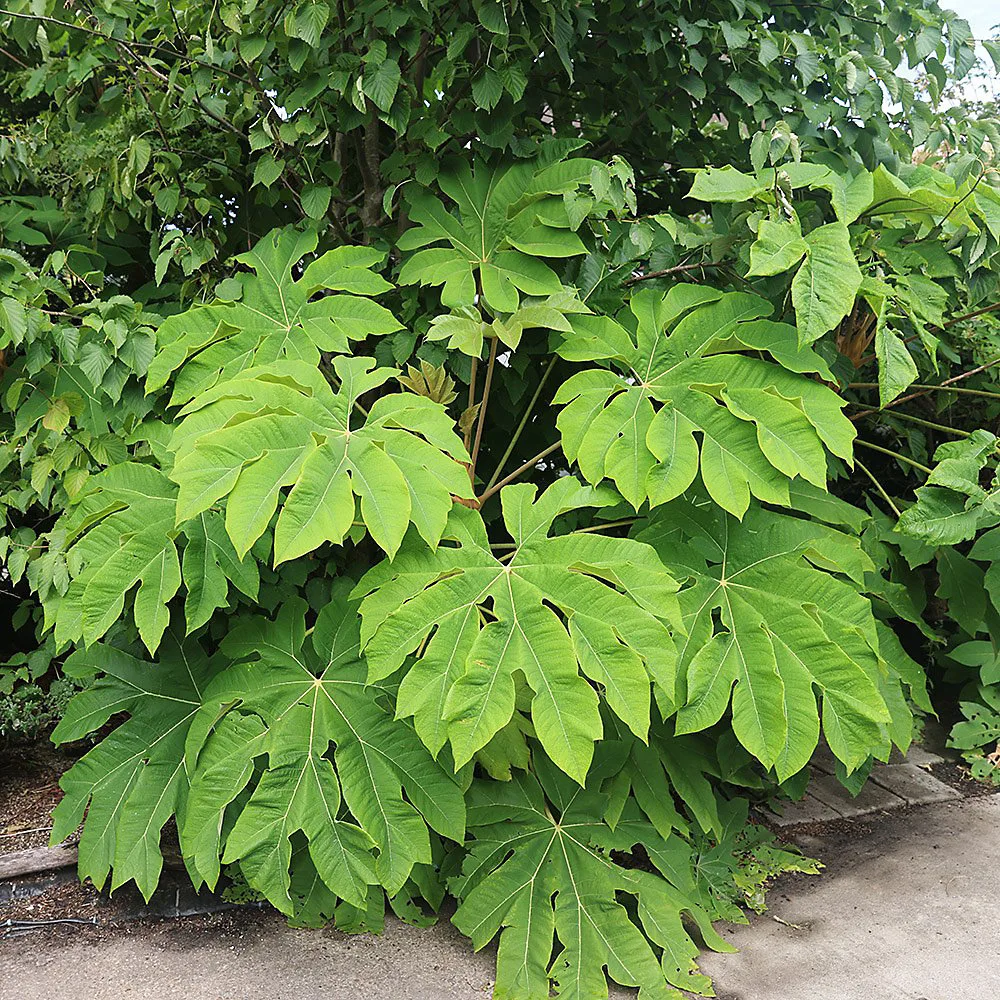
A large, fast-growing shrub or small tree to about 5m high, producing a thicket of upright stems topped by very large, deeply lobed green leaves up to 1m across. New shoots and leaves have a coating of fine, pale brown hairs. Creamy pompoms of flowers are produced in large sprays in autumn, followed by black fruit.
Scientific classification
- Species
- Chinese rice-paper plant 'Rex' (Tetrapanax papyrifer 'Rex')
- Genus
- Tetrapanax
- Family
- Araliaceae
- Order
- Apiales
- Class
- Magnoliopsida
- Phylum
- Magnoliophyta
- Information to be completed
- Toxicity
- Shrubs · Trees
- Plant type
- 4-8 metres
- Height
- 4-8 metres
- Spread
- Semi evergreen
- Foliage
- Columnar upright · Bushy
- Habit
- Spring · Summer · Autumn · Winter
- Season of interest
- Full sun
- Sunlight
- Information to be completed
- Ideal temperature









Chinese rice-paper plant 'Rex' pictures
Distribution of Chinese rice-paper plant 'Rex'
Distribution map
- Native
- Introduced
- Cultivated
Source:WCVP v16 · Royal Botanic Gardens, Kew · CC BY 3.0 · Boundaries:WGSRPD / TDWG
Chinese rice-paper plant 'Rex' care guide
- Abundant steady moisture, mist leaves during dry hot weather spells
- Watering
- Full sun
- Sunlight

Watering
Abundant steady moisture, mist leaves during dry hot weather spells
Fertilizing
 Fertilizing
Tropical foliage high-nitrogen feed every two weeks spring summer
Pruning
 Pruning
Remove dead or damaged leaves as necessary. Remove suckers if you want to prevent the spread of established clumps
Propagation
 Propagation
Propagate by seed sown in containers in a cold frame in autumn, or by division, removing suckers in spring or summer
Growing
 Growing
Grow in well-drained soil in full sun. Protect from cold winds and provide a deep mulch over winter in cold areas. If kept frost-free it will be evergreen; with mild frosts the plant is deciduous, and in colder areas it may die back to ground level then reshoot from the roots.
Common pests and diseases
Diseases
Generally disease-free
Pests
Generally pest-free
Explore the plant health library →




