
Kalimeris pinnatifida 'Hortensis'
Also known as: Information to be completed
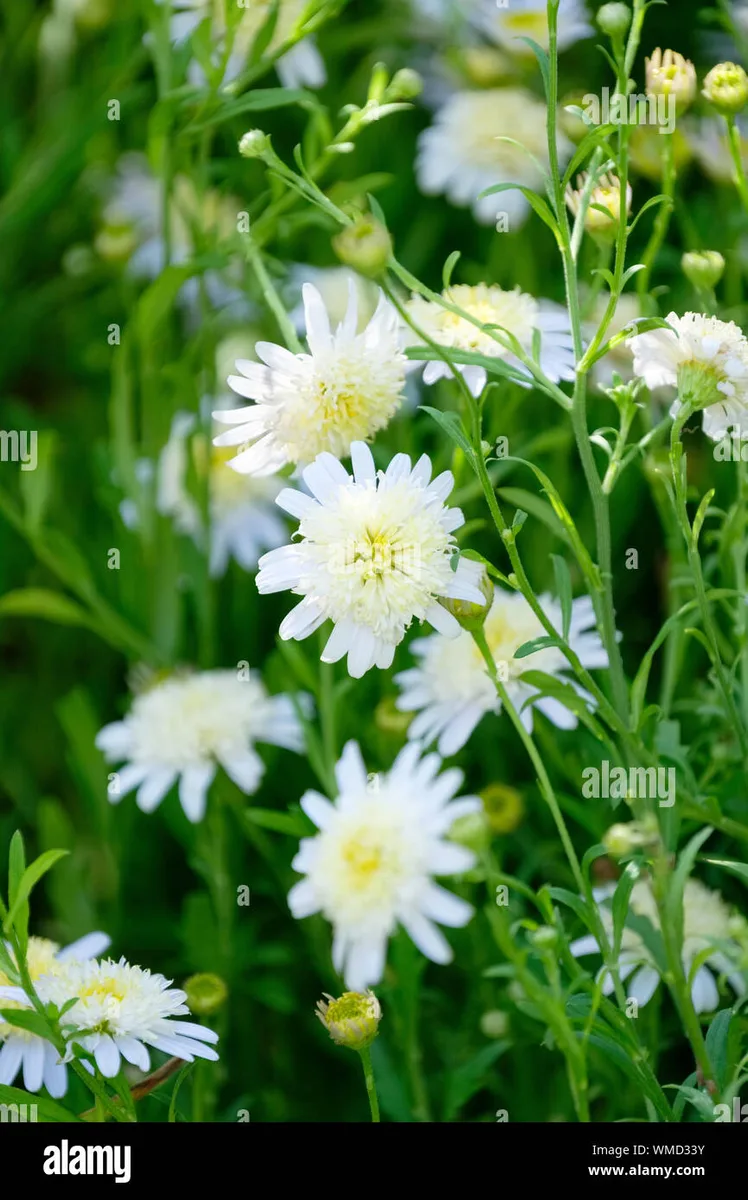
Upright, clump-forming perennial about 90cm tall but occasionally taller, with divided, hairy, stalkless mid-green leaves, and anemone-centred, white flowerheads 3cm across,, with prominent yellow central disc florets, produced from summer to autumn
Scientific classification
- Species
- Kalimeris pinnatifida 'Hortensis' (Kalimeris pinnatifida 'Hortensis')
- Genus
- Kalimeris
- Family
- Asteraceae
- Order
- Asterales
- Class
- Magnoliopsida
- Phylum
- Magnoliophyta
- Information to be completed
- Toxicity
- Herbaceous Perennial
- Plant type
- 1-1.5 metres
- Height
- 0.5-1 metres
- Spread
- Deciduous
- Foliage
- Clump forming
- Habit
- Spring · Summer · Autumn
- Season of interest
- Full sun · Partial shade
- Sunlight
- Information to be completed
- Ideal temperature









Kalimeris pinnatifida 'Hortensis' pictures
Distribution of Kalimeris pinnatifida 'Hortensis'
Distribution map
- Native
- Introduced
- Cultivated
Source:WCVP v16 · Royal Botanic Gardens, Kew · CC BY 3.0 · Boundaries:WGSRPD / TDWG
Kalimeris pinnatifida 'Hortensis' care guide
- Even slight moisture, drain standing water away rapidly
- Watering
- Full sun · Partial shade
- Sunlight

Watering
Even slight moisture, drain standing water away rapidly
Fertilizing
 Fertilizing
Weak all-purpose flower feed every four weeks spring summer
Pruning
 Pruning
Cut down flowered stems to ground level once flowering has finished or leave the seedheads and stems in place for wildlife and winter interest
Propagation
 Propagation
Propagate by division in spring or root softwood basal cuttings in spring; division can be carried out every third year to maintain vigour
Growing
 Growing
Grow in full sun or light shade in any moist but well-drained soil. Stake tall plants in early spring, see staking: perennials. See aster cultivation for further advice
Common pests and diseases
Diseases
May be susceptible to Verticillium wilt, powdery mildews and grey moulds
Pests
May be susceptible to leaf and bud eelworms, slugs and snails
Explore the plant health library →




