
Cape jasmine 'Kleim's Hardy'
Also known as: Information to be completed
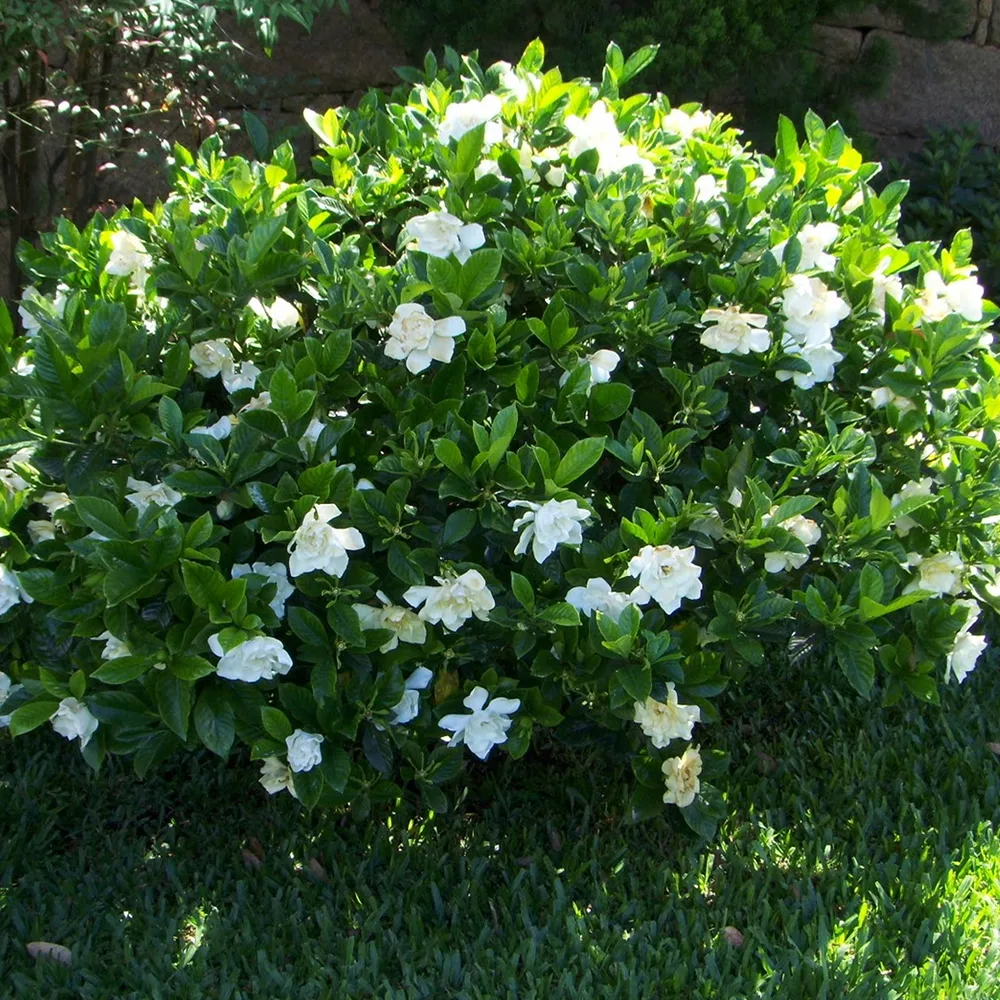
Kleim's Hardy' is an evergreen shrub with deep glossy green leaves and very fragrant, single, white, saucer-shaped flowers in summer and autumn
Scientific classification
- Species
- Cape jasmine 'Kleim's Hardy' (Gardenia jasminoides 'Kleim's Hardy')
- Genus
- Gardenia
- Family
- Rubiaceae
- Order
- Gentianales
- Class
- Magnoliopsida
- Phylum
- Tracheophyta
- Information to be completed
- Toxicity
- Shrubs · Conservatory Greenhouse
- Plant type
- 0.5-1 metres
- Height
- 0.5-1 metres
- Spread
- Evergreen
- Foliage
- Bushy
- Habit
- Spring · Summer · Autumn · Winter
- Season of interest
- Partial shade
- Sunlight
- Information to be completed
- Ideal temperature









Cape jasmine 'Kleim's Hardy' pictures
Distribution of Cape jasmine 'Kleim's Hardy'
Distribution map
- Native
- Introduced
- Cultivated
Source:WCVP v16 · Royal Botanic Gardens, Kew · CC BY 3.0 · Boundaries:WGSRPD / TDWG
Cape jasmine 'Kleim's Hardy' care guide
- Moderate regular watering, allowing brief slight drying between soakings
- Watering
- Partial shade
- Sunlight

Watering
Moderate regular watering, allowing brief slight drying between soakings
Fertilizing
 Fertilizing
Balanced perennial feed every four weeks from spring through summer
Pruning
 Pruning
Prune lightly as needed to remove unwanted shoots and keep the shrub in shape. Prune in mid- to late spring.
Propagation
 Propagation
Propagate by softwood or semi-ripe cuttings
Growing
 Growing
Grow outdoors in a warm, sheltered position in moist but well-drained, acid or neutral soil in partial or light dappled shade. Should tolerate a few degrees of frost. Otherwise grow under glass in lime-free compost in bright, filtered light in high humidity. See gardenia cultivation
Common pests and diseases
Diseases
May be susceptible to botrytis (grey moulds)
Pests
May be susceptible to aphids and scale insects and, under glass, glasshouse whitefly and mealybugs
Explore the plant health library →




