
coneflower 'Goldkugel'
Also known as: Information to be completed
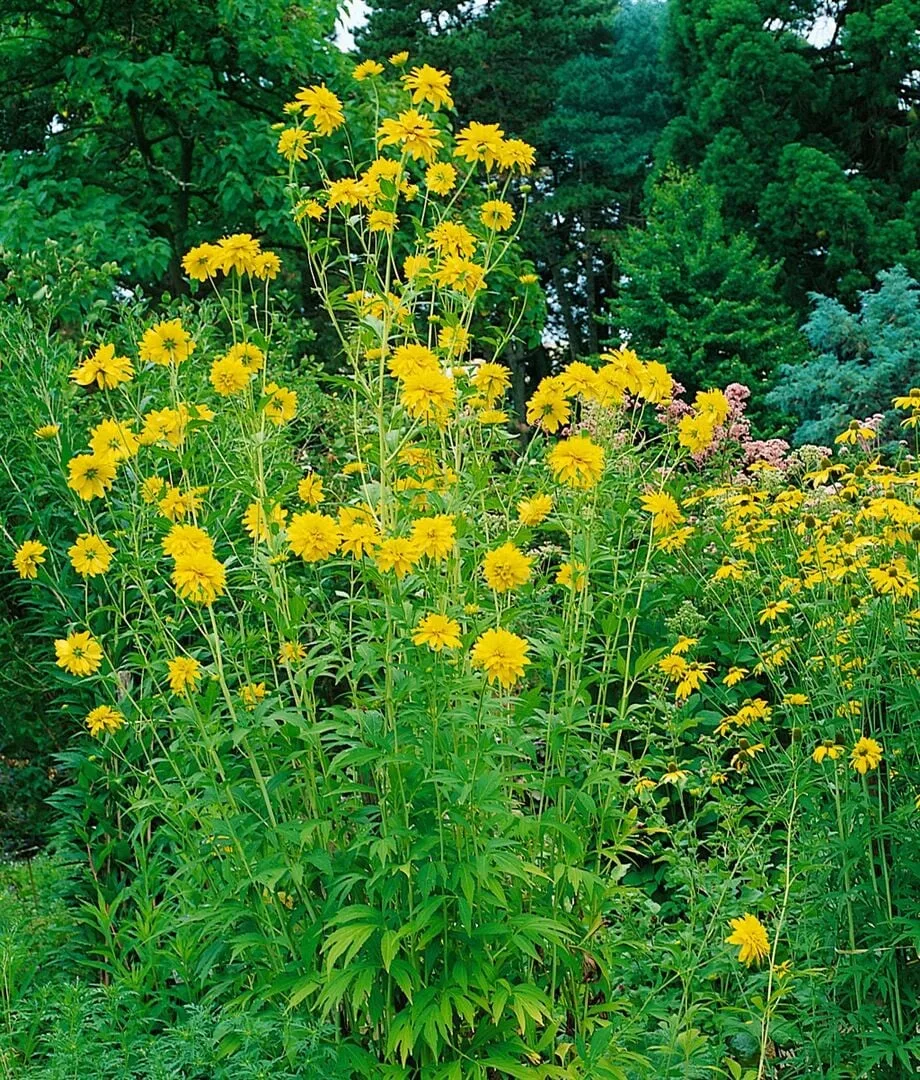
A bushy, clump-forming herbaceous perennial, up to 2m high, with deeply lobed and divided basal leaves. Produces large, rounded, golden yellow double flowers to 6cm across, on tall stems from mid summer to early autumn
Scientific classification
- Species
- coneflower 'Goldkugel' (Rudbeckia laciniata 'Goldkugel')
- Genus
- Rudbeckia
- Family
- Asteraceae
- Order
- Asterales
- Class
- Magnoliopsida
- Phylum
- Magnoliophyta
- Information to be completed
- Toxicity
- Herbaceous Perennial
- Plant type
- 1.5-2.5 metres
- Height
- 0.5-1 metres
- Spread
- Deciduous
- Foliage
- Bushy · Columnar upright
- Habit
- Spring · Summer · Autumn
- Season of interest
- Full sun
- Sunlight
- Information to be completed
- Ideal temperature









coneflower 'Goldkugel' pictures
Distribution of coneflower 'Goldkugel'
Distribution map
- Native
- Introduced
- Cultivated
Source:WCVP v16 · Royal Botanic Gardens, Kew · CC BY 3.0 · Boundaries:WGSRPD / TDWG
coneflower 'Goldkugel' care guide
- Even consistent soil moisture, drain excess water thoroughly after watering
- Watering
- Full sun
- Sunlight

Watering
Even consistent soil moisture, drain excess water thoroughly after watering
Fertilizing
 Fertilizing
Diluted sunflower-type feed every three spring and summer weeks
Pruning
 Pruning
Spent flowering stems may be cut back, or left to provide winter interest
Propagation
 Propagation
Propagate by division in spring
Growing
 Growing
Grow in moderately fertile soil that does not dry out. May spread if left unchecked, divide every 3-5 years to maintain vigour and control growth. See rudbeckia cultivation for more detailed advice
Common pests and diseases
Diseases
May be susceptible to powdery mildews, especially on dry soils
Pests
May be susceptible to aphids, to leaf and bud eelworms, and to slugs on young growth
Explore the plant health library →




