
Euphorbia wallichii 'Lemon and Lime'
Also known as: Information to be completed
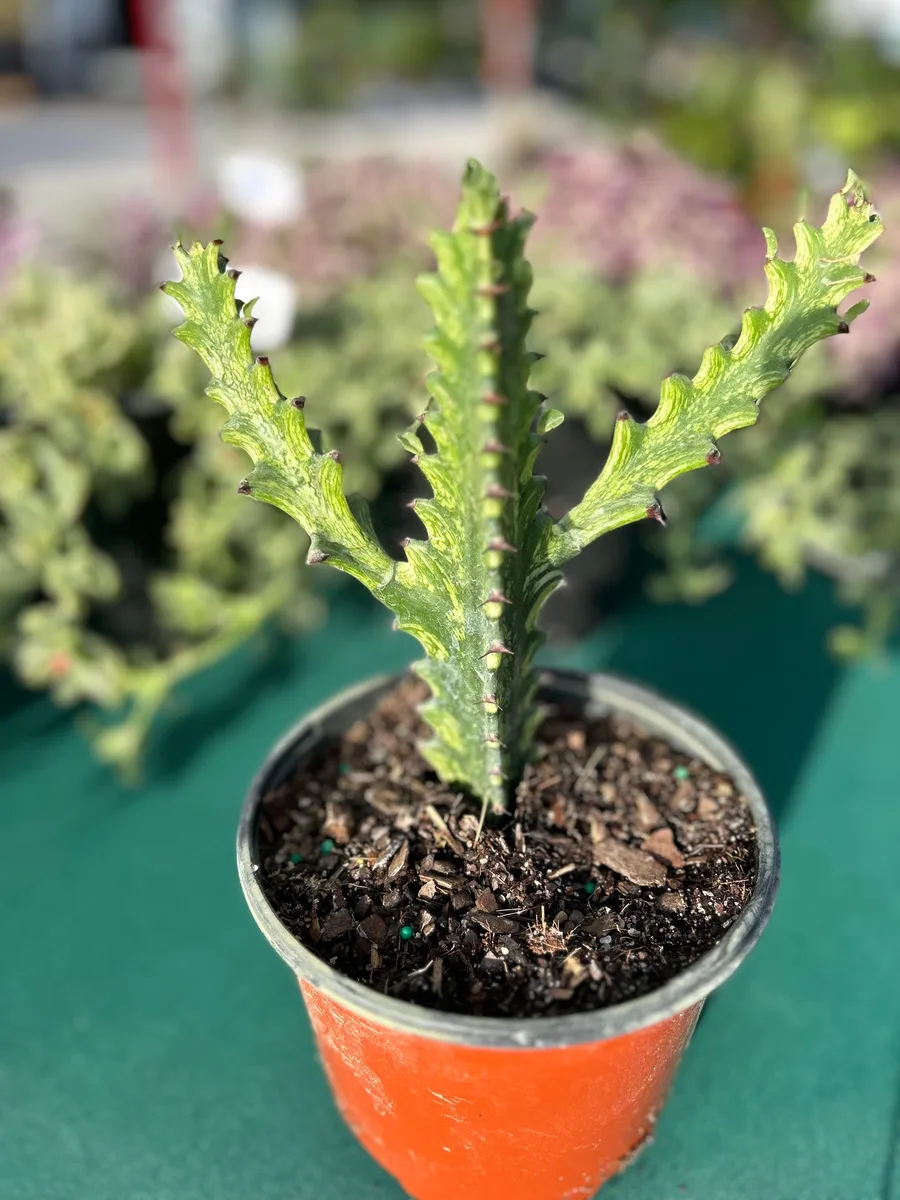
A fast-growing, clump-forming herbaceous perennial, producing stems to 60cm (2ft) high and a spread of 50cms (20in). Leaves are dark-green with a white central vein. Small, inconspicuous flowers surrounded by showy, bright, lime-yellow floral bracts, are produced in terminal clusters in summer.
Scientific classification
- Species
- Euphorbia wallichii 'Lemon and Lime' (Euphorbia wallichii 'Lemon and Lime')
- Genus
- Euphorbia
- Family
- Euphorbiaceae
- Order
- Malpighiales
- Class
- Magnoliopsida
- Phylum
- Magnoliophyta
- IRRITANT to skin/eye, harmful if eaten. Wear gloves and other protective equipment when handling]
- Toxicity
- Herbaceous Perennial
- Plant type
- 0.5-1 metres
- Height
- 0.1-0.5 metres
- Spread
- Deciduous
- Foliage
- Clump forming · Bushy
- Habit
- Spring · Summer · Autumn
- Season of interest
- Full sun · Partial shade
- Sunlight
- Information to be completed
- Ideal temperature









Euphorbia wallichii 'Lemon and Lime' pictures
Distribution of Euphorbia wallichii 'Lemon and Lime'
Distribution map
- Native
- Introduced
- Cultivated
Source:WCVP v16 · Royal Botanic Gardens, Kew · CC BY 3.0 · Boundaries:WGSRPD / TDWG
Toxicity
IRRITANT to skin/eye, harmful if eaten. Wear gloves and other protective equipment when handling]
Euphorbia wallichii 'Lemon and Lime' care guide
- Water moderately, allowing soil to dry slightly between waterings; reduce in winter.
- Watering
- Full sun · Partial shade
- Sunlight

Watering
Water moderately, allowing soil to dry slightly between waterings; reduce in winter.
Fertilizing
 Fertilizing
Apply a dilute balanced fertilizer monthly during the spring and summer months.
Pruning
 Pruning
Cut back old, flowered stems to the ground in late summer and autumn
Propagation
 Propagation
Propagate by division in early spring or take basal cuttings in spring or early summer; dip cut surfaces in charcoal or lukewarm water to prevent bleeding
Growing
 Growing
Grows best in well-drained soil, in full sun to partial shade. See Euphorbia for further advice
Common pests and diseases
Diseases
Generally disease-free
Pests
Generally pest-free
Explore the plant health library →




