
Lilium 'Golden Joy'
Also known as: Information to be completed
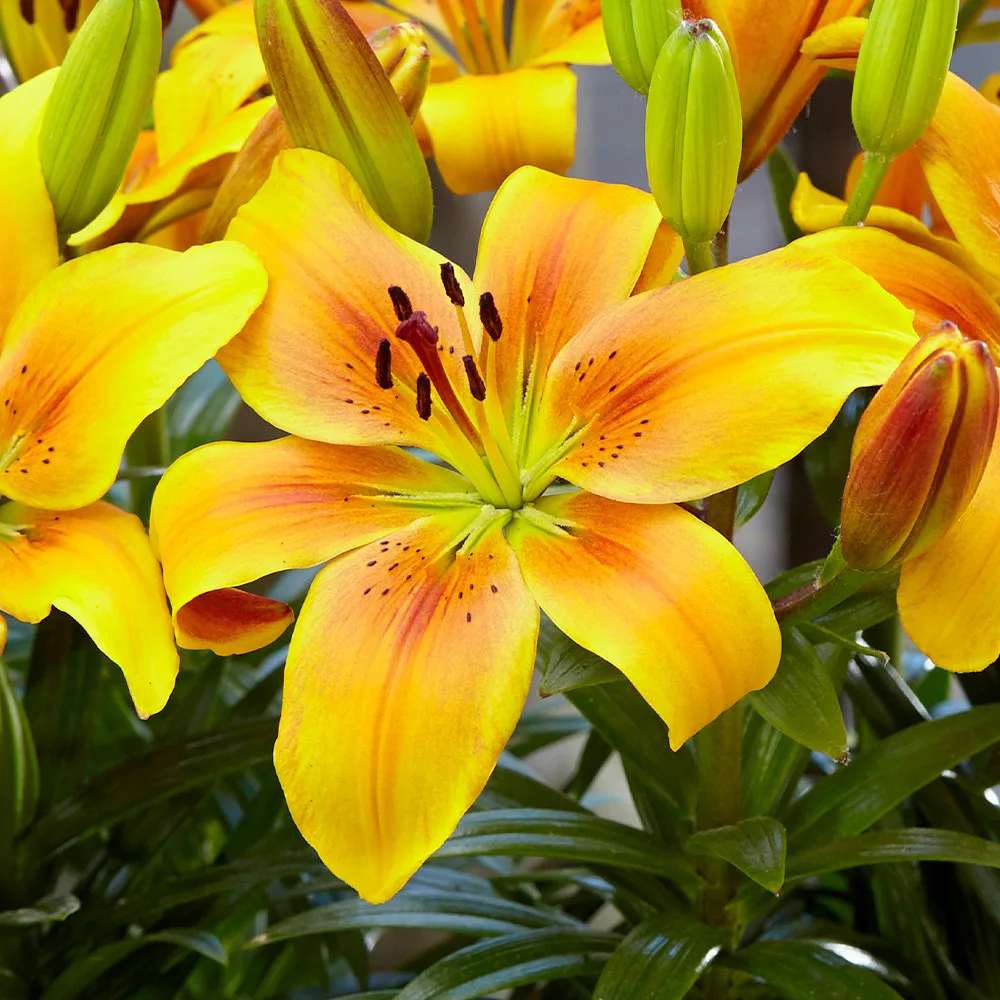
A deciduous, bulbous, compact herbaceous perennial to around 45cm, with strap-like dark green leaves and fragrant, upward-facing, golden yellow, speckled flowers with orange-red throats, appearing in summer
Scientific classification
- Species
- Lilium 'Golden Joy' (Lilium 'Golden Joy')
- Genus
- Lilium
- Family
- Liliaceae
- Ornamental bulbs - not to be eaten. Wear gloves and other protective equipment when handling
- Toxicity
- Bulbs · Herbaceous Perennial
- Plant type
- 0.1-0.5 metres
- Height
- 0.1-0.5 metres
- Spread
- Deciduous
- Foliage
- Columnar upright
- Habit
- Spring · Summer · Autumn
- Season of interest
- Full sun · Partial shade
- Sunlight
- Information to be completed
- Ideal temperature









Lilium 'Golden Joy' pictures
Distribution of Lilium 'Golden Joy'
Distribution map
Information to be completed
Information to be completed
Culture
Information to be completed
Toxicity
Ornamental bulbs - not to be eaten. Wear gloves and other protective equipment when handling
Quick identification of Lilium 'Golden Joy'
Information to be completed
Lilium 'Golden Joy' care guide
- Even moist soil while foliage grows, dry when bulbs dormant
- Watering
- Full sun · Partial shade
- Sunlight
- Information to be completed
- Ideal temperature

Watering
Even moist soil while foliage grows, dry when bulbs dormant
Fertilizing
 Fertilizing
Bulb high potassium feed monthly pre flowering period
Pruning
 Pruning
No pruning required, but deadheading will improve their appearance
Propagation
 Propagation
Propagate by division: separate offsets after the leaves have died down
Growing
 Growing
Plant bulbs in autumn, 15cm deep, in moist but well-drained soil enriched with leaf mould or well-rotted organic matter, in a sheltered position, with the base of the plant in shade, for example from ground-cover plants, and the rest of the plant in full sun; for more advice, see growing lilies in containers
People also ask
Information to be completed
Common pests and diseases
Diseases
May be susceptible to lily disease, other fungal diseases, and virus diseases; for more advice, see lily diseases
Pests
May be susceptible to lily beetle, aphids, slugs, snails, Thrips, leatherjackets, and wireworms, and to damage by rabbits and voles; plants in containers may be affected by vine weevil
Explore the plant health library →




