
garlic 'Arno'
Also known as: Information to be completed
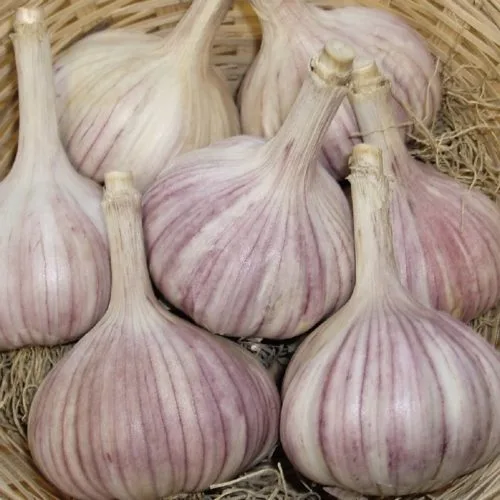
Perennial vegetable grown as an annual, the edible, strongly scented, compact bulbs are divided into cloves with long, narrow, flat green leaves on a tall stalk in summer. This variety produces large bulbs with pink cloves contained in a whitish skin
Scientific classification
- Species
- garlic 'Arno' (Allium sativum 'Arno')
- Genus
- Allium
- Family
- Amaryllidaceae
- Order
- Asparagales
- Class
- Liliopsida
- Phylum
- Magnoliophyta
- Skin irritant/allergen. Wear gloves and other protective equipment when handling
- Toxicity
- Bulbs
- Plant type
- 0.5-1 metres
- Height
- 0.1-0.5 metres
- Spread
- Deciduous
- Foliage
- Clump forming
- Habit
- Summer · Autumn
- Season of interest
- Full sun
- Sunlight
- Information to be completed
- Ideal temperature









garlic 'Arno' pictures
Distribution of garlic 'Arno'
Distribution map
- Native
- Introduced
- Cultivated
Source:WCVP v16 · Royal Botanic Gardens, Kew · CC BY 3.0 · Boundaries:WGSRPD / TDWG
Toxicity
Skin irritant/allergen. Wear gloves and other protective equipment when handling
garlic 'Arno' care guide
- Moist soil during active growth, then reduce watering after foliage yellows
- Watering
- Full sun
- Sunlight

Watering
Moist soil during active growth, then reduce watering after foliage yellows
Fertilizing
 Fertilizing
Light bulb fertilizer at emergence and again after flowering
Pruning
 Pruning
No pruning required
Propagation
 Propagation
Propagate by splitting bulbs into individual cloves and planting at double their depth
Growing
 Growing
Grow in fertile, moist but free draining soil in full sun. Also suitable for container growing in a pot which is at least 10cm deep. Grow in a free-draining media, be careful not to over-water. Harvest bulbs once tops begin to yellow and fall over
Common pests and diseases
Diseases
May be susceptible to onion rot, downy mildew and rust
Pests
Generally pest-free, new growth may suffer from slugs. May be susceptible to allium leaf miner, onion thrips and onion fly
Explore the plant health library →




