
Verbena bonariensis var. conglomerata
Also known as: Information to be completed
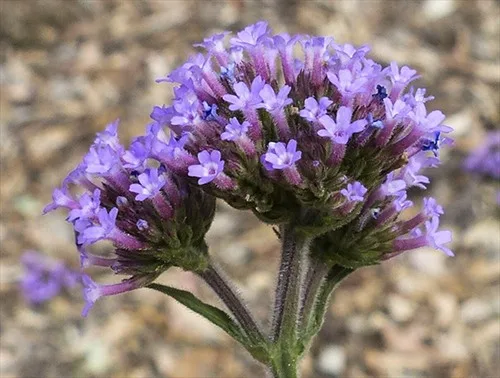
A stiff, upright, open clump-forming perennial to 2m tall. Rough, branching stems sparsely bear toothed, wrinkled leaves. From midsummer to early autumn it bears compact clusters of lilac-purple flowers; these are a good nectar source for pollinating insects
Scientific classification
- Species
- Verbena bonariensis var. conglomerata (Verbena bonariensis var. conglomerata)
- Genus
- Verbena
- Family
- Verbenaceae
- Order
- Lamiales
- Class
- Magnoliopsida
- Phylum
- Magnoliophyta
- Information to be completed
- Toxicity
- Herbaceous Perennial
- Plant type
- 1.5-2.5 metres
- Height
- 0.1-0.5 metres
- Spread
- Deciduous
- Foliage
- Columnar upright
- Habit
- Spring · Summer · Autumn
- Season of interest
- Full sun
- Sunlight
- Information to be completed
- Ideal temperature









Verbena bonariensis var. conglomerata pictures
Distribution of Verbena bonariensis var. conglomerata
Distribution map
- Native
- Introduced
- Cultivated
Source:WCVP v16 · Royal Botanic Gardens, Kew · CC BY 3.0 · Boundaries:WGSRPD / TDWG
Verbena bonariensis var. conglomerata care guide
- Moderate watering, let topsoil dry slightly between soakings
- Watering
- Full sun
- Sunlight

Watering
Moderate watering, let topsoil dry slightly between soakings
Fertilizing
 Fertilizing
Light flowering feed during active bloom season
Pruning
 Pruning
No pruning required
Propagation
 Propagation
Propagate by seed or division
Growing
 Growing
Grow in moist but well-drained, moderately fertile soil in full sun. Add a deep, dry mulch at the onset of winter. Cut back to ground level in early spring. May have the potential to become a nuisance due to prolific self-seeding in not well managed
Common pests and diseases
Diseases
May be susceptible to powdery mildews
Pests
May be susceptible to aphids, thrips and leafhoppers
Explore the plant health library →




