
aubergine 'Black Beauty'
Also known as: Information to be completed
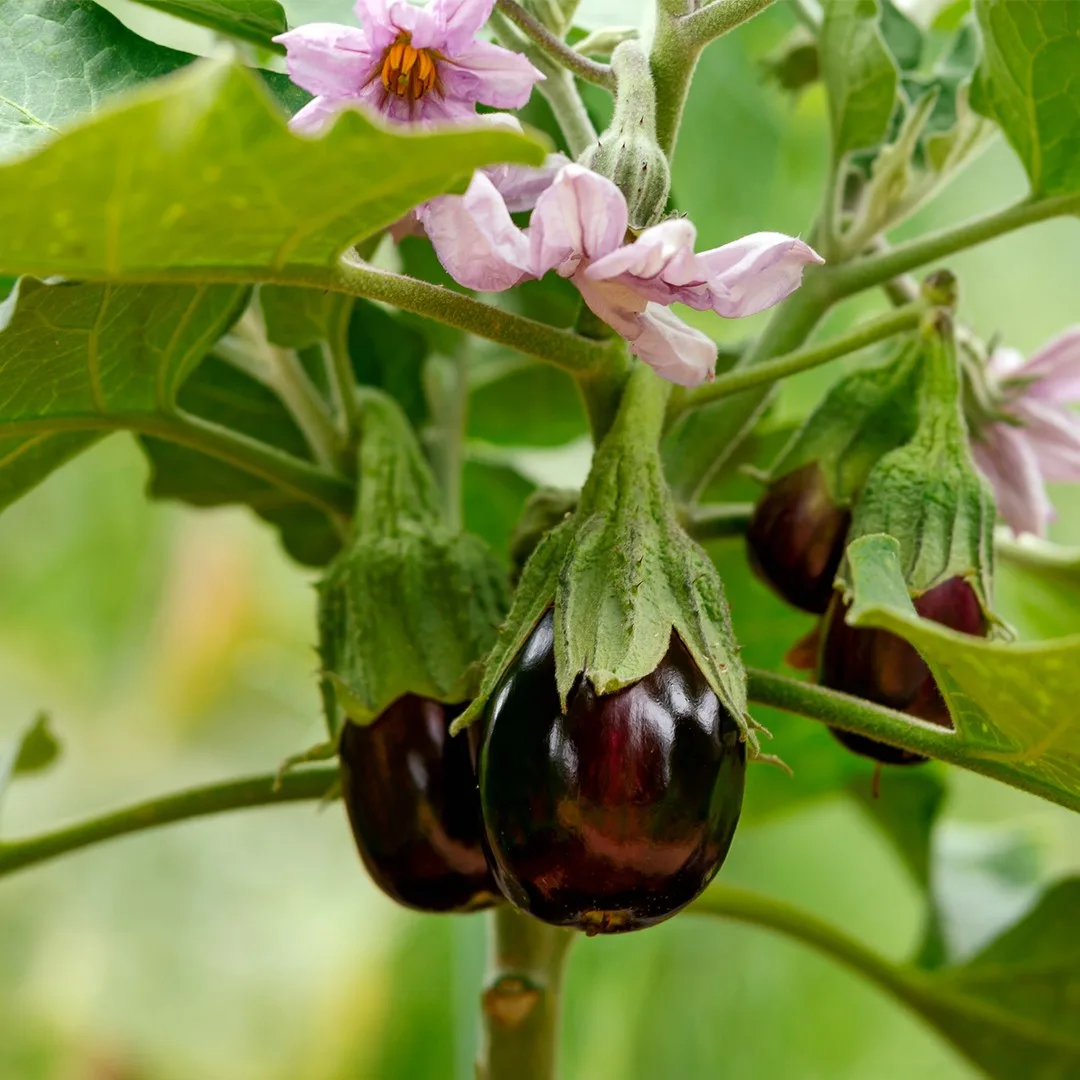
A bushy annual, vegetable and a long-established variety, which will reach 1m. It has green leaves and purple flowers, which develop into a crop of large egg-shaped purple-black fruits.
Scientific classification
- Species
- aubergine 'Black Beauty' (Solanum melongena 'Black Beauty')
- Genus
- Solanum
- Family
- Solanaceae
- Order
- Solanales
- Class
- Magnoliopsida
- Phylum
- Magnoliophyta
- Information to be completed
- Toxicity
- Fruit Edible · Conservatory Greenhouse
- Plant type
- 0.5-1 metres
- Height
- 0.5-1 metres
- Spread
- Evergreen
- Foliage
- Bushy
- Habit
- Spring · Summer · Autumn
- Season of interest
- Full sun
- Sunlight
- Information to be completed
- Ideal temperature









aubergine 'Black Beauty' pictures
aubergine 'Black Beauty' care guide
- Moderate regular watering, avoid prolonged drought or waterlogging
- Watering
- Full sun
- Sunlight

Watering
Moderate regular watering, avoid prolonged drought or waterlogging
Fertilizing
 Fertilizing
Balanced feed in spring and light repeat in growth season
Pruning
 Pruning
Little pruning is needed. Remove diseased, damaged, crowded or crossing shoots and unwanted growth. Timing depends on the plant: generally late winter or early spring; plants prone to bleeding and deciduous magnolias need different timing, and deciduous azaleas and lilacs are pruned after flowering.
Propagation
 Propagation
Propagate by seed. See sowing vegetable seeds or sowing seeds indoors for further advice
Growing
 Growing
Grow in fertile, moisture-retentive soil in good light. Can grow outside in summer. For more advice see aubergine cultivation
Common pests and diseases
Diseases
May be susceptible to honey fungus (rarely)
Pests
May be susceptible to aphids, glasshouse whitefly, glasshouse red spider mite and two-spotted mite
Explore the plant health library →




