
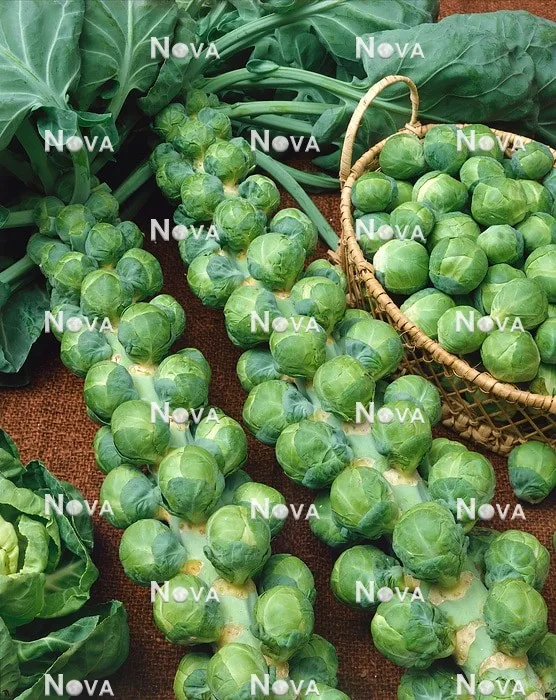
Brussels sprout 'Bedford Fillbasket'
Also known as: Information to be completed
Green brussel sprouts of above average size are produced on a 75cm plant, from autumn to January
Scientific classification
- Species
- Brussels sprout 'Bedford Fillbasket' (Brassica oleracea 'Bedford Fillbasket')
- Genus
- Brassica
- Family
- Brassicaceae
- Order
- Brassicales
- Class
- Magnoliopsida
- Phylum
- Tracheophyta
- Information to be completed
- Toxicity
- Annual Biennial
- Plant type
- 0.5-1 metres
- Height
- 0.1-0.5 metres
- Spread
- Evergreen
- Foliage
- Columnar upright
- Habit
- Spring · Summer · Autumn · Winter
- Season of interest
- Full sun · Partial shade
- Sunlight
- Information to be completed
- Ideal temperature









Brussels sprout 'Bedford Fillbasket' pictures
Distribution of Brussels sprout 'Bedford Fillbasket'
Distribution map
- Native
- Introduced
- Cultivated
Source:WCVP v16 · Royal Botanic Gardens, Kew · CC BY 3.0 · Boundaries:WGSRPD / TDWG
Brussels sprout 'Bedford Fillbasket' care guide
- Evenly moist soil leaf growth phase, drier after harvest period
- Watering
- Full sun · Partial shade
- Sunlight

Watering
Evenly moist soil leaf growth phase, drier after harvest period
Fertilizing
 Fertilizing
High-nitrogen vegetable feed biweekly foliage growing stage
Pruning
 Pruning
No pruning necessary
Propagation
 Propagation
Propagate by seed. See sowing vegetable seeds or sowing seeds indoors
Growing
 Growing
Sow seed outdoors in fertile but firm, soil that isn't too acidic. Or if space is limited, start the seeds in modules or seedtrays and plant outside when big enough to handle easily (about 5 or 6 leaves). For more advice see vegetable cultivation. Will need staking
Common pests and diseases
Diseases
May be susceptible to brassica downy mildew and brassica white blister. In areas where brassicas have been grown before, clubroot can build up in the soil
Pests
May be susceptible to flea beetle which can prevent seedlings from thriving and attacked by caterpillars when eggs laid by butterflies, hatch and feed. It is very popular food for pigeons which only netting can prevent. It is also eaten by snails, although once plants are established, this damage isn't usually severe. The cabbage root fly can cause failure to thrive and a heavy infestation of mealy cabbage aphid can spoil the harvest
Explore the plant health library →




