
devil lily
Also known as: kentan; spear-leaved lily; tiger lily
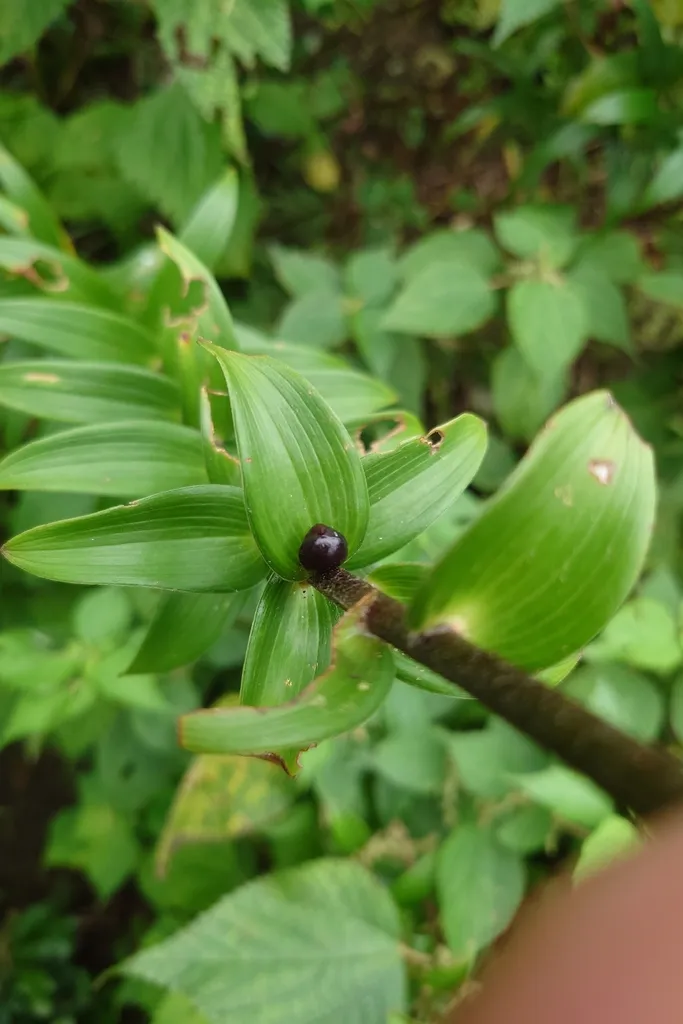
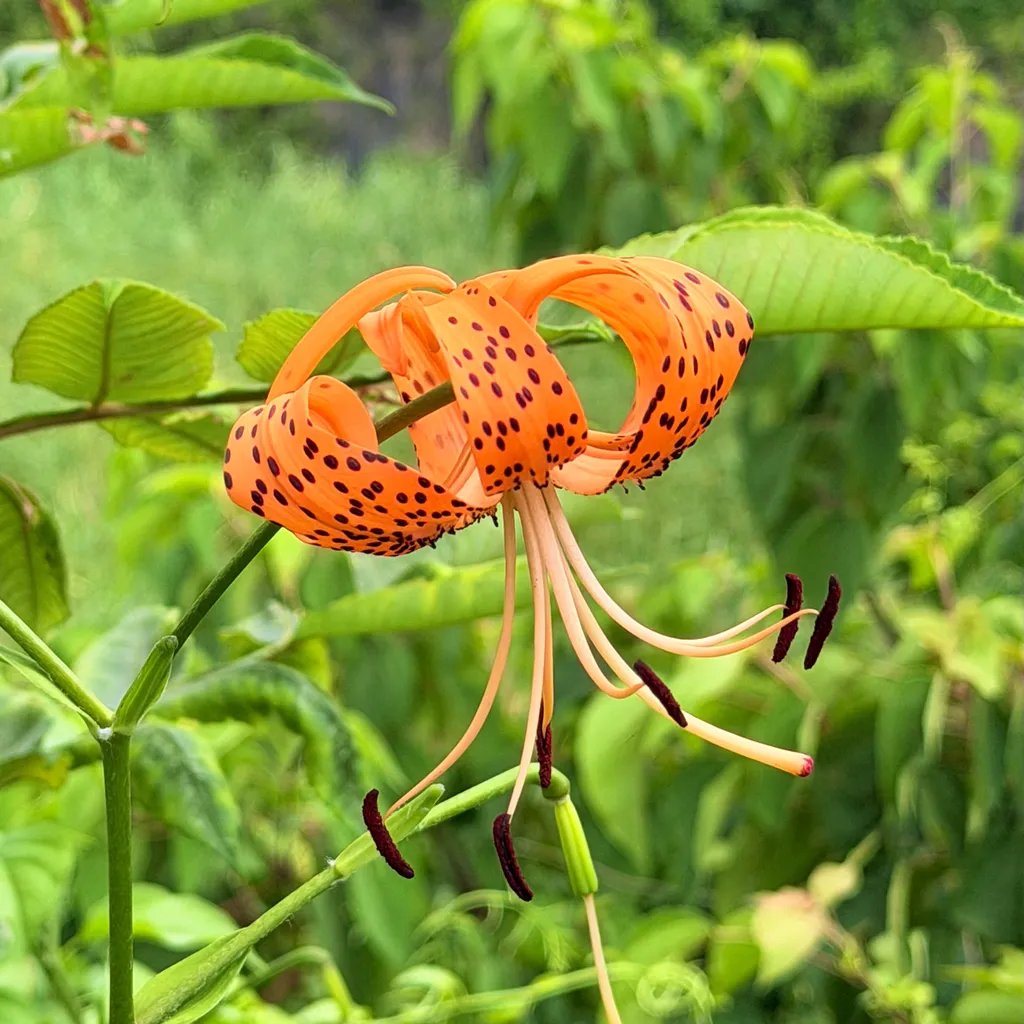
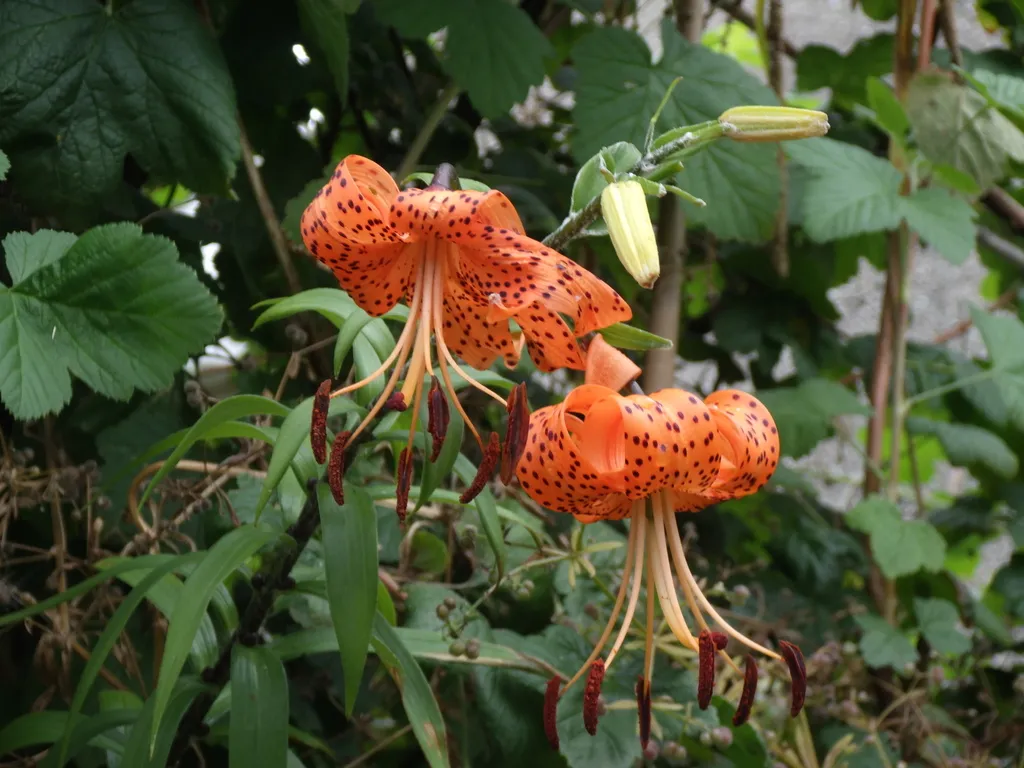
A robust, stem-rooting, clump-forming lily with dark purple stems and shiny, narrow, dark green leaves up to 20cm long. Purplish-black bulbils are produced in the upper leaf axils. Up to 40, nodding, orange, turkscap flowers, with dark purple spots, are produced in late summer and early autumn
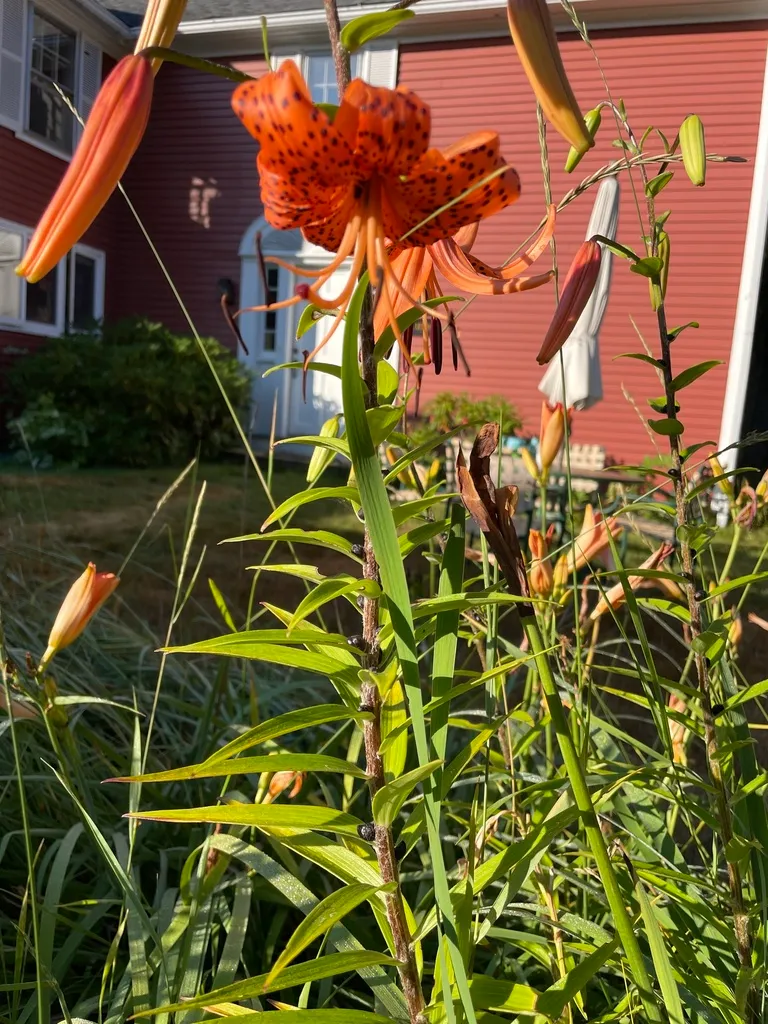
Scientific classification
- Species
- devil lily (Lilium lancifolium)
- Genus
- Lilium
- Family
- Liliaceae
- Order
- Liliales
- Class
- Liliopsida
- Phylum
- Magnoliophyta
- Ornamental bulbs - not to be eaten. Wear gloves and other protective equipment when handling
- Toxicity
- Bulbs
- Plant type
- 1-1.5 metres
- Height
- 0.1-0.5 metres
- Spread
- Deciduous
- Foliage
- Columnar upright
- Habit
- Spring · Summer · Autumn
- Season of interest
- Full sun
- Sunlight
- Information to be completed
- Ideal temperature









devil lily pictures
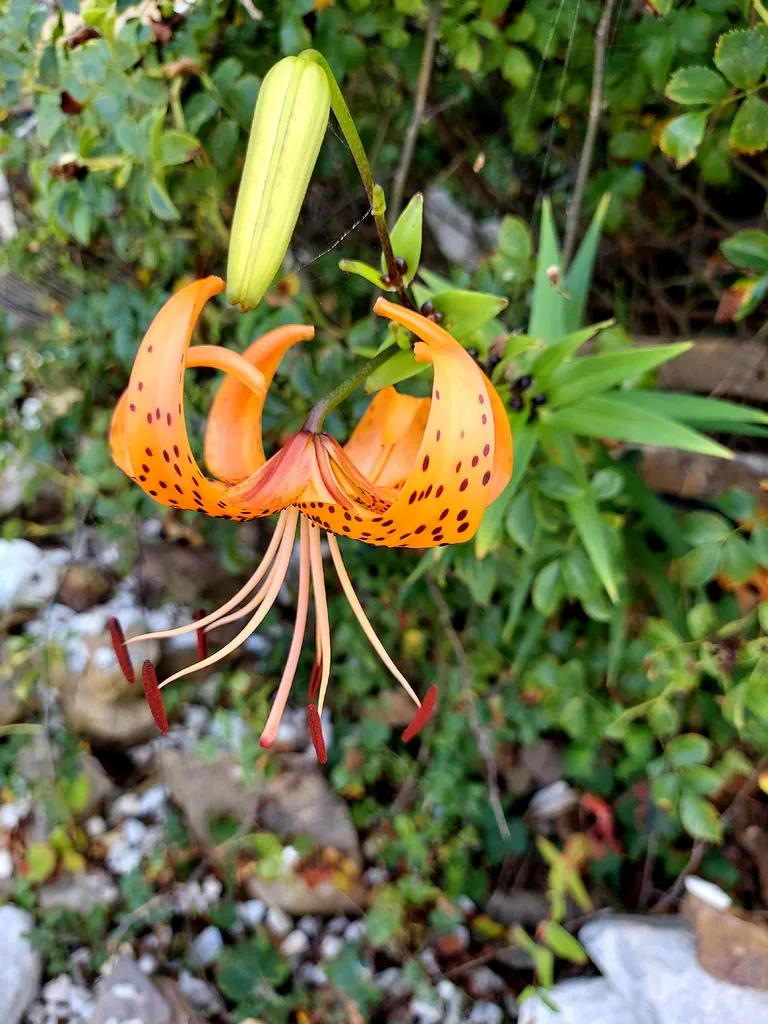
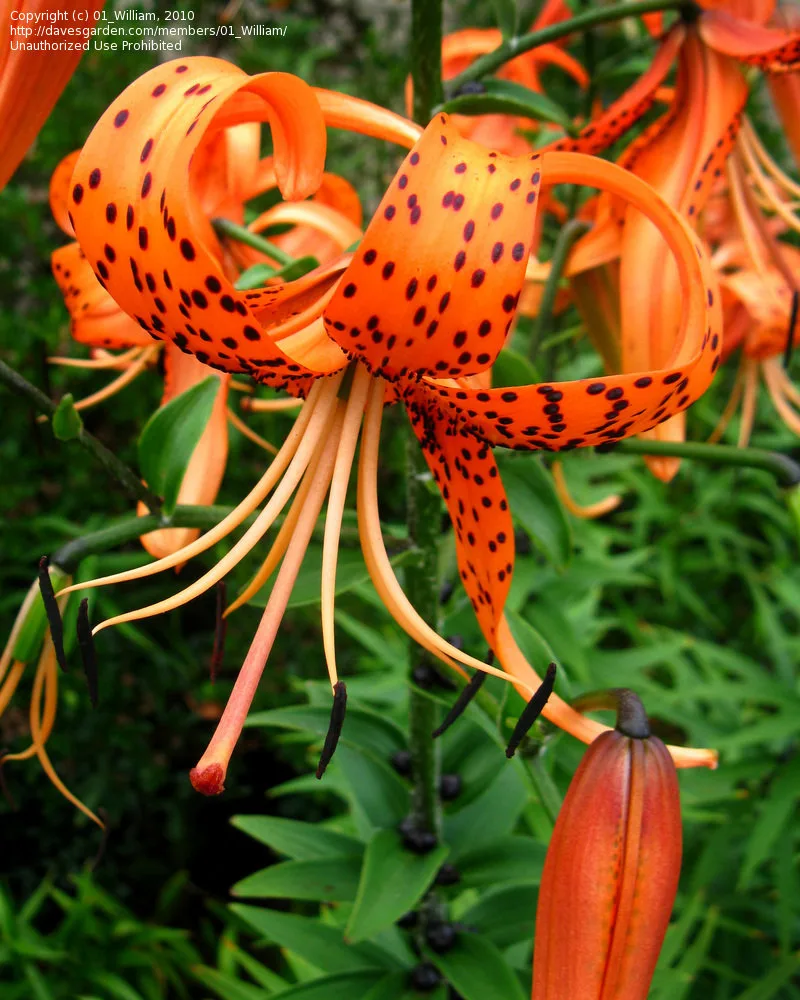
Distribution of devil lily
Distribution map
- Native
- Introduced
- Cultivated
Source:WCVP v16 · Royal Botanic Gardens, Kew · CC BY 3.0 · Boundaries:WGSRPD / TDWG
Toxicity
Ornamental bulbs - not to be eaten. Wear gloves and other protective equipment when handling
devil lily care guide
- Keep soil lightly and evenly moist during active stem and bud growth
- Watering
- Full sun
- Sunlight

Watering
Keep soil lightly and evenly moist during active stem and bud growth
Fertilizing
 Fertilizing
Lily bulb feed every three weeks during spring and summer growth
Pruning
 Pruning
No pruning needed
Propagation
 Propagation
Propagate by seed, sown as soon as ripe; by removing bulblets from parent bulbs as they become dormant; by removing bulbils from the leaf axils; or by scaling. See bulb propagation
Growing
 Growing
Prefers moist, acid soil enriched with leaf mould or well-rotted organic matter, but will tolerate some lime
Common pests and diseases
Diseases
May be susceptible to grey moulds and a virus; see lily diseases
Pests
May be susceptible to lily beetle, aphids, slugs, snails, Thrips, leatherjackets, and wireworms, and to damage by rabbits and voles; plants in containers may be affected by vine weevil
Explore the plant health library →




