
zinnia 'Dreamland Pink'
Also known as: Information to be completed
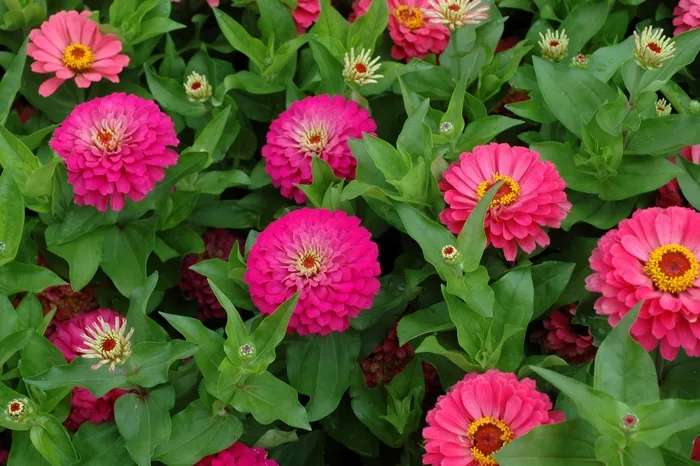
A compact annual to around 35cm tall with lance-shaped foliage. Semi-double to double, flat-petalled blooms are borne above the foliage on well-branched stems from summer into autumn
Scientific classification
- Species
- zinnia 'Dreamland Pink' (Zinnia elegans 'Dreamland Pink')
- Genus
- Zinnia
- Family
- Asteraceae
- Order
- Asterales
- Class
- Magnoliopsida
- Phylum
- Magnoliophyta
- Information to be completed
- Toxicity
- Annual Biennial
- Plant type
- 0.1-0.5 metres
- Height
- 0.1-0.5 metres
- Spread
- Deciduous
- Foliage
- Bushy
- Habit
- Spring · Summer · Autumn
- Season of interest
- Full sun
- Sunlight
- Information to be completed
- Ideal temperature









zinnia 'Dreamland Pink' pictures
Distribution of zinnia 'Dreamland Pink'
Distribution map
- Native
- Introduced
- Cultivated
Source:WCVP v16 · Royal Botanic Gardens, Kew · CC BY 3.0 · Boundaries:WGSRPD / TDWG
zinnia 'Dreamland Pink' care guide
- Water regularly, keeping the soil moist but not waterlogged; water more in hot weather.
- Watering
- Full sun
- Sunlight

Watering
Water regularly, keeping the soil moist but not waterlogged; water more in hot weather.
Fertilizing
 Fertilizing
Apply a balanced fertilizer every 3-4 weeks during the growing season.
Pruning
 Pruning
Deadhead to prolong flowering. Pinch back stems of young plants to encourage branching unless long-stemmed flowers are required
Propagation
 Propagation
Propagate by seed; resents root disturbance so either sow in situ in late spring after the danger of frost has passed or take care when transplanting from seed sown under cover with heat in early spring
Growing
 Growing
Grow in a fertile, well drained soil in full sun
Common pests and diseases
Diseases
May be affected by foot and root rot, grey moulds, fungal leaf spot and powdery mildews
Pests
Generally trouble free
Explore the plant health library →




