
pumpkin 'Jack be Little'
Also known as: squash 'Jack be Little'
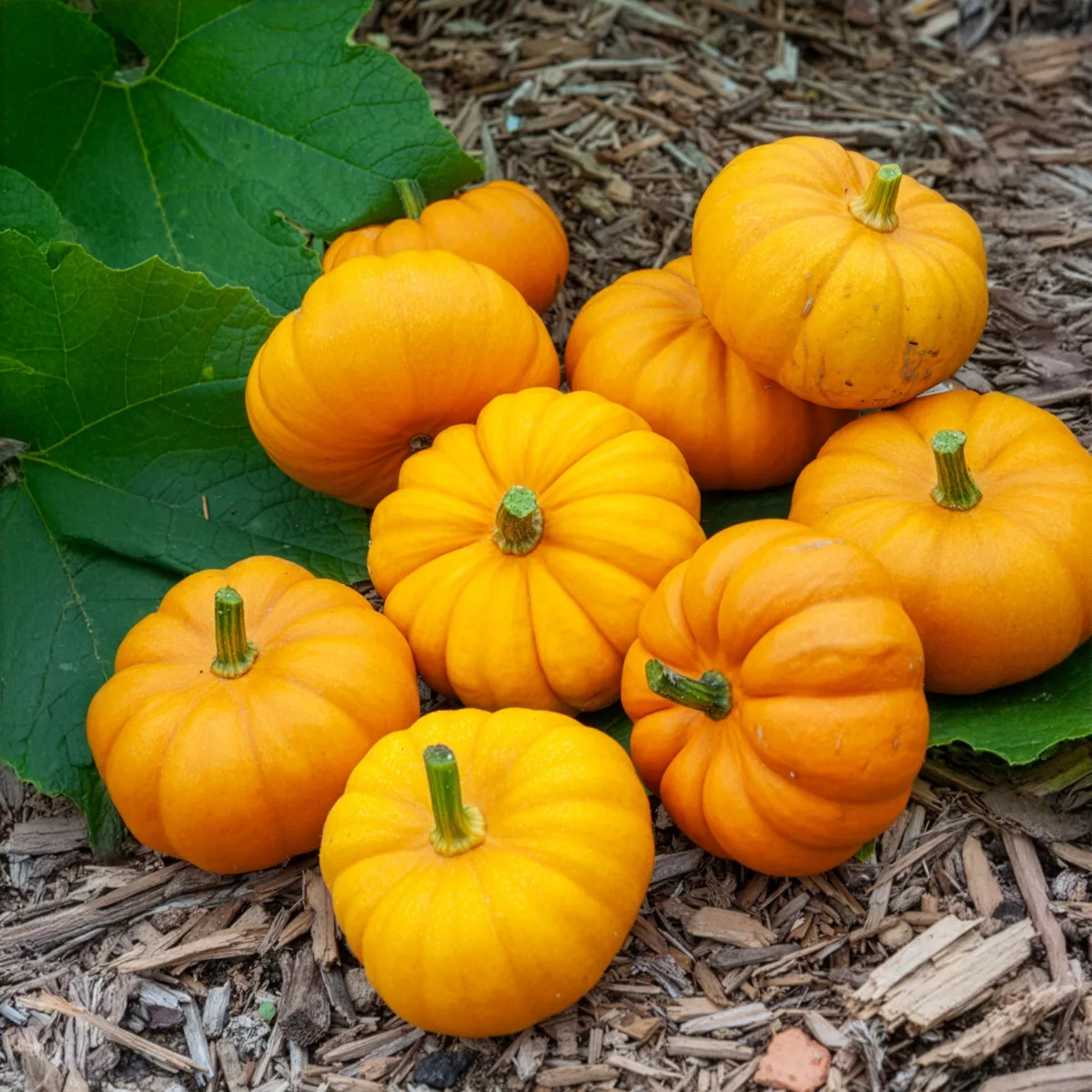
A cultivar producing one of the smallest pumpkins which are attractively ribbed, round and flattened and roughly palm sized, with a bright orange skin. These are perfect for stuffing and baking whole, or for using as miniature lanterns for halloween decorations. One plant will produce around ten fruits. When fully ripened the fruits can store for up to 12 months.
Scientific classification
- Species
- pumpkin 'Jack be Little' (Cucurbita pepo 'Jack be Little')
- Genus
- Cucurbita
- Family
- Cucurbitaceae
- Order
- Cucurbitales
- Class
- Magnoliopsida
- Phylum
- Magnoliophyta
- If crop is bitter, don't eat. Wear gloves and other protective equipment when handling
- Toxicity
- Annual Biennial
- Plant type
- 0.1-0.5 metres
- Height
- 1-1.5 metres
- Spread
- Deciduous
- Foliage
- Trailing
- Habit
- Spring · Summer · Autumn
- Season of interest
- Full sun
- Sunlight
- Information to be completed
- Ideal temperature









pumpkin 'Jack be Little' pictures
Distribution of pumpkin 'Jack be Little'
Distribution map
- Native
- Introduced
- Cultivated
Source:WCVP v16 · Royal Botanic Gardens, Kew · CC BY 3.0 · Boundaries:WGSRPD / TDWG
Toxicity
If crop is bitter, don't eat. Wear gloves and other protective equipment when handling
pumpkin 'Jack be Little' care guide
- Keep moisture even through flowering and fruiting, avoiding hard dry swings
- Watering
- Full sun
- Sunlight

Watering
Keep moisture even through flowering and fruiting, avoiding hard dry swings
Fertilizing
 Fertilizing
Tomato or pepper feed every one to two weeks in fruiting season
Pruning
 Pruning
No pruning required
Propagation
 Propagation
Propagate by seed. See sowing vegetable seeds or sowing seeds indoors for further advice
Growing
 Growing
Grow in fertile, moisture retentive but well drained, acidic to neutral soil in full sun. Sow indoors March to May in good quality seed compost. Sow the seeds on their side 1cm deep and maintain a constant temperature of 18-21C. Feed regularly with a high potassium fertiliser when the first fruits start to swell. See cucurbit cultivation for further advice
Common pests and diseases
Diseases
May be susceptible to grey moulds and powdery mildews
Pests
Generally pest-free
Explore the plant health library →




