
gooseberry 'Hinnonmäki Röd'
Also known as: Information to be completed
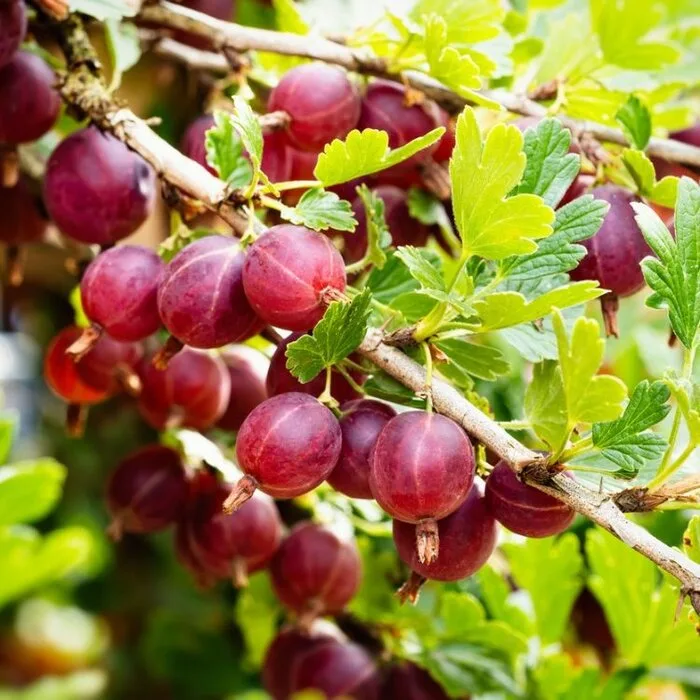
Hinnonmäki Röd' is a red gooseberry, for dessert or culinary use, with a vigorous upright growth habit. It is easy to grow and the round, juicy fruit is ready to pick in midsummer
Scientific classification
- Species
- gooseberry 'Hinnonmäki Röd' (Ribes uva-crispa 'Hinnonmäki Röd')
- Genus
- Ribes
- Family
- Grossulariaceae
- Order
- Saxifragales
- Class
- Magnoliopsida
- Phylum
- Magnoliophyta
- Information to be completed
- Toxicity
- Shrubs · Fruit Edible
- Plant type
- 1-1.5 metres
- Height
- 0.5-1 metres
- Spread
- Deciduous
- Foliage
- Bushy
- Habit
- Spring · Summer · Autumn
- Season of interest
- Full sun · Partial shade
- Sunlight
- Information to be completed
- Ideal temperature









gooseberry 'Hinnonmäki Röd' pictures
Distribution of gooseberry 'Hinnonmäki Röd'
Distribution map
- Native
- Introduced
- Cultivated
Source:WCVP v16 · Royal Botanic Gardens, Kew · CC BY 3.0 · Boundaries:WGSRPD / TDWG
gooseberry 'Hinnonmäki Röd' care guide
- Regular deep watering to maintain damp root zone in warm summer days
- Watering
- Full sun · Partial shade
- Sunlight

Watering
Regular deep watering to maintain damp root zone in warm summer days
Fertilizing
 Fertilizing
Berry bush fertilizer applied twice yearly pre-spring and post-harvest
Pruning
 Pruning
Prune gooseberries in winter and summer
Propagation
 Propagation
Propagate by hardwood cuttings in winter
Growing
 Growing
Grow gooseberries in a moist but well-drained soil that has been improved with organic matter. Mildly alkaline (chalky) soils are tolerated. They can be grown as goblet-shaped bushes or cordons. Water well as fruits swell and keep the base of the plants weed and grass-free. Further gooseberry cultivation advice
Common pests and diseases
Diseases
Gooseberry leaf spot can cause problems; this cultivar shows resistance to American gooseberry mildew
Pests
Gooseberry sawfly, capsid bug, birds, squirrels and aphids can be problematic
Explore the plant health library →




