
gooseberry 'Invicta'
Also known as: Information to be completed
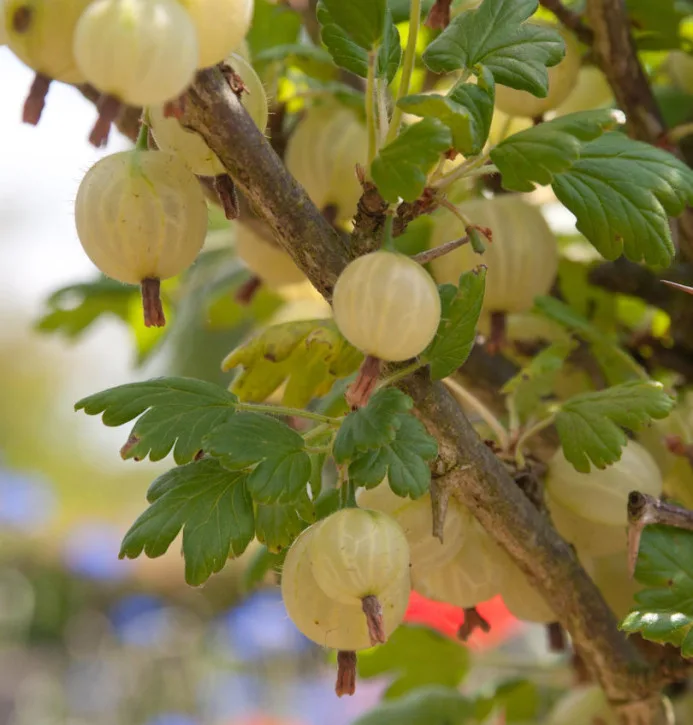
Gooseberry 'Invicta' is a green culinary cultivar that has some resistance to mildew and leaf spot. It crops heavily and has quite good flavour. Very vigorous with a spreading habit and large thorns. Young shoots can be damaged on exposed sites. A mid-season gooseberry, fruiting slightly earlier than 'Careless'
Scientific classification
- Species
- gooseberry 'Invicta' (Ribes uva-crispa 'Invicta')
- Genus
- Ribes
- Family
- Grossulariaceae
- Information to be completed
- Toxicity
- Shrubs · Fruit Edible
- Plant type
- 1-1.5 metres
- Height
- 1-1.5 metres
- Spread
- Deciduous
- Foliage
- Bushy
- Habit
- Spring · Summer
- Season of interest
- Full sun · Partial shade
- Sunlight
- Information to be completed
- Ideal temperature









gooseberry 'Invicta' pictures
Distribution of gooseberry 'Invicta'
Distribution map
Information to be completed
Information to be completed
Culture
Information to be completed
Toxicity
Information to be completed
Quick identification of gooseberry 'Invicta'
Information to be completed
gooseberry 'Invicta' care guide
- Thorough deep watering, maintain steady damp soil for fruiting currant
- Watering
- Full sun · Partial shade
- Sunlight
- Information to be completed
- Ideal temperature

Watering
Thorough deep watering, maintain steady damp soil for fruiting currant
Fertilizing
 Fertilizing
Soft fruit balanced feed applied two times each spring and summer year
Pruning
 Pruning
Prune gooseberries in winter and summer
Propagation
 Propagation
Propagate by hardwood cuttings in winter
Growing
 Growing
Grow gooseberries in a moist but well-drained soil that has been improves with organic matter. Mildly alkaline (chalky) soils are tolerated. They can be grown as goblet-shaped bushes or cordons. Water well as fruits swell and keep the base of the plants weed and grass-free. Further gooseberry cultivation advice
People also ask
Information to be completed
Common pests and diseases
Diseases
American gooseberry mildew and gooseberry leaf spot can cause problems
Pests
May be susceptible to Gooseberry sawfly, capsid bug, birds, squirrels and aphids
Explore the plant health library →




