
English lavender [Blue Scent]
Also known as: Information to be completed
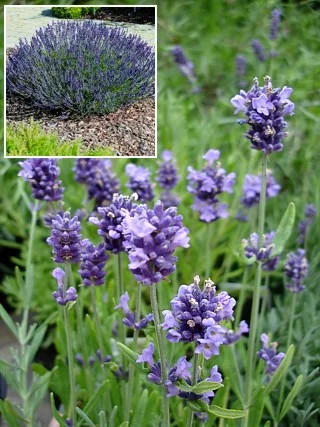
A bushy but compact variety with narrow, scented grey to green leaves and slim, upright stems which produce dense, blue flowers in the summer
Scientific classification
- Species
- English lavender [Blue Scent] (Lavandula angustifolia Blue Scent ('Syngablusc'))
- Genus
- Lavandula
- Family
- Lamiaceae
- Order
- Lamiales
- Class
- Magnoliopsida
- Phylum
- Magnoliophyta
- Information to be completed
- Toxicity
- Shrubs
- Plant type
- 0.1-0.5 metres
- Height
- 0.1-0.5 metres
- Spread
- Evergreen
- Foliage
- Bushy
- Habit
- Spring · Summer · Autumn · Winter
- Season of interest
- Full sun
- Sunlight
- Information to be completed
- Ideal temperature









English lavender [Blue Scent] pictures
English lavender [Blue Scent] care guide
- Water sparingly with excellent drainage, avoid winter wet
- Watering
- Full sun
- Sunlight

Watering
Water sparingly with excellent drainage, avoid winter wet
Fertilizing
 Fertilizing
Light low nitrogen feed in spring only
Pruning
 Pruning
Shorten flowered shoots to about 1.5–2.5 cm from the previous year's growth. Prune after flowering has finished.
Propagation
 Propagation
Propagate by semi-hardwood cuttings
Growing
 Growing
Grow in well-drained soil in a sheltered, sunny position. See lavender cultivation for further details
Common pests and diseases
Diseases
May be susceptible to grey moulds (Botrytis) and honey fungus (rarely)
Pests
May be susceptible to rosemary beetle and cuckoo spit (froghoppers)
Explore the plant health library →




