
arum lily 'Picasso'
Also known as: Information to be completed
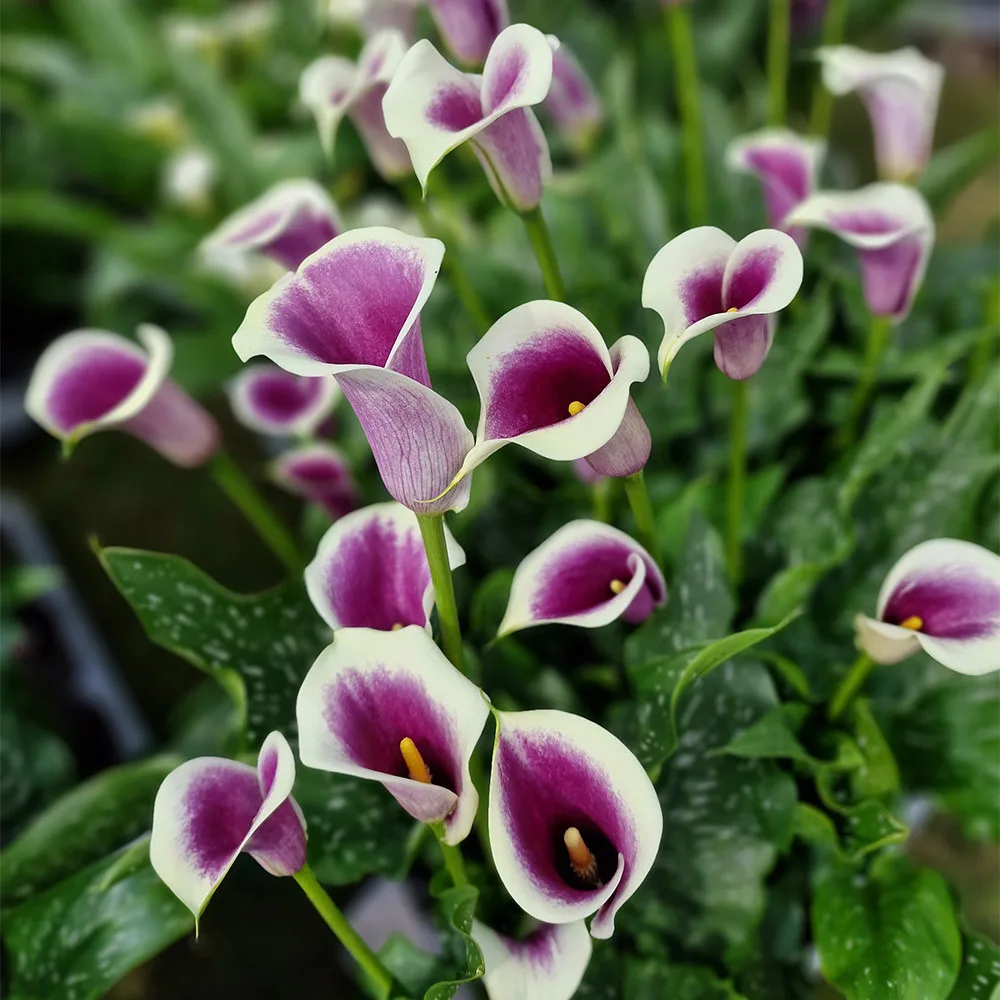
A tuberous perennial, to 60cm tall, with arrow-shaped, wavy green leaves spotted white. Each flower stem has a yellow spadix surrounded by a purple-throated spathe with creamy-white rims
Scientific classification
- Species
- arum lily 'Picasso' (Zantedeschia 'Picasso')
- Genus
- Zantedeschia
- Family
- Araceae
- Harmful if eaten, skin/eye irritant. Wear gloves and other protective equipment when handling]
- Toxicity
- Conservatory Greenhouse · Bedding
- Plant type
- 0.5-1 metres
- Height
- 0.1-0.5 metres
- Spread
- Deciduous
- Foliage
- Clump forming
- Habit
- Spring · Summer · Autumn
- Season of interest
- Full sun
- Sunlight
- Information to be completed
- Ideal temperature









arum lily 'Picasso' pictures
Distribution of arum lily 'Picasso'
Distribution map
Information to be completed
Information to be completed
Culture
Information to be completed
Toxicity
Harmful if eaten, skin/eye irritant. Wear gloves and other protective equipment when handling]
Quick identification of arum lily 'Picasso'
Information to be completed
arum lily 'Picasso' care guide
- Evenly moist soil active growth, fully dry dormant winter season
- Watering
- Full sun
- Sunlight
- Information to be completed
- Ideal temperature

Watering
Evenly moist soil active growth, fully dry dormant winter season
Fertilizing
 Fertilizing
Diluted arum lily potash feed every four weeks spring to fall
Pruning
 Pruning
Deadhead flowers and cut down yellowing foliage at the end of the season
Propagation
 Propagation
Propagate by division in spring
Growing
 Growing
Use as summer bedding, planting in a moist, humus-rich, but well-drained soil in full sun. Lift and store overwinter in trays of compost in a cool, frost-free garage or shed and plant out tubers in spring after risk of frost has passed. Alternatively, grow in containers of loam-based JI No2 potting compost and overwinter in a greenhouse or conservatory. See Zantedeschia cultivation
People also ask
Information to be completed
Common pests and diseases
Diseases
May be susceptible to bacterial or fungal rots or a virus
Pests
May be susceptible to aphids or thrips; glasshouse red spider mite or glasshouse whitefly
Explore the plant health library →




