
Nicotiana × sanderae
Also known as: Information to be completed
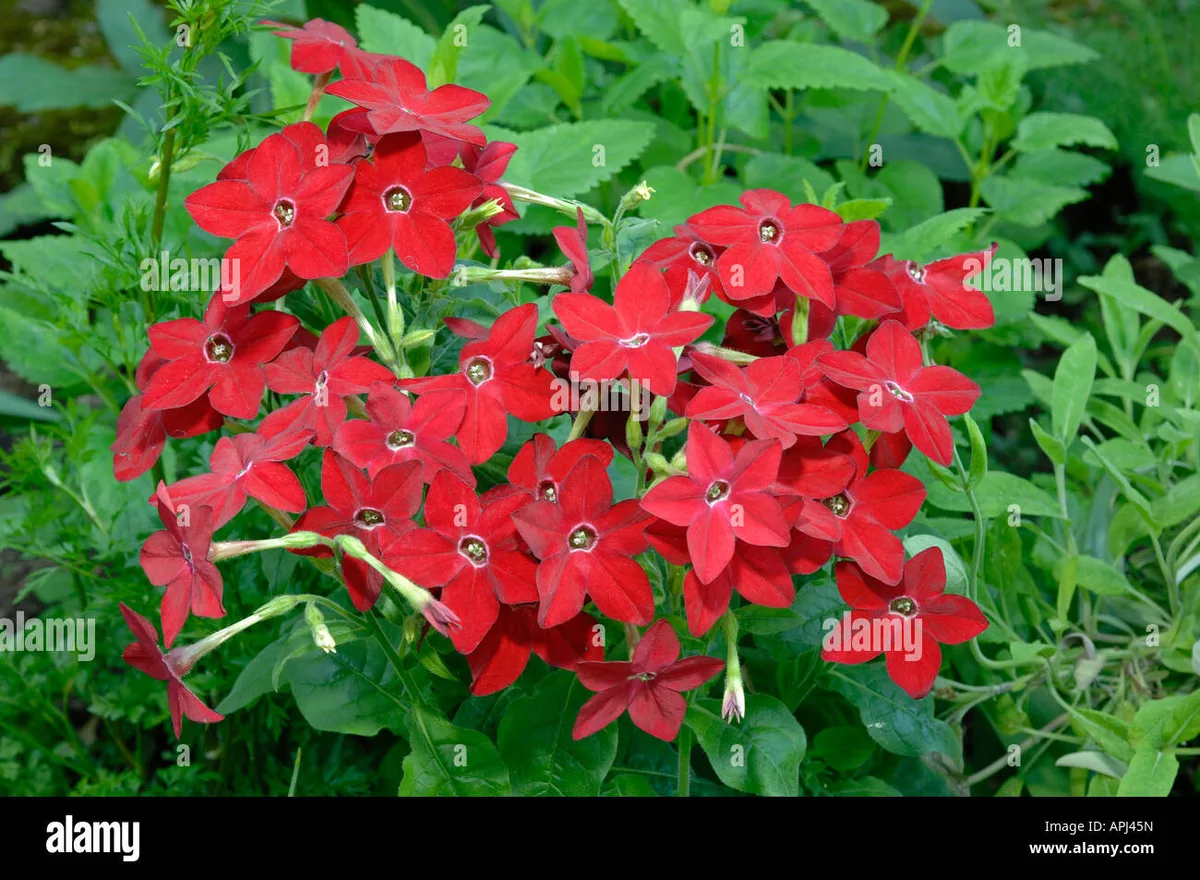
A tender annual or short-lived perennial, to around 60cm high, with an upright habit, a woody base and slightly sticky stems. Basal leaves are spoon-shaped, often with wavy edges, and stem leaves are lance-shaped. Open clusters of fragrant, salverform flowers, with long tubes and flaring petals to 5cm across, are produced in summer and sometimes into autumn, in shades of red, pink, purple or white. These hybrids often open their flowers in full sun as well as in the evenings
Scientific classification
- Species
- Nicotiana × sanderae (Nicotiana × sanderae)
- Genus
- Nicotiana
- Family
- Solanaceae
- Order
- Solanales
- Class
- Magnoliopsida
- Phylum
- Magnoliophyta
- Harmful if eaten, avoid skin contact. Wear gloves and other protective equipment when handling]
- Toxicity
- Annual Biennial · Herbaceous Perennial
- Plant type
- 0.5-1 metres
- Height
- 0.1-0.5 metres
- Spread
- Deciduous
- Foliage
- Columnar upright
- Habit
- Spring · Summer · Autumn
- Season of interest
- Full sun · Partial shade
- Sunlight
- Information to be completed
- Ideal temperature









Nicotiana × sanderae pictures
Toxicity
Harmful if eaten, avoid skin contact. Wear gloves and other protective equipment when handling]
Nicotiana × sanderae care guide
- Medium regular watering, extra moisture while blooming heavily
- Watering
- Full sun · Partial shade
- Sunlight

Watering
Medium regular watering, extra moisture while blooming heavily
Fertilizing
 Fertilizing
Diluted all-purpose feed biweekly warm bloom months
Pruning
 Pruning
No pruning required
Propagation
 Propagation
Propagate by seed, surface sown at 18°C in mid spring
Growing
 Growing
Grow in fertile, moist but well-drained, slightly acidic soil in full sun or part shade
Common pests and diseases
Diseases
May be susceptible to grey moulds and to virus diseases
Pests
May be susceptible to aphids, glasshouse whitefly and glasshouse leafhopper
Explore the plant health library →




