
Begonia grandis subsp. evansiana 'Simsii'
Also known as: Information to be completed
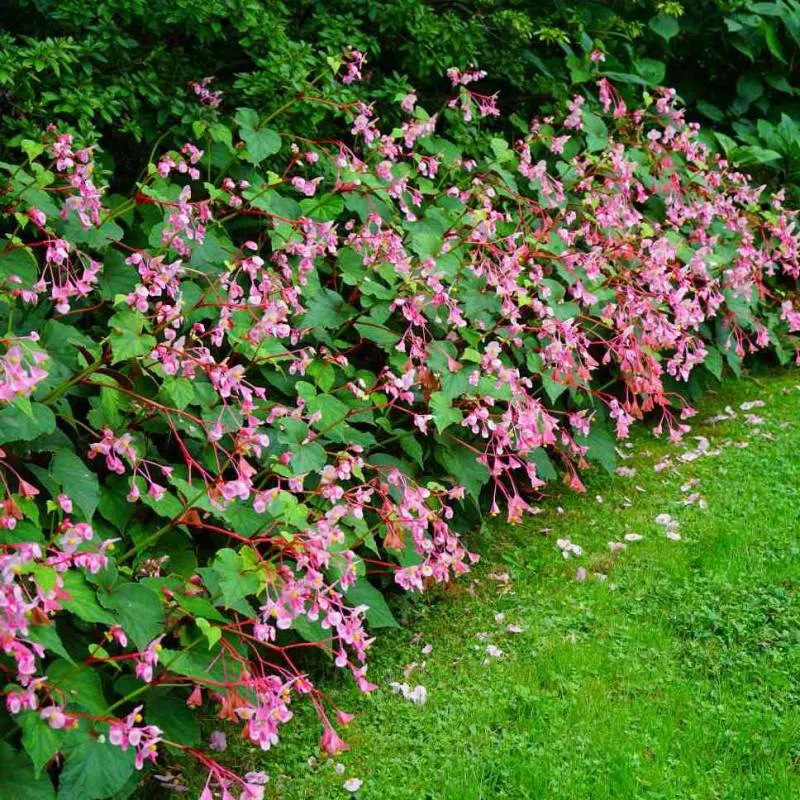
A vigorous tuberous perennial, up to 80cm high, with asymmetric, deep green leaves with finely toothed edges and red veins on the undersides. Loose, hanging sprays of pink flowers are borne on long, reddish stems in late summer
Scientific classification
- Species
- Begonia grandis subsp. evansiana 'Simsii' (Begonia grandis subsp. evansiana 'Simsii')
- Genus
- Begonia
- Family
- Begoniaceae
- Order
- Cucurbitales
- Class
- Magnoliopsida
- Phylum
- Magnoliophyta
- Ornamental bulbs - not to be eaten. Wear gloves and other protective equipment when handling
- Toxicity
- Herbaceous Perennial
- Plant type
- Information to be completed
- Height
- Information to be completed
- Spread
- Deciduous
- Foliage
- Bushy
- Habit
- Spring · Summer · Autumn
- Season of interest
- Partial shade
- Sunlight
- Information to be completed
- Ideal temperature









Begonia grandis subsp. evansiana 'Simsii' pictures
Distribution of Begonia grandis subsp. evansiana 'Simsii'
Distribution map
- Native
- Introduced
- Cultivated
Source:WCVP v16 · Royal Botanic Gardens, Kew · CC BY 3.0 · Boundaries:WGSRPD / TDWG
Toxicity
Ornamental bulbs - not to be eaten. Wear gloves and other protective equipment when handling
Begonia grandis subsp. evansiana 'Simsii' care guide
- Keep compost evenly moist with bright shade and good humidity
- Watering
- Partial shade
- Sunlight

Watering
Keep compost evenly moist with bright shade and good humidity
Fertilizing
 Fertilizing
Weak balanced begonia feed every two to three weeks in growth
Pruning
 Pruning
No pruning required
Propagation
 Propagation
Propagate by basal softwood cuttings in spring, or by seed; plants will often self-seed, dropping tiny bulblets from the stems in late summer
Growing
 Growing
Thrives in fertile, humus-rich, moist but well-drained soil, in dappled or afternoon shade. May need winter protection in colder regions, and can be slow to start in spring. Will not tolerate waterlogging. See begonias: outdoors for further information
Common pests and diseases
Diseases
May be susceptible to grey moulds (botrytis), powdery mildews and stem rot
Pests
May be susceptible to caterpillars, mealybugs, mites, thrips, vine weevil and aphids
Explore the plant health library →




