
crimson knotweed
Also known as: Information to be completed
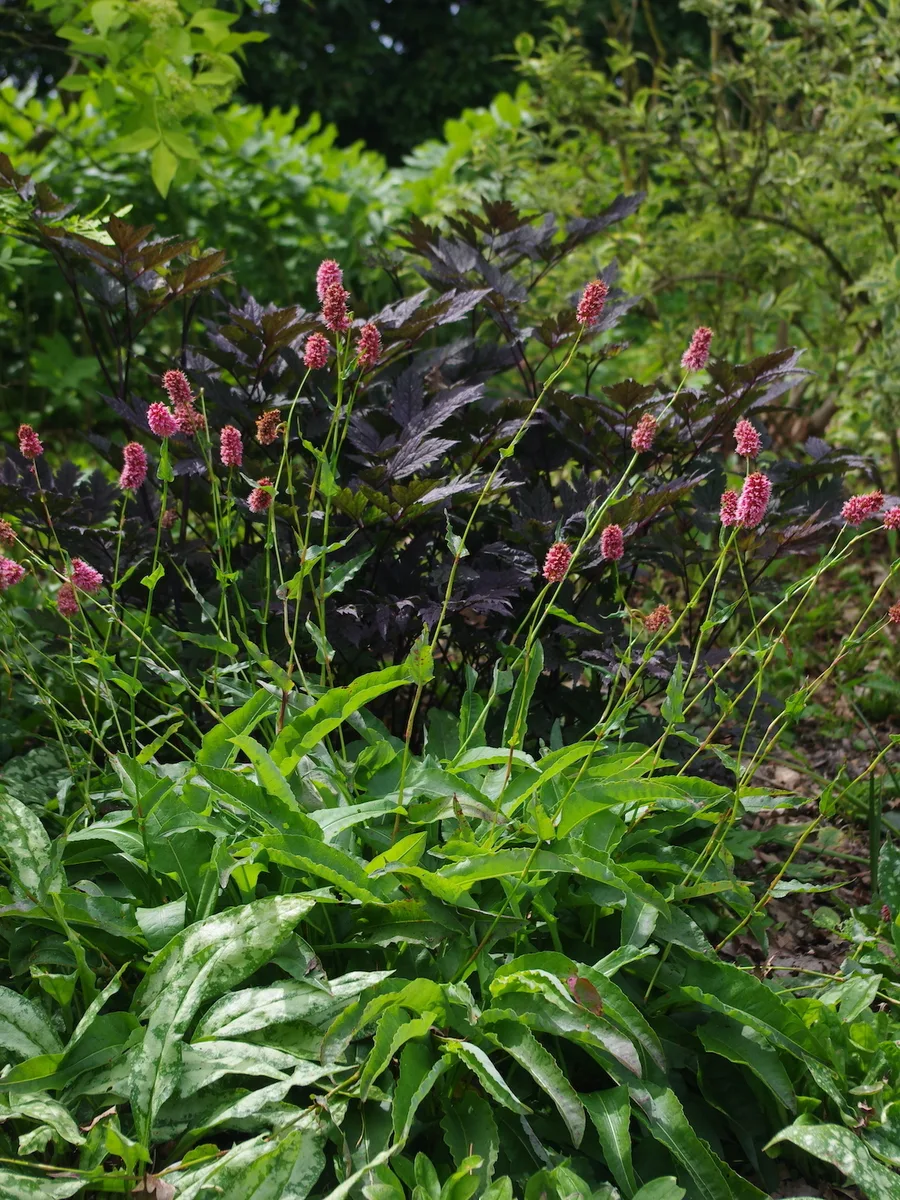
P. milletii is a clump-forming, upright, semi-evergreen perennial with linear to lance-shaped, pointed, dark green leaves to 30cm long with prominent mid-ribs. Profuse, dense, cylindrical spikes of slender, rich-crimson flowers from early summer to late autumn to 60cm tall
Scientific classification
- Species
- crimson knotweed (Bistorta milletii)
- Genus
- Bistorta
- Family
- Polygonaceae
- Order
- Caryophyllales
- Class
- Magnoliopsida
- Phylum
- Tracheophyta
- Information to be completed
- Toxicity
- Bogs · Herbaceous Perennial
- Plant type
- 0.5-1 metres
- Height
- 0.1-0.5 metres
- Spread
- Semi evergreen
- Foliage
- Bushy
- Habit
- Autumn · Spring · Summer · Winter
- Season of interest
- Full sun · Partial shade
- Sunlight
- Information to be completed
- Ideal temperature









crimson knotweed pictures
Distribution of crimson knotweed
Distribution map
- Native
- Introduced
- Cultivated
Source:WCVP v16 · Royal Botanic Gardens, Kew · CC BY 3.0 · Boundaries:WGSRPD / TDWG
crimson knotweed care guide
- Moderate regular watering, allowing brief slight drying between soakings
- Watering
- Full sun · Partial shade
- Sunlight

Watering
Moderate regular watering, allowing brief slight drying between soakings
Fertilizing
 Fertilizing
Balanced perennial feed every four weeks from spring through summer
Pruning
 Pruning
Cut back after flowering
Propagation
 Propagation
Propagate by division in spring or autumn
Growing
 Growing
Grow in any moist soil in full sun or partial shade. Tough and non-invasive but may self-seed
Common pests and diseases
Diseases
Generally disease free
Pests
Generally pest-free
Explore the plant health library →




